

Page Table of Contents

Creating an image of a USB drive lets you keep a complete copy for backup, recovery, or later use. Unlike simply copying files, a full-drive image can preserve the drive's partitions, file system, boot information, and other data.
On Windows, you can create a USB image using different disk imaging tools. Some save the entire drive as an image file, while others can also clone the USB drive directly to another disk.
In this guide, we'll show you how to create an image of a USB drive on Windows 11, 10, 8, and 7.
What Is a USB Drive Image?
A USB drive image is a file that contains the data and structure of a USB drive. Depending on the tool, it can include files, partitions, boot information, and other data stored on the drive.
This is different from simply copying files from a USB drive to your computer. File copying transfers files and folders, while a full-drive image preserves the drive's overall structure. This makes it useful for backing up a bootable USB drive or restoring it later.
If you need to create an image of a USB drive, you can use a dedicated imaging tool or disk/USB cloning software that supports saving a disk as an image file.
Share this article on your social media to help others make image of USB drive easily and quickly!
Clone USB Drive to Image Using EaseUS Disk Copy
As mentioned above, cloning is the best way to make an image of a USB drive. But you have to use professional cloning software. EaseUS Disk Copy stands out due to its practicality and ease of use. Most importantly, it supports directly cloning a disk to an image.
EaseUS Disk Copy is a reliable and practical cloning utility for Windows computers. It can make an exact copy of your USB flash drive, including all data, system files, and settings. It helps clone HDDs, SSDs, USBs, SD cards, and other disk types and clone HDD to SSD with different sizes, so you can clone from a smaller USB drive to a larger one and vice versa.
Feel free to download and use it on your computer to clone a USB to image or another drive.
 Free Download
Windows 11/10/8/7
Here is how to clone USB drive to image or another drive using EaseUS Disk Copy:
Step 1. Connect USB drives
- Connect the original USB drive and target disk (USB/HDD/SSD) to your PC.
- IF the target disk is an HDD or SSD, you will need a USB-to-SATA cable or external drive enclosure to connect it to your PC.
Step 2. Launch EaseUS Disk Copy and choose Disk Mode.
- Download and install EaseUS Disk Copy, then launch it and select Disk Mode.
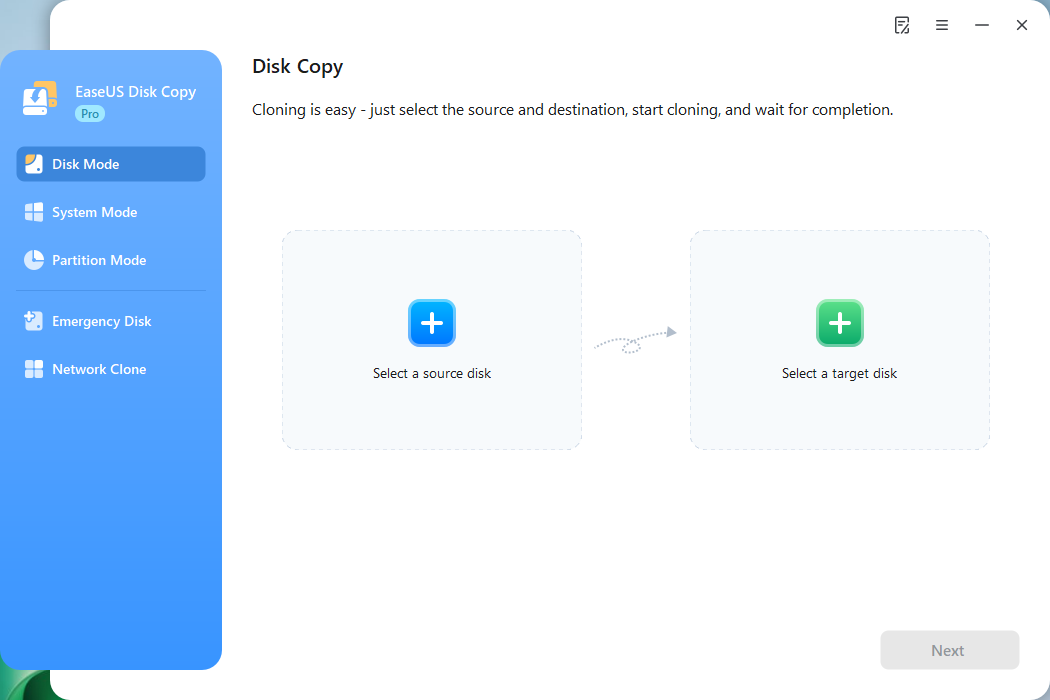
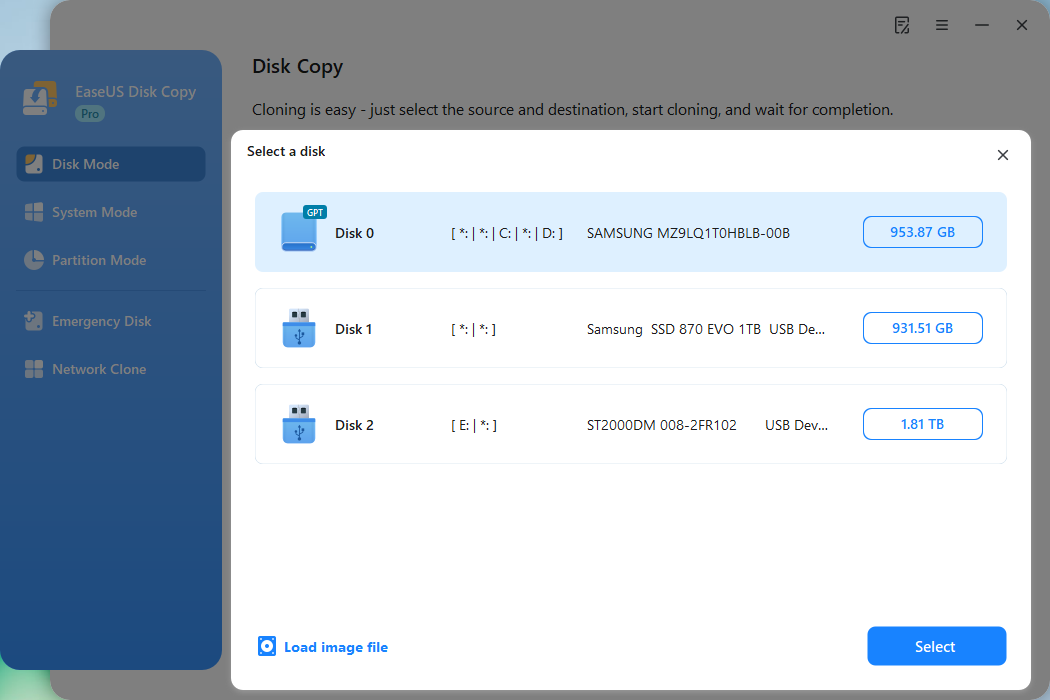
Step 3. Select the source drive.
- Select the USB drive you want to copy, then click Select.
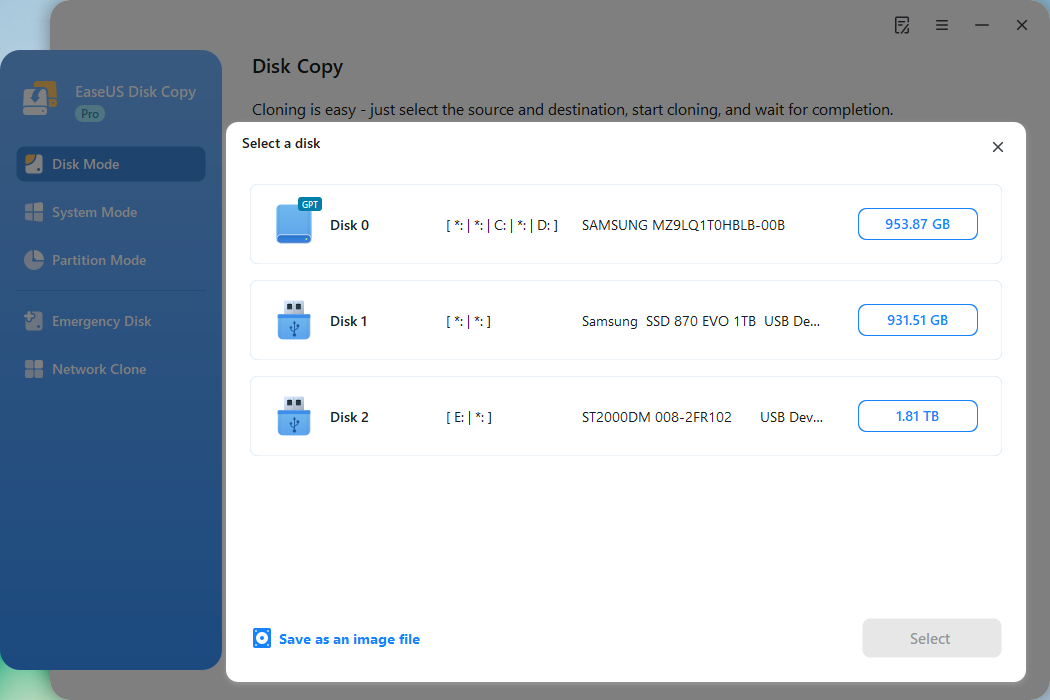
Step 4. Choose "Save as an image file".
- It will automatically compress the image file.
- You can use the image files to restore the data or system.
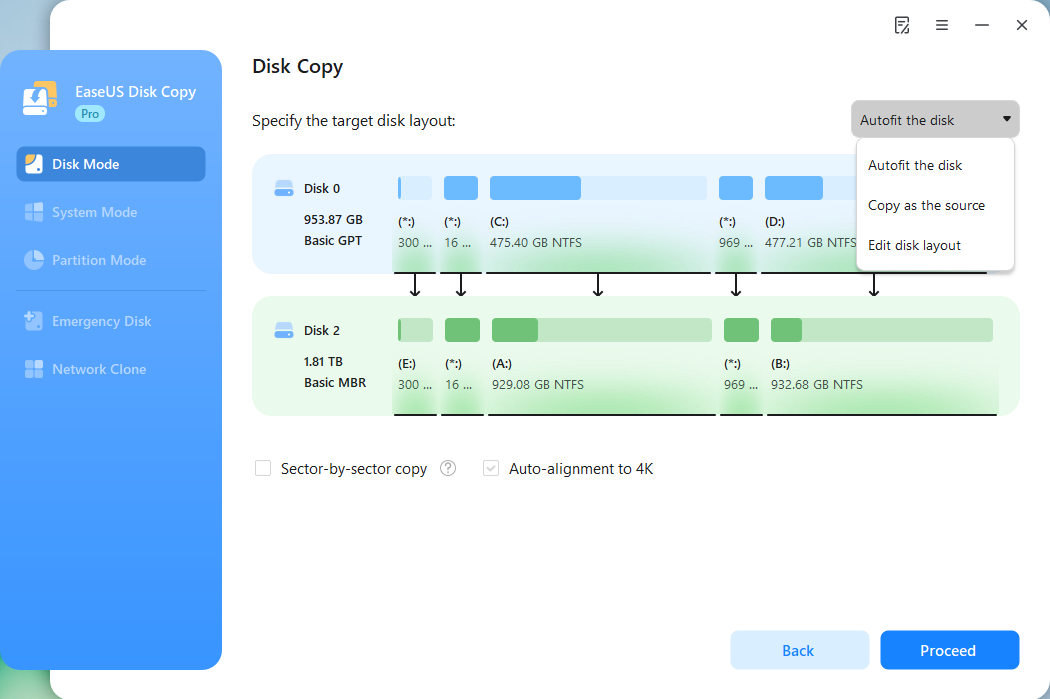
Step 5. Adjust disk layout.
- Autofit the disk: makes some changes to the destination disk layout by default to work at its best.
- Copy as the source: create a 1-to-1 copy of your source disk.
- Edit disk layout: manually resize or move partitions on this destination disk.
Step 6. Start cloning.
Click Proceed, and a message will appear, warning you that data will be lost. Confirm the message by clicking Continue.
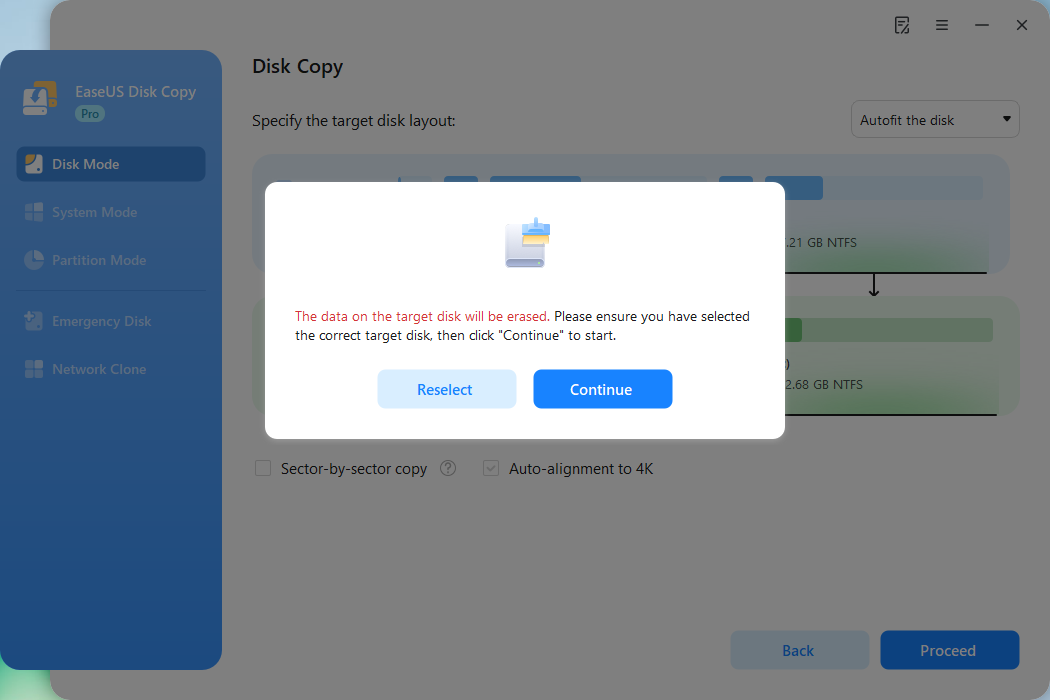
Now, it will start executing the cloning task.
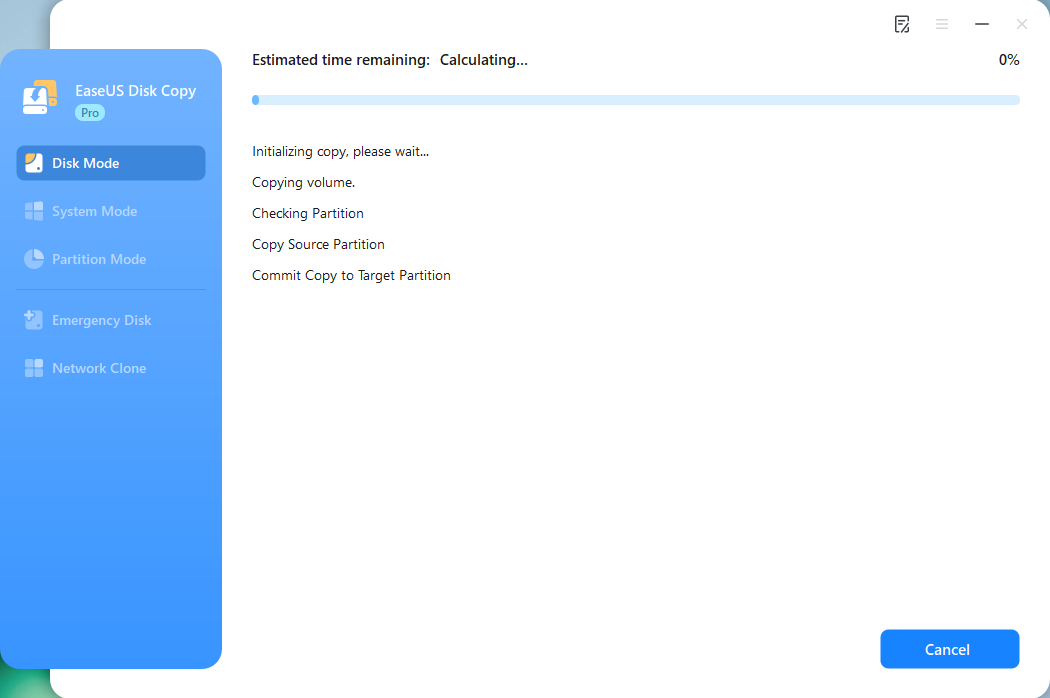
*The time it takes to clone a hard drive depends on how much data is on the source disk, and it will also be affected by the disk type, USB connection, etc.
Share this article on your social media to help others make image of USB drive easily and quickly!
Create Image of USB Drive Using ImageUSB
To create an image of a USB drive, you can also use a disk imaging tool like ImageUSB or Win32 Disk Imager. These tools create a bit-for-bit copy of the USB drive, allowing you to back it up or restore it later. The created image file will have a .bin or .img extension.
Here is how to image from a USB drive using ImageUSB:
Step 1. Download and Install. Download and install ImageUSB on your computer.
Step 2. Insert the USB Drive. Plug the USB drive you want to image into your computer.
Step 3. Open ImageUSB. Launch the ImageUSB app.
Step 4. Select the USB Drive. Choose the correct USB drive from the list of available drives.
Step 5. Choose Image Creation. Select the "Create image from USB drive" option.
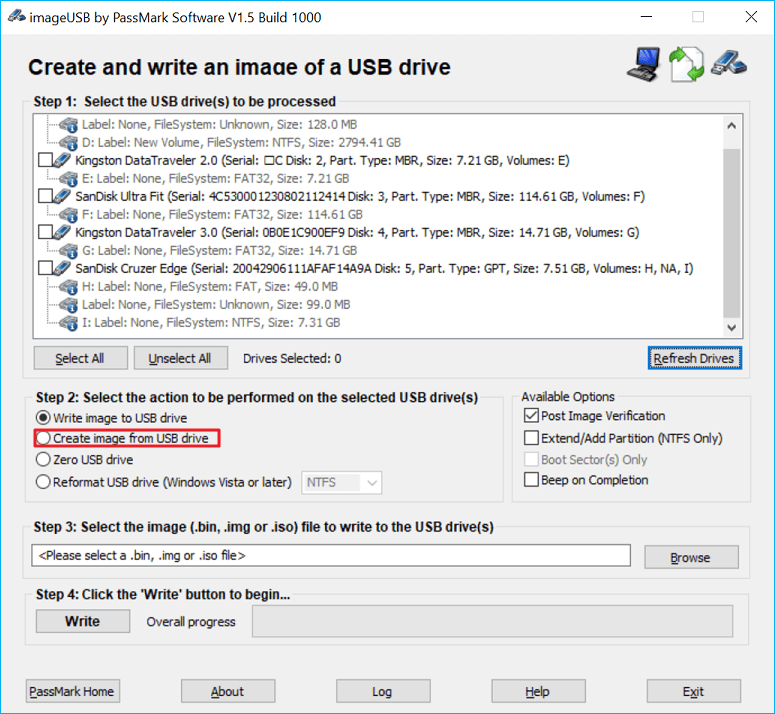
Step 6. Choose a Destination. Click the "Browse" button to specify where to save the USB image file and enter a name.
Step 7. Start the Process. Click the "Create" button to begin creating the image.
Step 8. Verification (Optional). ImageUSB can verify the image after it is created by default to ensure its integrity.
Step 9. Completion. The process will complete, and you'll have a .bin image file of your USB drive.
Create a USB Drive Image with Rufus
Rufus is mainly designed for creating bootable USB drives, but it can also save a USB drive as a disk image. Depending on the version and options available, Rufus can create formats such as VHD or VHDX.
Step 1. Open Rufus
- Connect the USB drive to your PC and launch Rufus.
Step 2. Select the USB Drive
- Make sure the correct USB device is selected under Device.
Step 3. Open Advanced Drive Properties
- Click Show advanced drive properties.
Step 4. Save the USB Drive
- Click the Save icon next to the selected drive and choose where to save the image.
Step 5. Choose the File Name
- Enter a file name and save the image to your preferred location.
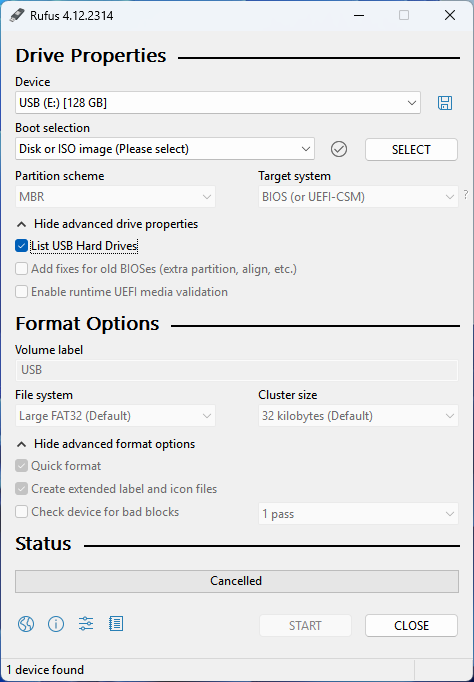
Rufus can also write supported image files back to a USB drive, making it useful for restoring or duplicating bootable media.
Share this article on your social media to help others make image of USB drive easily and quickly!
USB Image vs. USB Clone: What's the Difference?
USB imaging and USB cloning are similar, but they work differently.
| USB Image | USB Clone |
| Saves the drive as an image file | Copies the drive to another drive |
| Can be stored on a PC or external drive | Usually requires a separate target drive |
| Useful for backup and archiving | Useful for duplication or migration |
| Can be restored later | Creates a copy on the target drive |
If you want to save a USB drive as an .img or .bin file, creating an image is the better choice. If you want to make another USB drive with the same data and structure, cloning is usually more convenient.
This difference matters for bootable USB drives. Simply copying files may not preserve the partition structure or boot information needed to start the drive.
To Wrap Things Up
Creating an image of a USB drive lets you keep a complete copy for backup, recovery, or later use. It can also preserve a bootable USB more reliably than simply copying files.
For a simple USB image, consider tools such as ImageUSB and Rufus. If you also need disk cloning and USB image backup or restore features, EaseUS Disk Copy is another option.
Free Download
Windows 11/10/8/7
FAQs on How to Create Image from USB Drive
1. What is the difference between cloning and copying a USB drive?
Cloning a USB drive creates an exact, sector-by-sector copy, including all files, hidden data, and boot information, making the new drive a bootable mirror of the original. Copying, on the other hand, only transfers files and folders, potentially missing boot information and resulting in a non-bootable copy, especially for drives containing an operating system.
2. What is the best software to clone a USB drive?
EaseUS Disk Copy is a trustworthy USB cloning software compatible with Windows 11, 10, 8, and 7. You can either clone a hard drive to a USB flash drive or create an image of a USB flash device. You can use it to clone a USB drive to another USB drive or another destination, such as a computer.
3. USB imaging vs USB cloning: What's the Difference?
A USB image saves all data from a drive into a single image file, making it more flexible for backup, storage, and later restoration. In contrast, disk cloning creates a direct, one-to-one copy onto another disk, which is better suited for immediate migration but requires a target drive.
4. How do you create a system image on a USB drive?
To create a system image on a USB drive in Windows, you can use the built-in Backup and Restore (Windows 7) tool. You can also use professional system imaging software like EaseUS Todo Backup.
5. Can Rufus clone USB drive?
No, Rufus cannot clone a drive. Rufus helps format and create a bootable USB flash drive. You can use tools like Rufus or Win32 Disk Imager to create a bootable USB drive or to write an ISO image to a USB drive.
6. Can Rufus create and write an image of a USB drive?
Yes, Rufus can both create (save) an image of a USB drive and write (flash) an image to a USB drive.
How to save an image of a USB drive in Rufus:
- Open Rufus and insert your USB drive into your PC.
- Click on Show advanced drive properties.
- Click the Save (Disk icon) next to the device selection dropdown to save your USB as an image file.
-
Updated by
![]()
Jerry
"I hope my articles can help solve your technical problems. If you are interested in other articles, you can check the articles at the bottom of this page, and you can also check my Facebook to get additional help."…Read full bio