

Page Table of Contents

You can transfer Windows from one SSD to another without reinstalling Windows. The easiest way is to clone your existing Windows installation to the new SSD, including the operating system, installed programs, settings, and required boot partitions.
This is useful when you're upgrading to a larger SSD, replacing an old drive, or moving Windows from a SATA SSD to an NVMe SSD. In this guide, we'll show you how to transfer Windows to another SSD and explain what to do if the new SSD won't boot.
| Method | Windows | Apps | Settings | Reinstall OS? |
| SSD Cloning | Yes | Yes | Yes | No |
| Backup & Restore | Yes | Yes | Yes | Depends |
| Fresh Install | Yes | No | No | Yes |
Note: Depending on the backup method, you may need to reinstall Windows or some applications after restoring your data.
Can You Move Windows from One SSD to Another
Yes, you can, via cloning software. If you want to transfer Windows from one SSD to another without reinstalling Windows, the easiest way is to clone your system drive using disk cloning software.
A proper Windows migration can transfer the operating system, installed applications, system settings, personal files, and the partitions required to boot Windows. Once the transfer is complete, you can set the new SSD as the boot drive and continue using Windows with your existing setup.
Alternatively, you can perform a clean install of Windows on the new SSD, then transfer your files and settings, or perform a system image recovery on another SSD.
| What Can Be Transferred? | Can It Be Transferred? |
| Windows operating system | Yes |
| Installed programs | Yes |
| Windows settings | Yes |
| Personal files | Yes |
| System/boot partitions | Yes |
| Windows activation | Usually retained, depending on the license and hardware |
Share this article on your social platforms to help others move OS from one SSD to another!
What You Need Before Transferring OS to Another SSD
1. A New SSD
Make sure the new SSD has enough capacity for the data you want to migrate. If you're moving Windows from a smaller SSD to a larger SSD, the process is usually straightforward. If the target SSD is smaller, the amount of used space on the source drive must fit on the target.
2. Connect the New SSD
It depends on your computer.
- Desktop: install the new SSD directly.
- Laptop with two M.2 slots: install both SSDs simultaneously.
- Laptop with one slot: use a USB-to-NVMe/SATA adapter or external SSD enclosure to connect the target SSD.
3. Back Up Important Files
Although disk cloning copies the source system to the target SSD, it is still a good idea to back up important files before making major changes to your storage configuration.
How to Transfer Windows from One SSD to Another
Here, we will introduce 3 ways to move OS to another drive. For most users, cloning is the simplest way to transfer Windows from one SSD to another. Instead of reinstalling Windows and your applications, disk cloning copies the existing system to the new SSD.
Method 1. Clone Windows to Another Drive Using EaseUS Disk Copy
EaseUS Disk Copy is recommended for migrating your Windows OS to a new SSD or HDD. With this simple yet powerful disk cloning software, you can easily transfer Windows to another drive without reinstalling Windows or losing data.
This process copies the OS, programs, and files, requiring you to connect a new SSD to your PC, select the source (old) and target (new) SSDs in the software, and start the OS migration.
EaseUS SSD cloning software has the System Mode, which lets you migrate OS to a new drive. If your PC cannot boot, it lets you create a WinPE bootable disk to clone your disk.
 Free Download
Windows 11/10/8/7
How to Clone Windows to Another SSD Using EaseUS Disk Copy:
Note: If you want to transfer everything, select the Disk Mode. System Mode will only transfer the C drive and boot partitions.
Step 1. Connect New SSD
- Insert the new SSD into the USB-to-SATA adapter or external SSD enclosure and connect it to your PC via the USB port.
- Alternatively, install the new SSD internally if your PC has 2 slots.
Step 2. Launch EaseUS OS Cloning Software
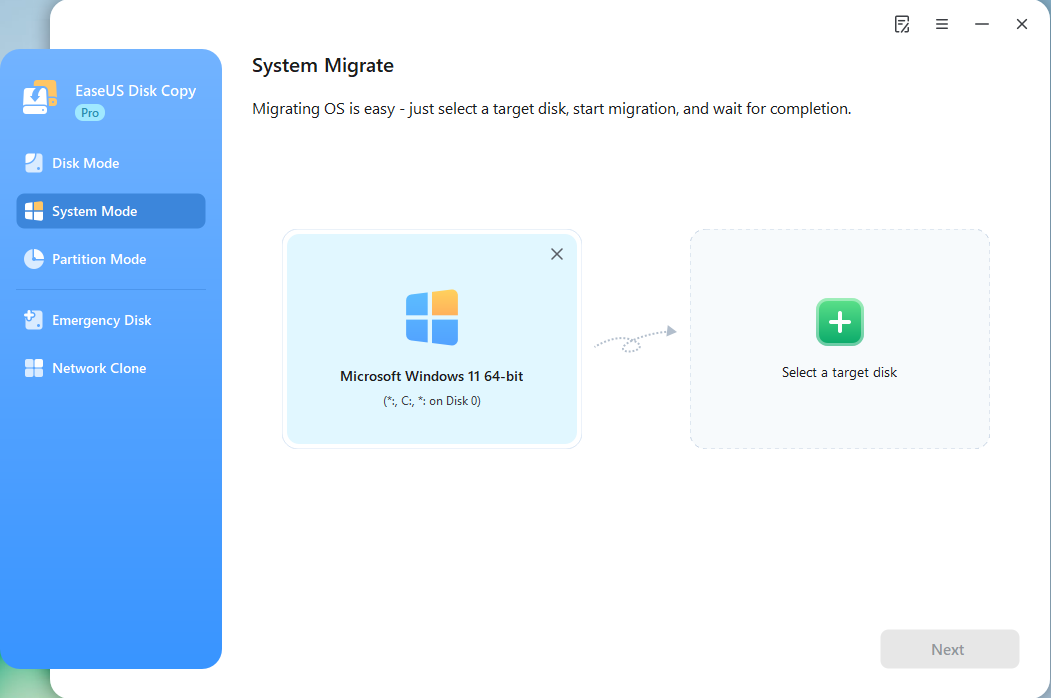
- Install EaseUS Disk Copy, launch it, and select System Mode.
- It will automatically select the system you use, including the system-related partitions and boot files.
Step 3. Select Target SSD
- Choose the new SSD as the destination.
- Enable "Preview partition layout" to access advanced disk-cloning features.
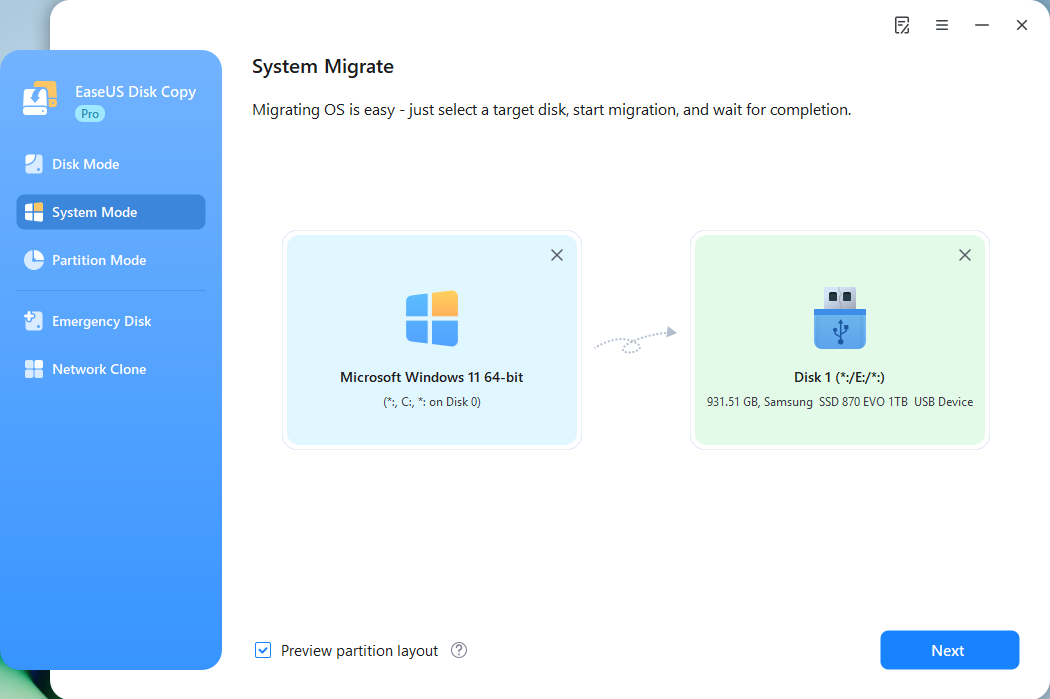
Note: Adjust disk layout if necessary.
- If your new SSD is larger, you can select "Autofit the disk" to make full use of the bigger space on the new SSD. This will ensure there is no unallocated space on your new SSD.
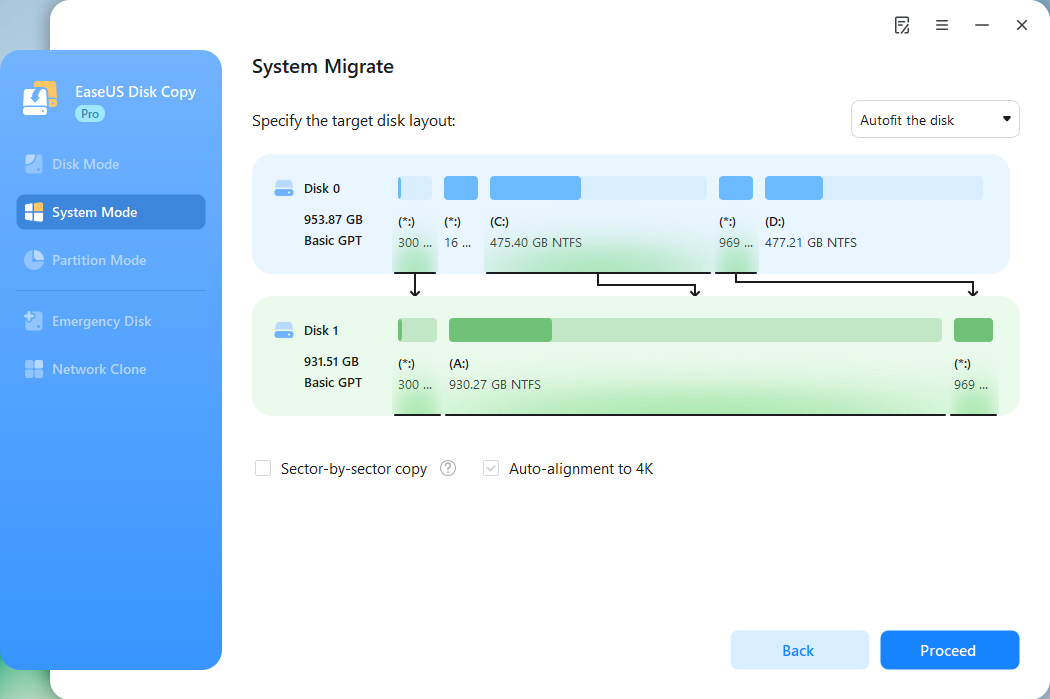
Step 4. Start OS Migration
- Note that all data on the target drive will be deleted.
- Click Proceed to transfer OS to the new SSD and wait for the OS migration process to complete.
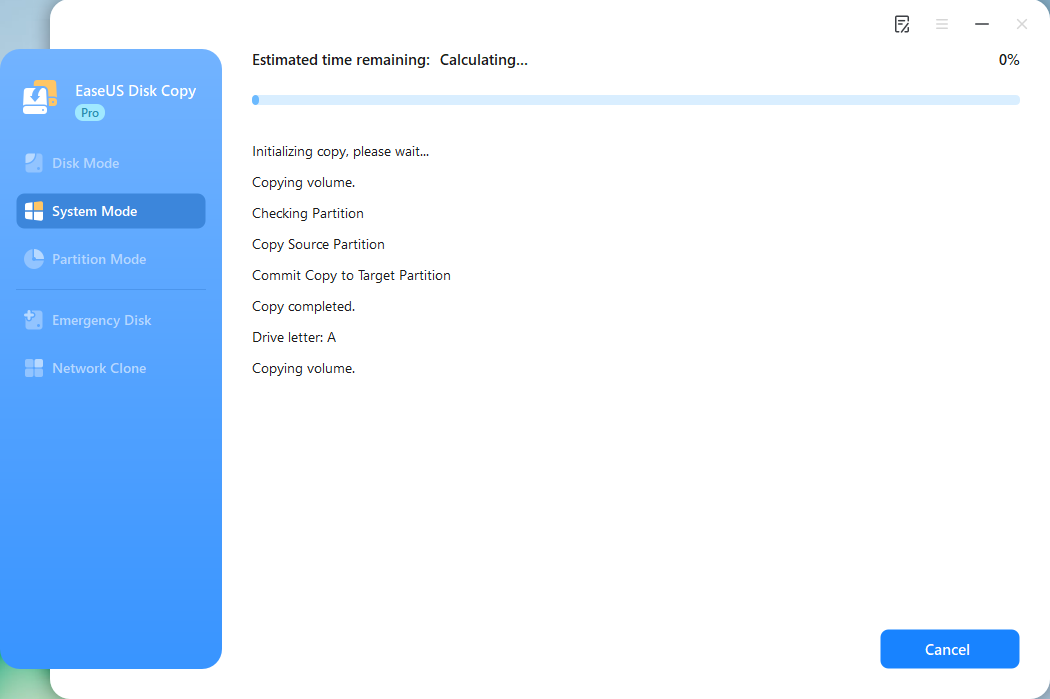
Step 5. Switch Drives
After cloning one SSD to another, you can install the SSD alongside your old SSD if you use a desktop or laptop with more than 2 slots. If you use a laptop with only one slot, once complete, shut down the PC, remove the old SSD, install the new SSD in its place, and boot from the new SSD. You may need to change the boot order in the BIOS if the system doesn't automatically boot.
If the cloned SSD won't boot, you can refer to this article to solve the problem.
This video provides a complete guide on how to transfer Windows, programs, and data to a new SSD:
- Notice:
- Your Windows license should be transferred with the cloning process, but checking if you need to reactivate it is a good idea. If not, you can reactivate Windows with your old product key or license code.
Method 2. Move Windows to Another Drive via Backup & Restore
Another way to migrate Windows from one SSD to another is to use Windows Backup and Restore (Windows 7). Use the Backup and Restore (Windows 7) tool to create an image, then restore it to the new drive via the recovery environment.
However, this method is not straightforward or stable because you may encounter the "System Restore is not working" error when restoring the system image. Therefore, if you want a more efficient, direct way to transfer Windows to another drive, disk cloning may suit you better.
Prerequisites:
- USB-to-SATA cable or external hard drive enclosure.
- An external device that is large enough to store the system image.
- A system repair disc or bootable USB. If you don't have one, create a repair disc yourself.
Here is how to transfer Windows from one SSD to another with Windows built-in utility:
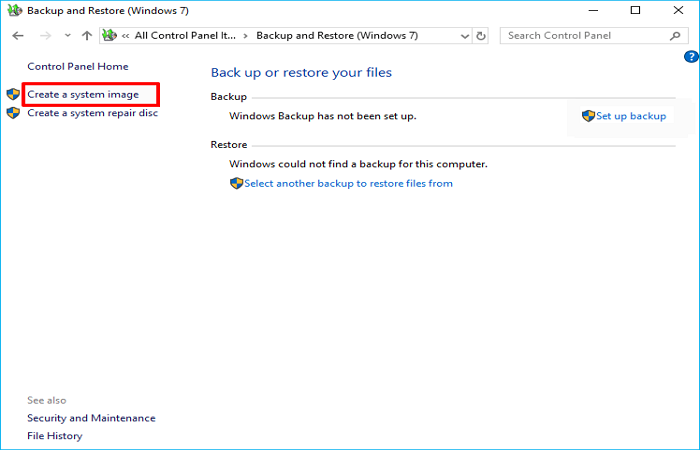
Step 1. Visit Control Panel > Backup & Restore (Windows 7) and select Create a system image.
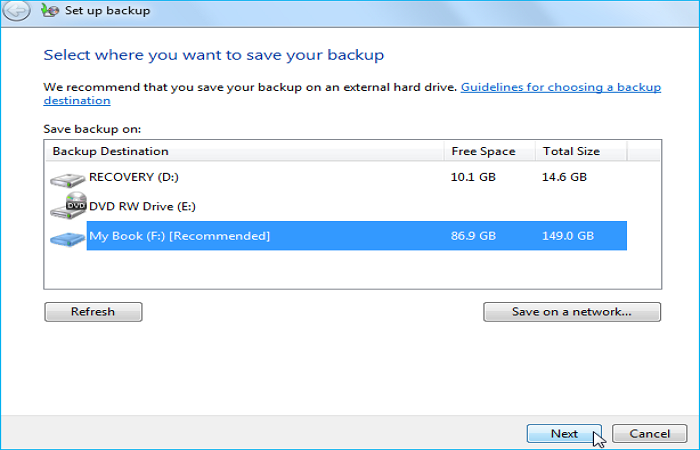
Step 2. This will launch a wizard that you can follow to create a system image of your Windows on an external drive or USB drive. First, select the hard drive where you will save the system image.
Step 3. Choose the drive and partitions you want to include in the image. Ensure the Windows Drive, typically drive C, is included in the image.
Step 4. Tap Start backup to launch the backup process.
Step 5. Connect the external drive containing the system image and the new SSD to your computer. (If your computer cannot boot as usual, you will need to use the system repair disc to boot your PC.)
Step 6. Restart the PC to access the Windows Recovery Environment.
- In Windows 10: Settings > Update and Security > Recovery and press Restart now.
- In Windows 11:Settings > System > Recovery and press Restart now.
Step 7. In Choose an option window, click Troubleshoot > Advanced options > System Image Recovery.
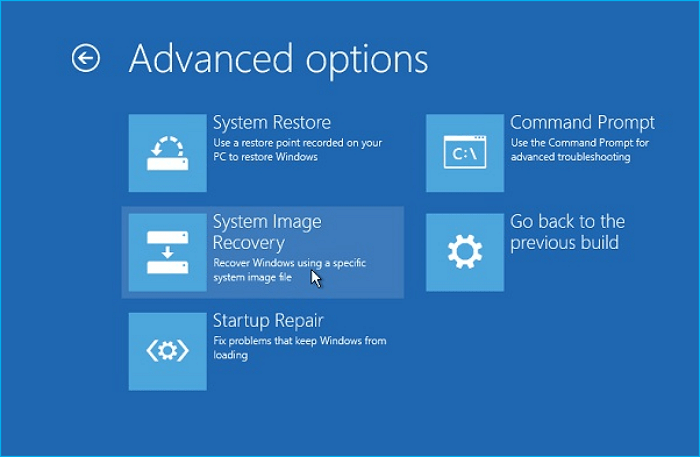
Step 8. Select a system image > Use the latest available system image (recommended) > Format and repartition disks. Then begin the restoration process.
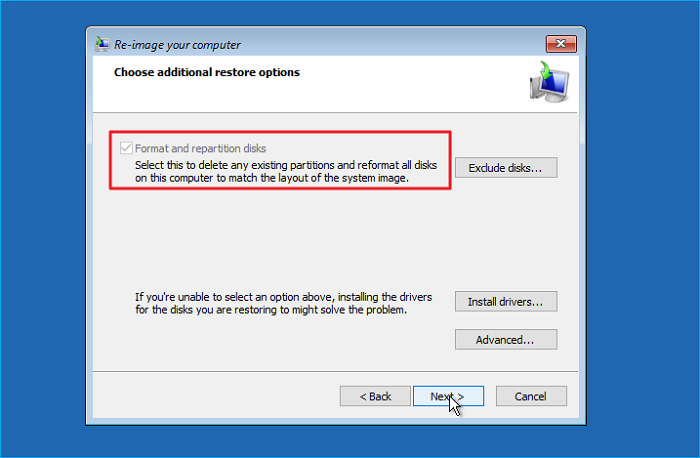
Step 9. After restoring the image, change the boot order in your BIOS to boot from the new SSD.
It is advised not to stop the restoration procedure midway because it can take some time. After the operation finishes, you will be prompted to restart your system to boot into standard mode.
Share this article on your social platforms to help others move OS from one SSD to another!
Method 3. Clean Install Windows on New SSD
A clean installation is another option, but it does not directly transfer your existing Windows environment. You'll need to install Windows from scratch on the new SSD, then transfer data from the old disk to the new SSD.
Step 1. Create Windows installation media
Use the Windows Media Creation Tool to create a bootable USB drive or DVD with the Windows installation files.
- Go to the official Microsoft website to download the Media Creation Tool.
- Launch the downloaded mediacreationtool.exe file and accept the license terms.
- Choose Create installation media for another PC.
- Select the desired language, architecture (64-bit or 32-bit), and Windows 10 edition.
- Choose the USB flash drive as the destination for the installation files.
- Select the correct USB drive, as the process will format it.
- The tool will download the Windows 10 ISO file and create the bootable USB drive.
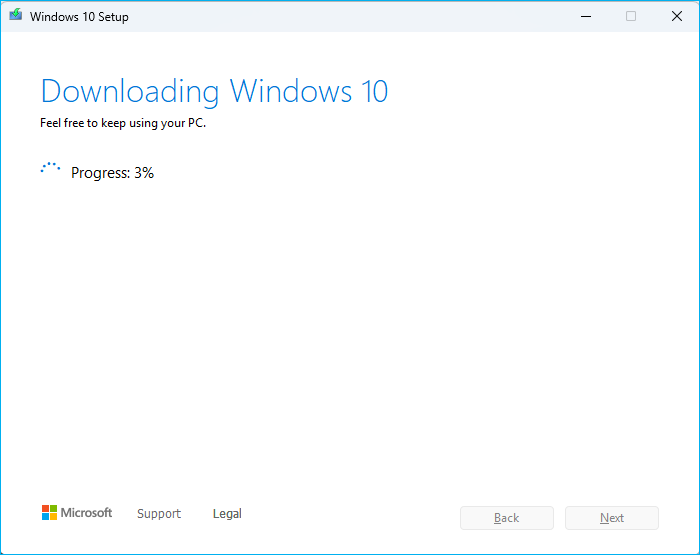
Step 2. Boot from the installation media
Restart your computer and boot from the newly created installation media.
- Connect the new SSD and bootable USB to your PC.
- Restart PC and press the BIOS key on the keyboard (F2, Delete, Esc, or F12) to access the BIOS.
- Set the bootable USB as the first boot device.
- Save the changes and exit the BIOS. Then, reboot the PC.
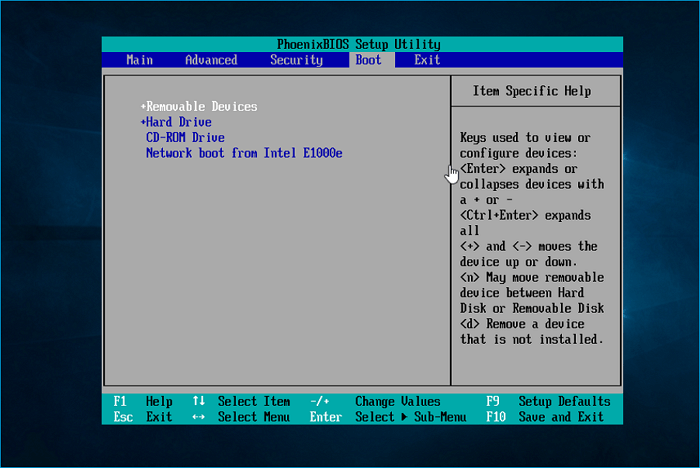
Step 3. Install Windows on the new SSD
Follow the on-screen instructions to install Windows on the new SSD.
- Select the Windows Language, Edition, and Architecture.
- Click Install now.
- Select I don't have a product key.
- Click I accept the license terms.
- Click Custom: Install Windows only (advanced).
- Select the new SSD to install Windows.
- Follow the on-screen guide to install Windows on an SSD.
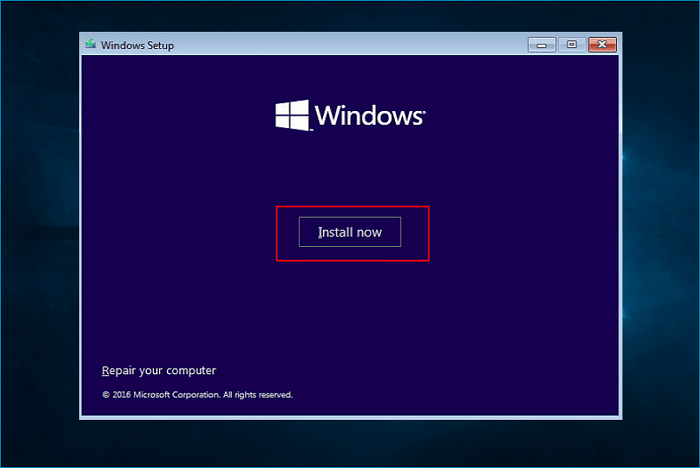
Step 4. Transfer files and settings
After installing Windows, you can manually transfer your files and settings from the old SSD.
Windows Won't Boot After Transferring to the New SSD?
If Windows doesn't boot after the transfer, the problem may not be with the Windows files themselves. The new SSD may not be set as the boot drive, or some of the boot information may not have transferred correctly. Try these checks before starting the transfer again.
1. Check the BIOS/UEFI Boot Order
Make sure the new SSD or its Windows Boot Manager entry is set as the first boot option. The computer may still be trying to start Windows from the old drive.
2. Make Sure the New SSD Is Detected
If the new SSD doesn't appear in BIOS/UEFI, check the SSD connection, M.2 slot compatibility, SATA cable, and relevant storage settings.
3. Check UEFI and Legacy Boot Mode
The boot mode should match the way Windows was originally installed. For example, a Windows installation using UEFI and GPT should normally be booted in UEFI mode.
4. Try Startup Repair
If the SSD is detected but Windows still won't start, try Startup Repair from the Windows Recovery Environment. It can automatically fix some common boot configuration problems.
5. Disconnect the Old SSD Temporarily
If both drives are connected, the computer may still be using boot files from the old SSD. Disconnecting it temporarily can help confirm whether Windows can boot from the new SSD on its own.
6. Check the EFI System Partition
On UEFI systems, make sure the EFI System Partition was transferred correctly. If the Windows partition is present but the required boot files are missing, the new SSD may not boot.
7. Check BitLocker Encryption
If BitLocker is enabled, make sure you have the recovery key available before making major changes to the system drive. Hardware or boot configuration changes can sometimes trigger a BitLocker recovery prompt.
To Wrap Things Up
Are you clear about how to transfer Windows from SSD to another now? In short, you can use cloning software, use a Windows built-in tool, or clean install Windows. Performing SSD cloning is the best way to transfer the operating system from one SSD to another without reinstalling Windows and apps or losing data.
It would be better to use cloning software - EaseUS Disk Copy to help you clone OS to a new drive. It can help you transfer Windows from one drive to another without reinstalling Windows. More valuable functions are here for you to explore. Just download and try it.
Free Download
Windows 11/10/8/7
FAQs on How to Transfer Windows to Another SSD
Below are some FAQs about how to move Windows from one SSD to another.
1. Do I need to reactivate Windows after cloning?
Generally, you do not need to reactivate Windows after cloning your OS drive if you're using the same hardware (motherboard and CPU). If you've cloned the drive and are booting from it on the same computer, Windows should recognize the existing digital license and reactivate automatically. However, if you've changed hardware (especially the motherboard or CPU), you will likely need to reactivate Windows.
2. Can I transfer Windows from one SSD to another without losing data?
Yes. Disk cloning can transfer Windows, applications, settings, and other files to the new SSD. However, it's still a good idea to back up important files before making major changes on your PC.
3. Can I transfer Windows to a smaller SSD?
Yes, as long as the data on the original drive fits on the smaller SSD and the cloning tool can resize the partitions as needed. You can also delete some files or shrink the partition on the source drive before transferring Windows.
4. Can I transfer Windows from SATA SSD to NVMe SSD?
Yes, you can transfer Windows from a SATA ro NVMe SSD as long as your computer supports NVMe and the new SSD is detected by the BIOS/UEFI and Windows.
5. Can I transfer Windows if my laptop has only one SSD slot?
Yes. You can connect the new SSD externally using a compatible USB enclosure or adapter, clone Windows to it, and then replace the old SSD.
6. Can I use my old SSD after transferring Windows?
Yes. If Windows boots correctly from the new SSD and your files are intact, you can format the old SSD and reuse it for storage.
-
Updated by
![]()
Jerry
"I hope my articles can help solve your technical problems. If you are interested in other articles, you can check the articles at the bottom of this page, and you can also check my Facebook to get additional help."…Read full bio