

Page Table of Contents

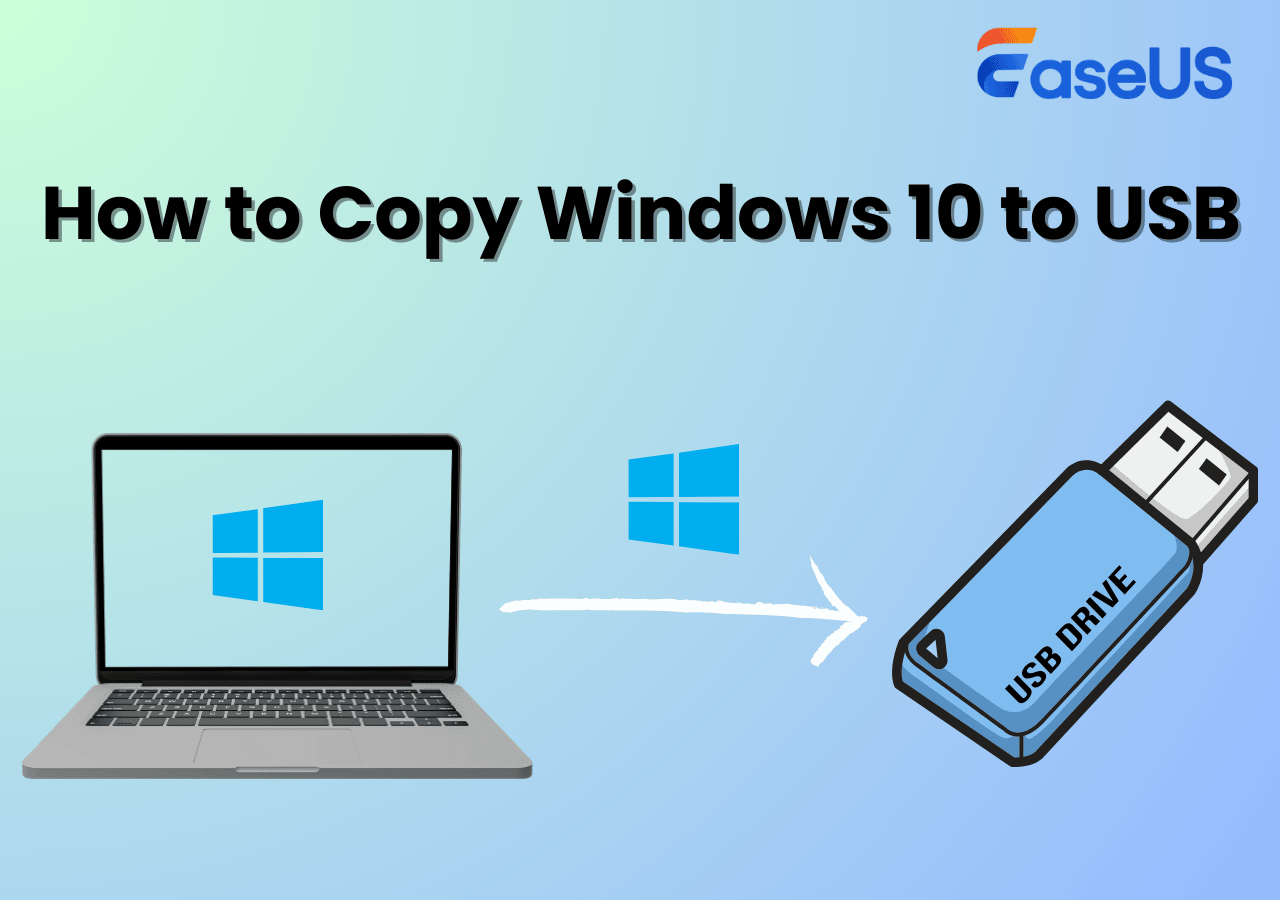
You can transfer Windows to another drive without reinstalling it. If you're upgrading to a larger SSD, replacing an old HDD, or moving Windows to an M.2 drive, disk cloning lets you copy your existing Windows installation to the new drive.
Cloning transfers Windows, installed applications, settings, boot partitions, and personal files, so you can continue using your existing setup after cloning. In this guide, we'll cover how to clone Windows to another drive, an alternative built-in Windows method to move OS to another drive, and what to do if the new drive won't boot.
Can You Transfer Windows to Another Drive?
Yes. You can transfer Windows to another drive without reinstalling Windows. Whether you're upgrading to a larger SSD, replacing an old HDD, or moving Windows to an M.2 SSD, there are 2 common options:
- Disk cloning: Copies your existing Windows installation, applications, settings, boot partitions, and files to the new drive. This is usually the simplest option.
- System image recovery: Creates a backup of your Windows installation that you can restore to the new drive. It uses Windows' built-in backup and recovery tools but may involve a few more steps.
Simply copying the Windows or C: drive isn't enough because Windows also relies on boot files and system partitions.
A disk clone copies system and data from the original drive to the destination drive, allowing you to boot Windows from the new drive without setting everything up again.
If you prefer to use Windows' built-in tools or already have a system image, you can also transfer Windows by creating and restoring a system image. We'll cover both methods below.
Clone Windows to Another Drive via EaseUS Disk Copy
A fast and easy way to copy your entire drive, including the operating system, to the new drive for full migration while maintaining data integrity
For most users, disk cloning is the more straightforward choice if you want to move an existing Windows installation to another drive. However, you need professional disk cloning software because Windows has no built-in tool to help you clone a drive.
EaseUS Disk Copy comes to help. It can help transfer your Windows installation to an SSD without reinstalling Windows.
 Free Download
Windows 11/10/8/7
It lets you clone your system, disk, and partition on Windows 11/10/8/7. If you want to migrate OS to another disk without reinstalling OS or losing data, EaseUS can suit you well. It includes a System Mode feature that lets you migrate Windows to an SSD. Download it on your PC to clone Windows to another drive!
- Preparations Before Windows Transfer:
- Ensure there is enough space on the destination SSD to store all data.
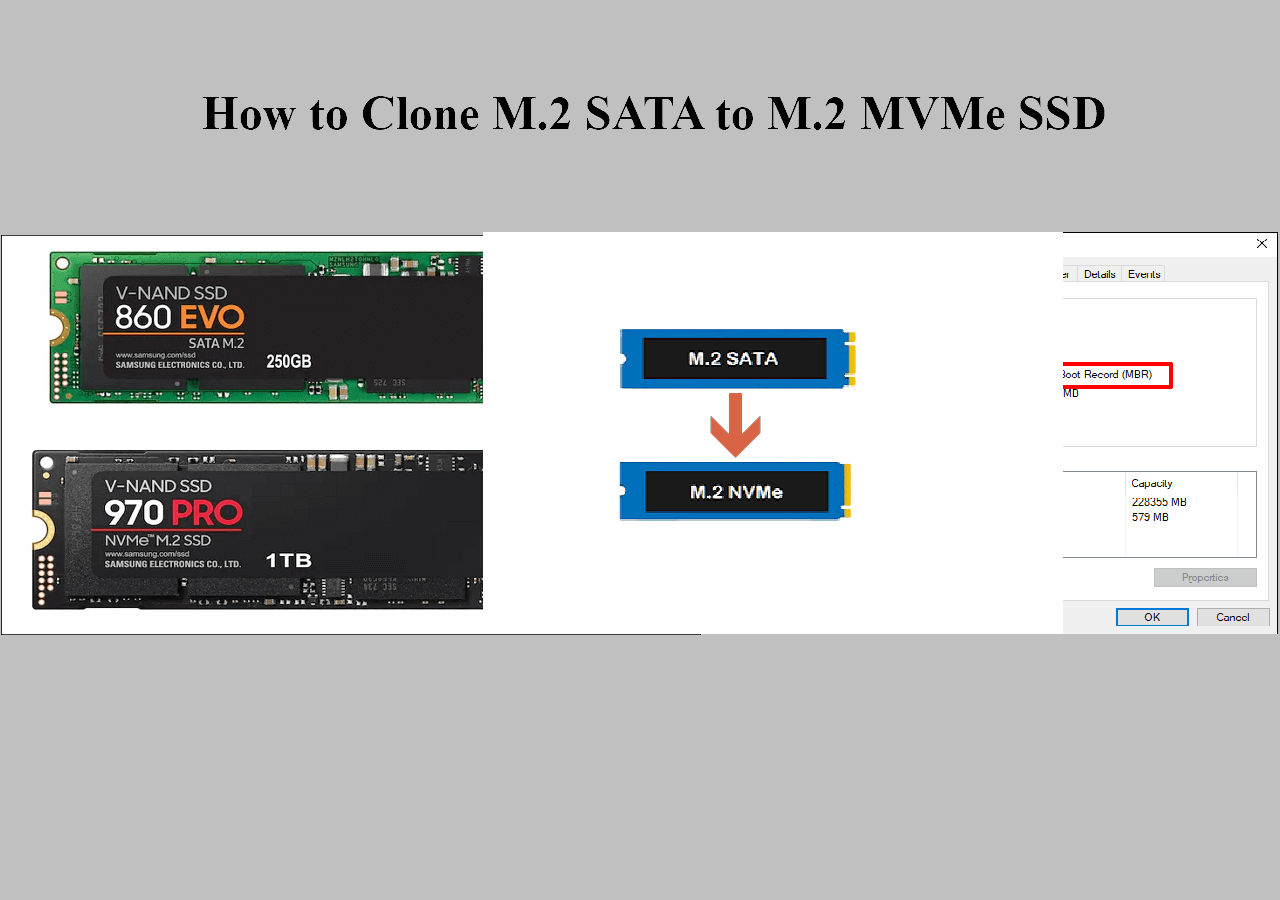
- Make sure the new drive is compatible with your computer (e.g., SATA, M.2, etc.).
- Connect the new drive to your PC via a USB-to-SATA cable or an external disk enclosure if your PC has only one slot.
- Before performing any of these operations, it's highly recommended to back up your important files.
Here is how to move OS to another drive without losing data via EaseUS Disk Copy:
Step 1. Connect New SSD/HDD
- Insert the new SSD/HDD into the USB-to-SATA adapter or external disk enclosure and connect it to your PC via the USB port.
- Alternatively, install the new SSD/HDD internally if your PC has 2 slots.
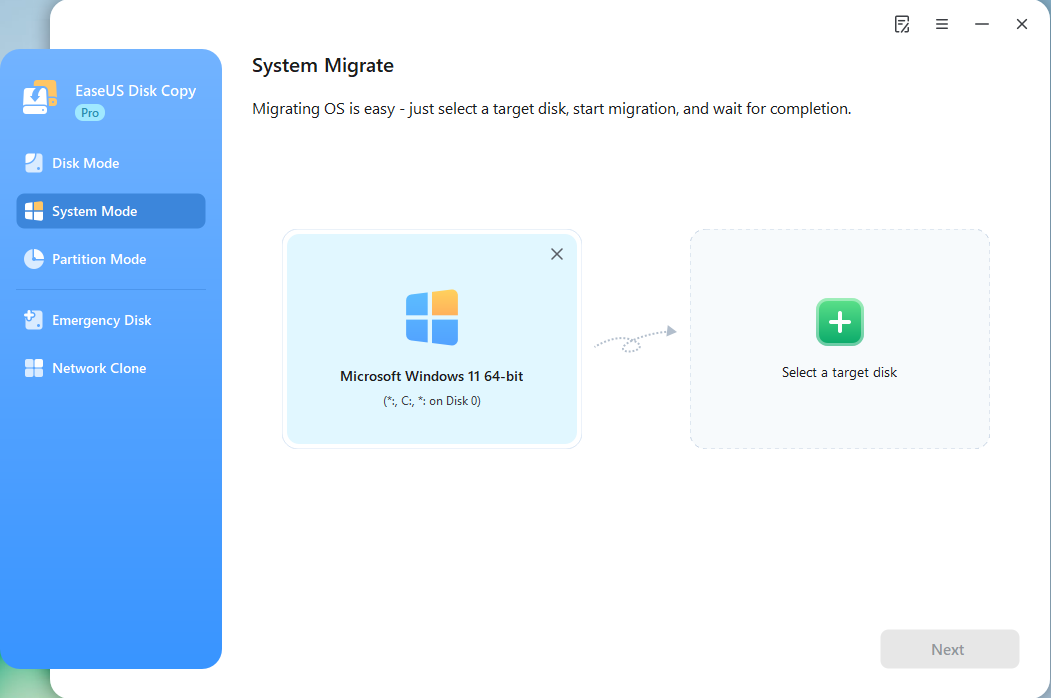
Step 2. Open EaseUS OS Cloning Software
- Download and install EaseUS Disk Copy, launch it, and choose System Mode.
- It will automatically select the Windows system, including system-related partitions and boot files.
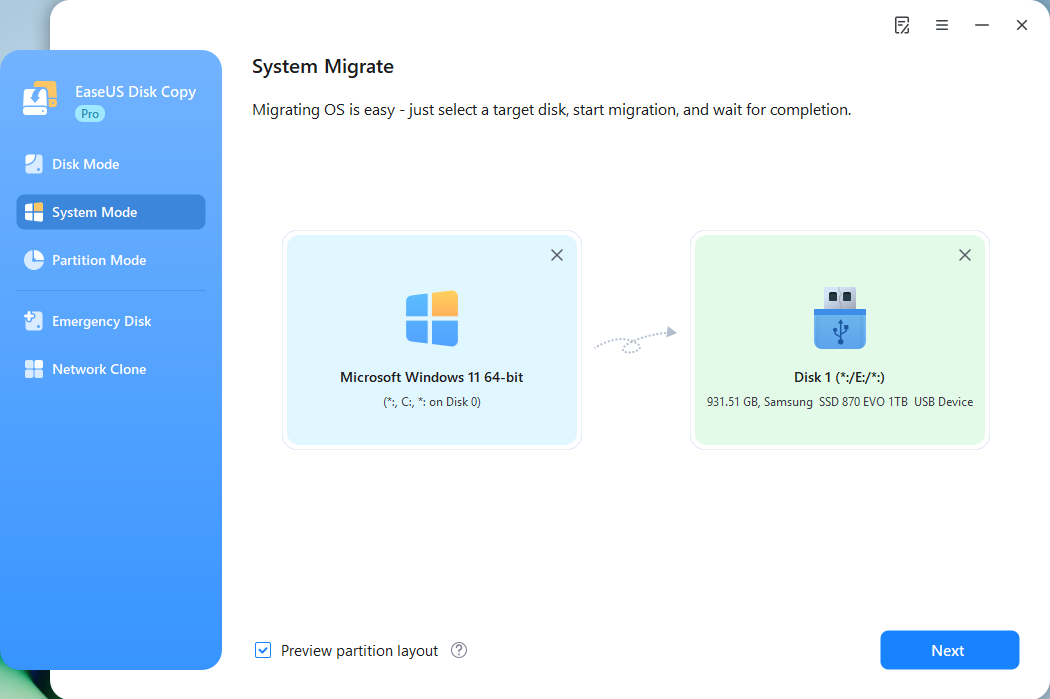
Step 3. Select Target SSD/HDD
- Choose the new disk as the destination.
- Check the "Preview partition layout" box to access advanced disk-cloning features.
Note: Adjust disk layout if needed.
- If your new disk is larger, you can select "Autofit the disk" to make full use of the bigger space.
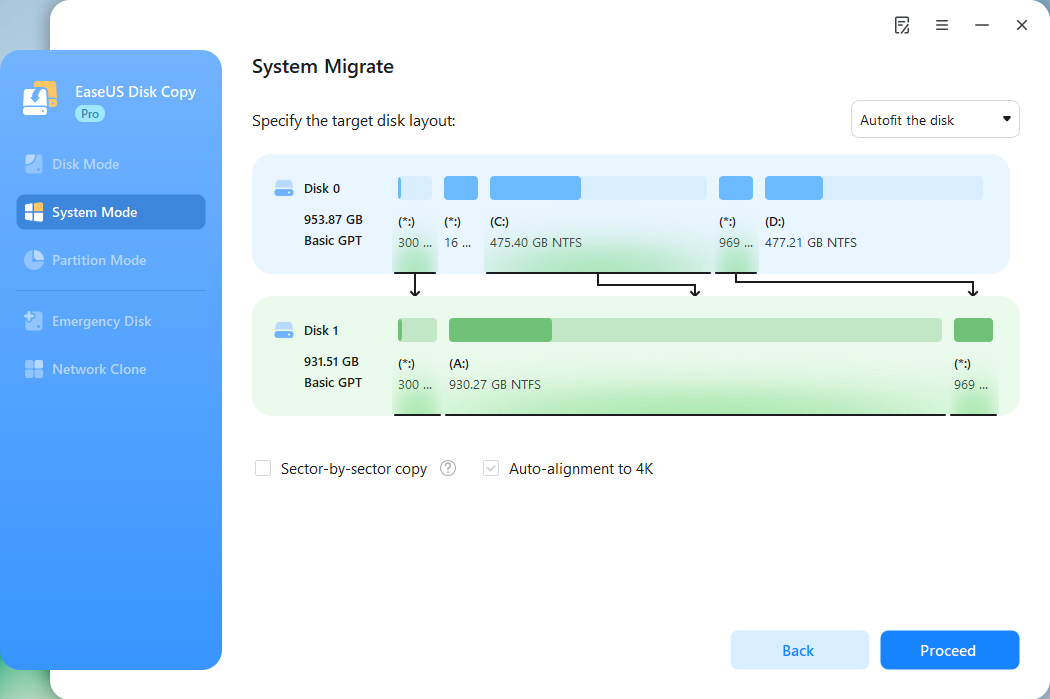
Step 4. Start System Migration
- Note that all data on the target disk will be deleted.
- Click Proceed to transfer Windows to another drive and wait for it to complete.
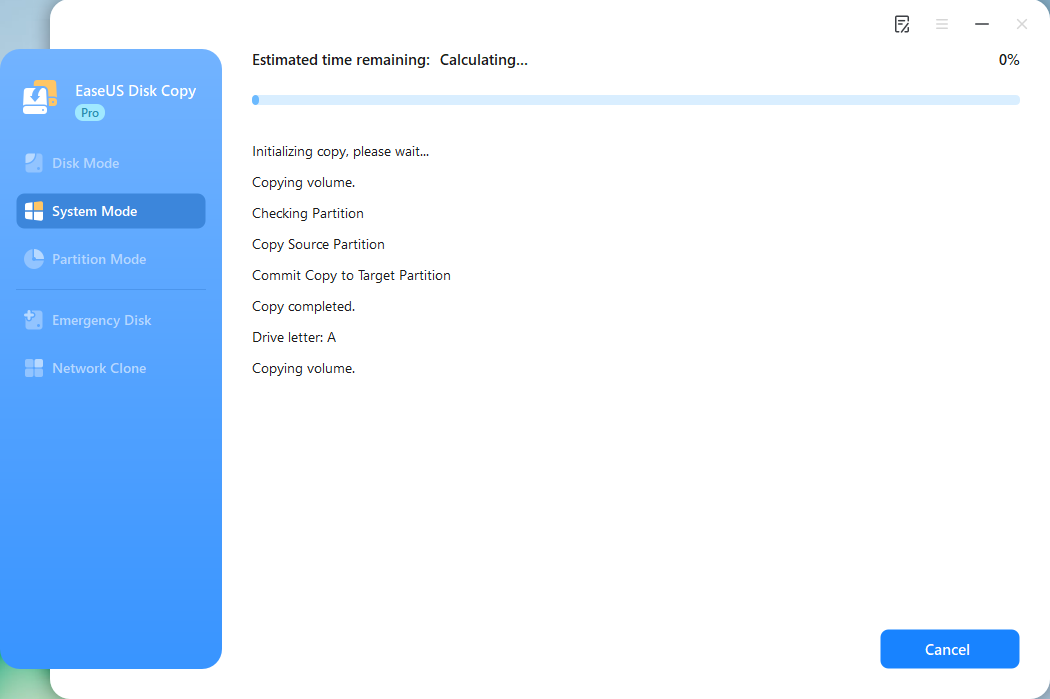
Step 5. Switch Drives
After cloning, you can install the disk alongside your old disk if you use a PC with more than 2 slots. If you use a laptop with only one slot, once complete, shut down the laptop, open the back case, remove the old disk, install the new disk in its place, and boot from the new SSD/HDD. You can change the boot order in the BIOS/UEFI if the system doesn't automatically boot.
- How to Boot Windows from Cloned SSD:
- After you have done the cloning process, you need to boot from the SSD.
-
1. Shut down your PC, open the back cover or host, then remove the HDD using screwdrivers.
2. Install the SSD and screw it in tightly, then put the back cover or host back.
3. Restart the computer, and during restart, hold down the F2/F12/DEL key to access the BIOS screen.
4. Navigate to the Boot tab and select the SSD as the first boot drive.
5. Save the changes, and your computer will boot from the SSD.
This video demonstrates how to move Windows to another drive using EaseUS Disk Copy:
Is this article helpful? If you like this article, share it on your social platforms.
Move OS to Another Drive Using System Image Recovery
A good (but slow speed) option for backing up and restoring your entire system, including the operating system, apps, and data, for disaster recovery
If you do not want to download any third-party software, Windows also covers you. You can use the Windows System Image Tool to transfer Windows to another drive. This method involves creating a full system image on an external disk and restoring it to a new drive.
Part 1. Create System Image Backup on an External Disk
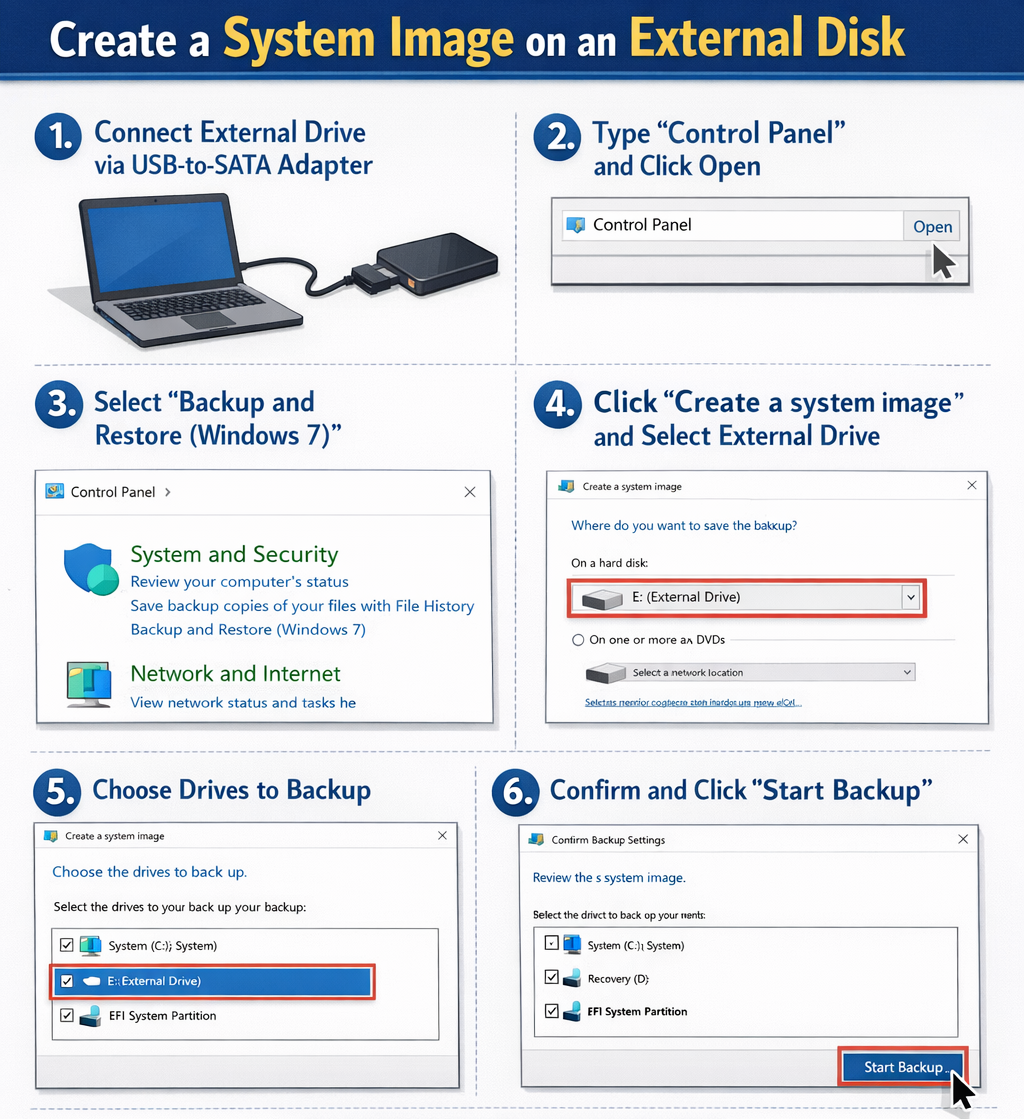
To create a system image, you can use Backup and Restore (Windows 7) or professional free backup software like EaseUS Todo Backup. Steps to create a system image using Backup and Restore:
Step 1. Connect the external drive to your computer.
Step 2. Type Control Panel in the search box and click Open.
Step 3. Click Backup and Restore (Windows 7).
Step 4. Select Create a system image.
Step 5. Select the connected external drive as the location to store the image backup.
Step 6. Choose which drives you want to back up. (By default, the system partition is selected.)
Step 7. Confirm the backup settings and click the Start backup button to create a system image.
Part 2. Restore System Image to the New Drive
Once the backup is complete, connect the backup drive and the new drive to your PC. If you use Windows 10, go to Settings > Update and Security > Recovery and click Restart now. (For Windows 11, Settings > System > Recovery and click Restart now.)
When your computer reboots, you will enter the Windows Recovery Environment (WinRE).
Go to: Troubleshoot >> Advanced options >> System Image Recovery >> Select a system image >> Use the latest available system image (recommended) >> Select Format and repartition disks (enable this option for restoring to a new disk) >> Click Finish.
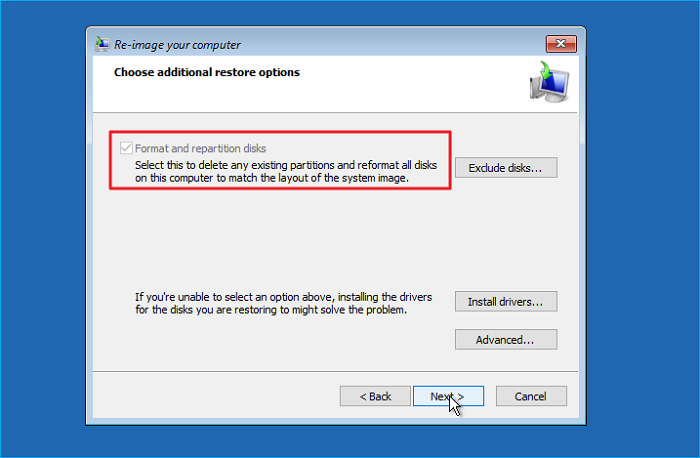
Then, follow the on-screen prompts to restore the system and data to the new drive.
- Notice:
- You may also need a system repair disc or recovery USB drive if your PC cannot boot. You will be guided to the Choose an option window, and you can follow the same steps to restore Windows to a new drive.
Is this article helpful? If you like this article, share it on your social platforms.
Troubleshooting: Windows Won't Boot After Transfer
Even when the transfer process finishes successfully, you may run into a few issues when starting Windows from the new drive. Here are the most common ones and what you can do.
1. Windows Won't Boot From the New Drive
Check the boot order in BIOS/UEFI and make sure the new drive or its Windows Boot Manager entry is selected. If that doesn't work, check the EFI/system partition and make sure the partition style and boot mode match the original installation.
2. The PC Still Boots From the Old Drive
With both drives connected, the PC may still use the old drive's boot files. Change the boot priority in the BIOS/UEFI settings or temporarily disconnect the old drive and try again.
3. The New Drive Is Not Detected
If the drive doesn't appear in Windows, check Disk Management and then BIOS/UEFI. For M.2 or NVMe drives, make sure the SSD is installed correctly and that the slot supports it.
4. The New SSD Shows Less Available Space
When cloning to a larger SSD, some of the extra capacity may be left as unallocated space. If it's next to the Windows partition, you can usually extend the partition to use it.
5. Windows Transfer or Cloning Fails
Check that the destination drive has enough space and that both drives are connected properly. File-system errors or bad sectors on the source drive can also cause cloning problems, so back up important files if the old drive is showing signs of failure.
6. Windows Is No Longer Activated
Moving Windows to another drive normally doesn't require reactivation. If Windows shows an activation warning, go to Settings > System > Activation and check the status. Major hardware changes, such as replacing the motherboard, can affect activation.
To Wrap Things Up
How to transfer Windows 10 from HDD to SSD without losing data? Or how to move Windows to another drive without losing data? Have you got your answer now? You can use EaseUS Disk Copy to help you easily and quickly move Windows to another drive without losing data. Cloning will be the best way to help you transfer Windows to another drive without losing data.
Remember to back up files on the SSD if it is not new, and if your SSD is not large enough to hold the entire content of the old HDD, you can use EaseUS Disk Copy to help you clone only Windows to an SSD or transfer Windows to another drive. More useful features are waiting for you to explore and use.
Free Download
Windows 11/10/8/7
FAQs on How to Transfer Windows to Another Drive
Below are some frequently asked questions about moving Windows to another drive.
1. Can I transfer Windows to another drive without reinstalling?
Yes. Disk cloning lets you move an existing Windows installation to another HDD or SSD without reinstalling Windows or losing data.
2. Can I transfer Windows without cloning the entire disk?
Yes. Disk cloning software like EaseUS Disk Copy offers a system clone feature that lets you clone Windows to another drive. You can also create a Windows system image and restore it to another drive. However, this usually involves more steps than cloning the system drive.
3. Will transferring Windows delete my files?
Cloning normally doesn't delete files from the source drive. However, the destination drive may be overwritten during the cloning process, so back up any important data stored there first.
4. Can I transfer Windows to a larger or smaller drive?
Yes, you can clone to a smaller drive as long as the data fits on the destination drive. When moving to a larger drive, you can usually expand the Windows partition to use the extra space.
5. Can I transfer Windows to an M.2 SSD?
Yes, as long as your computer supports the type of M.2 SSD you're using. Check the motherboard or laptop specifications before buying or installing the drive.
6. Will Windows remain activated after moving to another drive?
In most cases, moving Windows to another drive doesn't require you to purchase Windows again or reactivate it. However, activation can depend on your Windows license and hardware configuration.
-
Updated by
![]()
Jerry
"I hope my articles can help solve your technical problems. If you are interested in other articles, you can check the articles at the bottom of this page, and you can also check my Facebook to get additional help."…Read full bio