

Page Table of Contents

When installing Windows on an SSD without a USB, the most recommended way on Google searches is to do a clean install. Do you know how to install Windows on a new SSD without USB? And how to install Windows 10 on a new hard drive without a disk or USB? This tutorial shows you 3 ways to install Windows without USB with detailed steps inside.
Can You Install Windows Without a USB
When Windows 11, Windows 10, Windows 8, or Windows 7 is loading and running slowly on a hard disk drive (HDD), installing Windows on a new solid-state drive (SSD) is an effective way to give your Windows computer a fresh start. It is widely known that an SSD can be a better boot disk than an HDD because, compared with an HDD, an SSD has less noise, quicker access time, lower latency, etc.
Therefore, many computer users prefer to upgrade the old system disk to SSD or install the operating system (OS) on a new SSD to make the computer boot up faster and run smoothly even if multiple programs are in the background, but how can I install Windows without a USB if I do not have a USB or CD handy? Can I install Windows without using a USB?
The answer is yes. You can install Windows 10 without CD or USB, or install Windows 11 without USB. Installing Windows on a new SSD without a USB drive can be difficult, but there are a few ways to get around it.
If you find the post practical, share it with your friends and fans to help them install Windows without a USB drive.
Method 1. Install Windows Without USB via EaseUS Disk Copy
Apply to: directly install Windows on a new hard drive without USB/CD, reinstalling everything, or losing data
Installing Windows OS on a new SSD without USB, the easiest way is to migrate Windows 11/10/8/7 from the hard disk to the new SSD and boot from it. Here, I will introduce an easy-to-use disk clone software - EaseUS Disk Copy, to help you migrate Windows to a new SSD without a USB.
EaseUS Disk Copy is a simple yet powerful cloning software for Windows 11/10/8/7. It allows you to migrate OS to SSD and clone disk. It can help you directly transfer your Windows from one hard drive to another without reinstalling Windows and clone SSD to new SSD. Get this powerful OS cloning software to migrate Windows to another disk without any external media or install Windows on new PC without USB.
 Free Download
Windows 11/10/8/7
Here is how to clone Windows to new SSD using EaseUS Disk Copy:
Step 1. Connect New SSD
- Insert the new SSD into the USB-to-SATA adapter and connect it to your PC via the USB port.
- Alternatively, install it internally if your PC has 2 slots.
Step 2. Open EaseUS OS Cloning Software
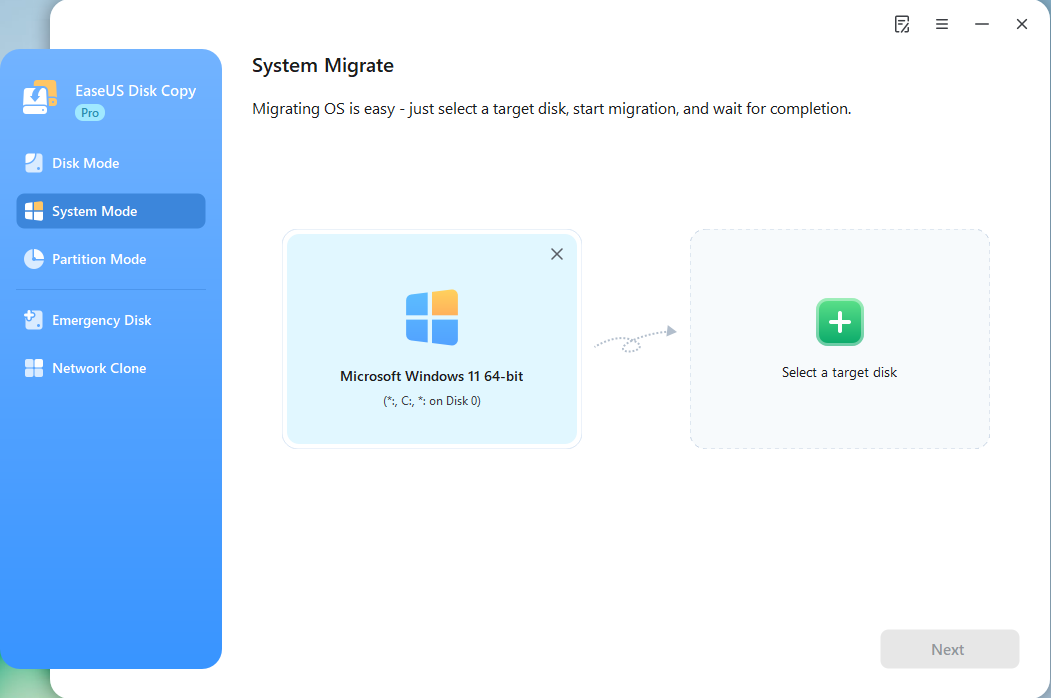
- Install EaseUS Disk Copy, launch it, and select System Mode.
- It will select the system you use automatically, including all system-related partitions and boot sectors.
Step 3. Select Target SSD
- Choose the target SSD.
- Enable "Preview partition layout" for advanced cloning features.
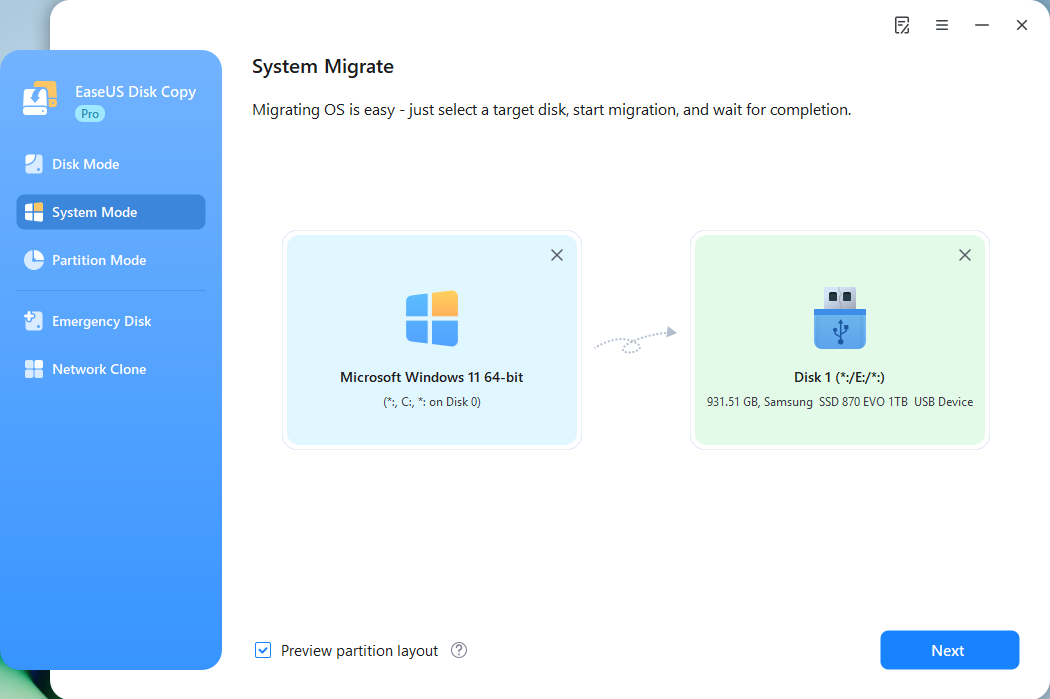
Note: Adjust disk layout if necessary.
- If your new SSD is larger, you can select "Auto-fit the disk" to make good use of the bigger space.
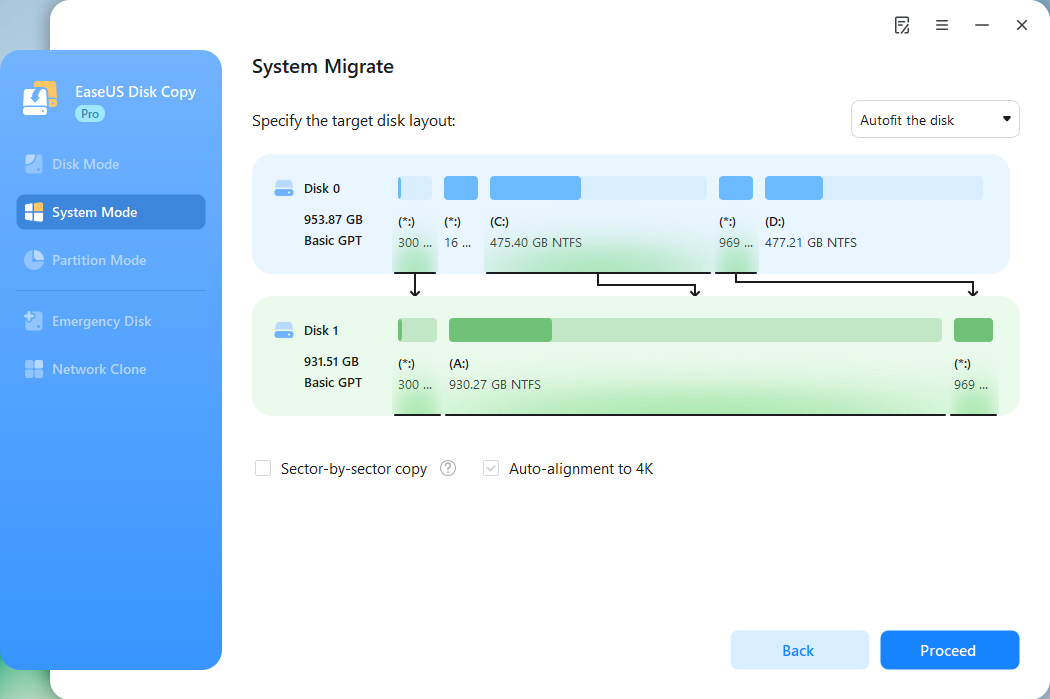
Step 4. Start Cloning OS
- Click Proceed to install Windows on new SSD without USB and wait for the OS migration process to complete.
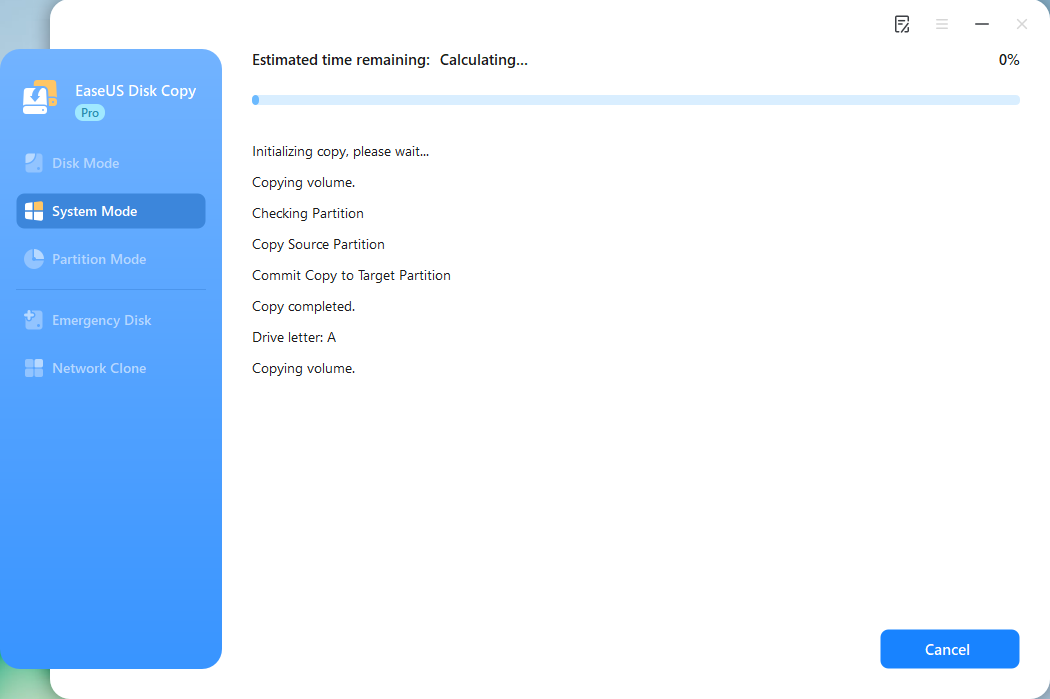
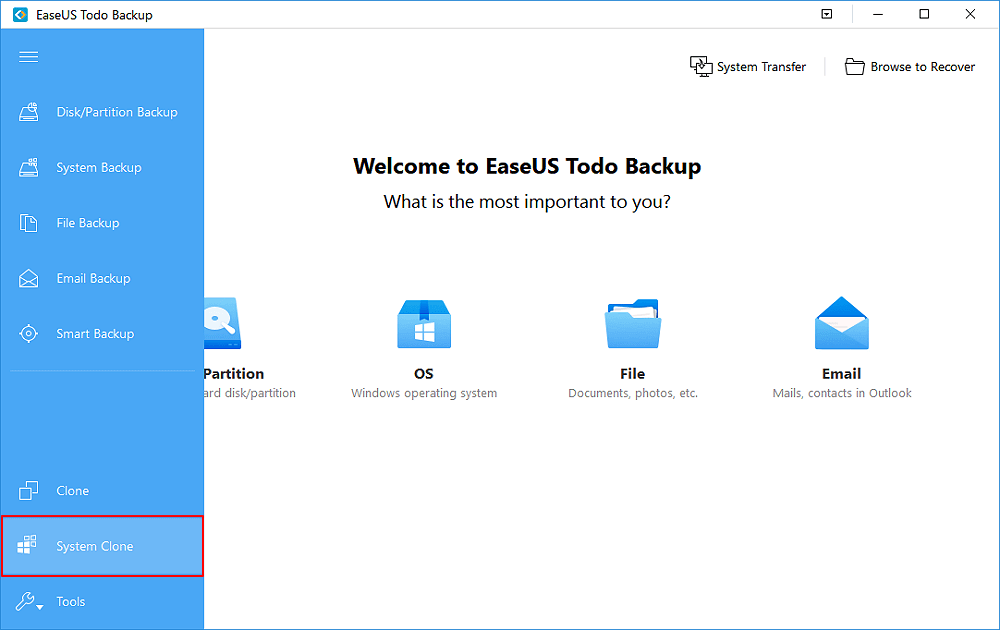
Besides, if you want to install Windows on a dissimilar computer using an SSD instead of a USB, you can use EaseUS Todo Backup as universal restore software to help you install Windows on dissimilar hardware.
This video demonstrates how to install Windows 11 without a USB drive using EaseUS Disk Copy:
Method 2. Clean Install Windows Without USB Using ISO File
Apply to: Reinstall Windows from scratch and get a new Windows environment; need to reinstall everything and possible data loss risks
To install Windows without bootable USB, you can use an ISO file and mount it to perform the installation. This method allows you to perform a clean install or upgrade from an existing Windows installation. By using ISO, you do not need a bootable USB drive or Media Creation Tool to install Windows 11 on a computer running Windows 10. You can mount the ISO file in File Explorer and run the upgrade setup.
The following are the instructions on how to install Windows from ISO without USB:
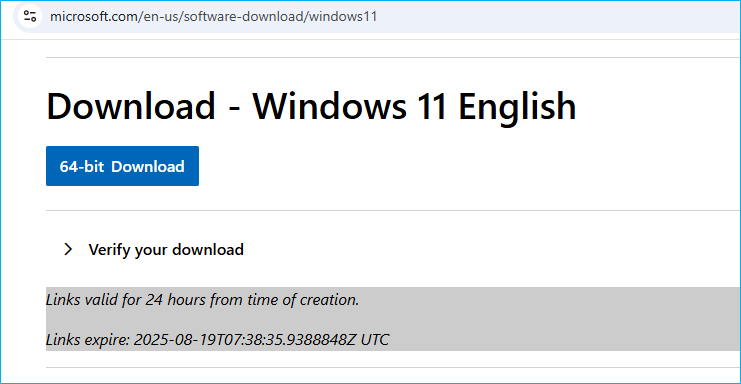
Step 1. Download the Windows 11 ISO:
- Go to the official Microsoft website and download the Windows 11 ISO file.
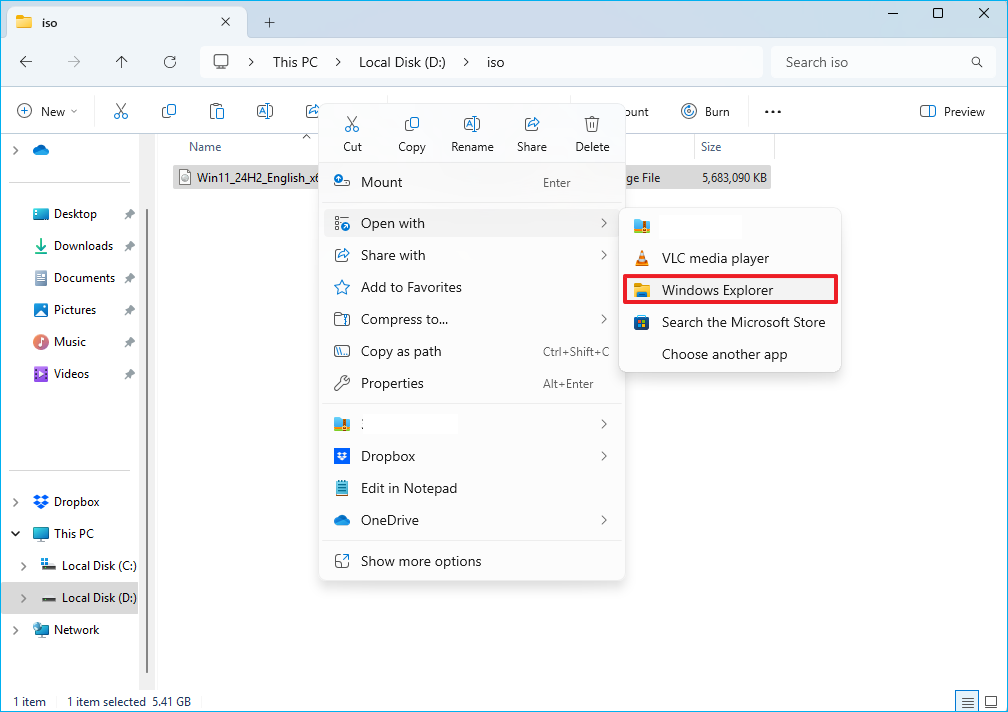
Step 2. Mount the ISO:
- Locate the downloaded ISO file.
- Right-click on the ISO file and select "Mount" (alternatively, "Open with" > "Windows Explorer").
- This will create a virtual drive containing the Windows 11 installation files.
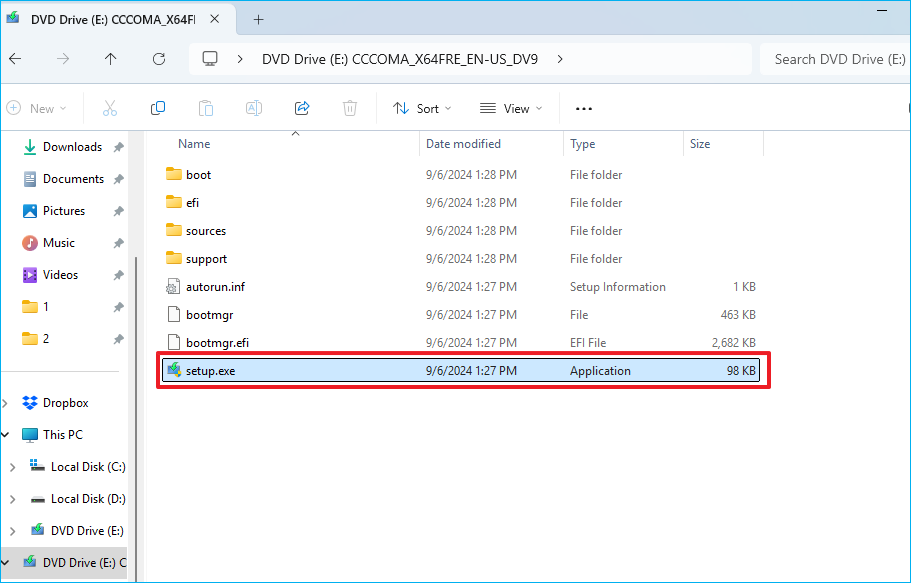
Step 3. Run the Installer:
- Open the virtual drive created in the previous step.
- Double-click on the setup.exe file to launch the Windows 11 installer.
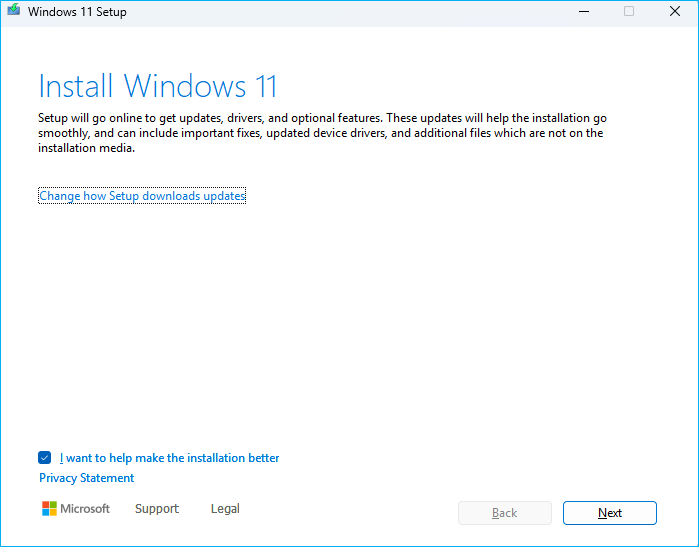
Step 4. Choose "Custom" Installation:
- Click Change how Windows Setup downloads updates.
- When prompted, select "Custom: Install Windows only (advanced)".
- This option allows you to delete existing partitions and perform a clean install.
Step 5. Select the Installation Drive:
- Choose the drive where you want to install Windows 11.
- Be extremely careful not to delete the partition containing the ISO files.
Step 6. Follow the Prompts:
- The installer will guide you through the rest of the installation process.
- This may involve multiple restarts and can take some time.
Step 7. Post-Installation:
- After the installation is complete, you can delete the partition containing the ISO files if desired.
- You may also need to adjust partition sizes to optimize your storage.
- Notice:
- If you want to install Windows 11 completely from scratch, select the Nothing option under Change what to keep, click the Next button, and then click the Install button.
After completing these instructions, the computer will restart multiple times as the updating process starts. After installation, you might need to complete Windows 11 configuration by going through the out-of-box experience (OOBE).
If you find the post practical, share it with your friends and fans to help them install Windows without a USB drive.
Method 3. Reinstall Windows 11 Using Reset This PC
Apply to: fix system issues
If your system is already running Windows 10 or Windows 11, the built-in Reset this PC feature allows you to reinstall Windows 11 without using a USB drive or ISO file manually. Reset this PC is a built-in recovery feature that reinstalls Windows automatically, optionally keeps your personal files, and removes apps, drivers, and system changes, all without requiring external media (USB/DVD).
This method is one of the easiest and safest ways to reinstall Windows, especially if your system is slow, corrupted, or experiencing errors. Here is how to reinstall Windows without USB via Windows Reset.
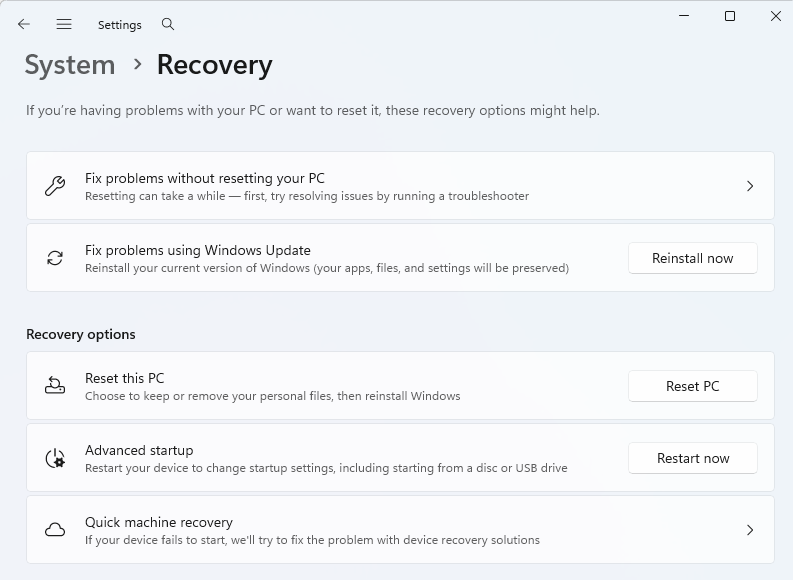
Step 1. Press Windows + I to open Settings.
Step 2. Go to System > Recovery.
Step 3. Under Recovery options, click Reset PC.
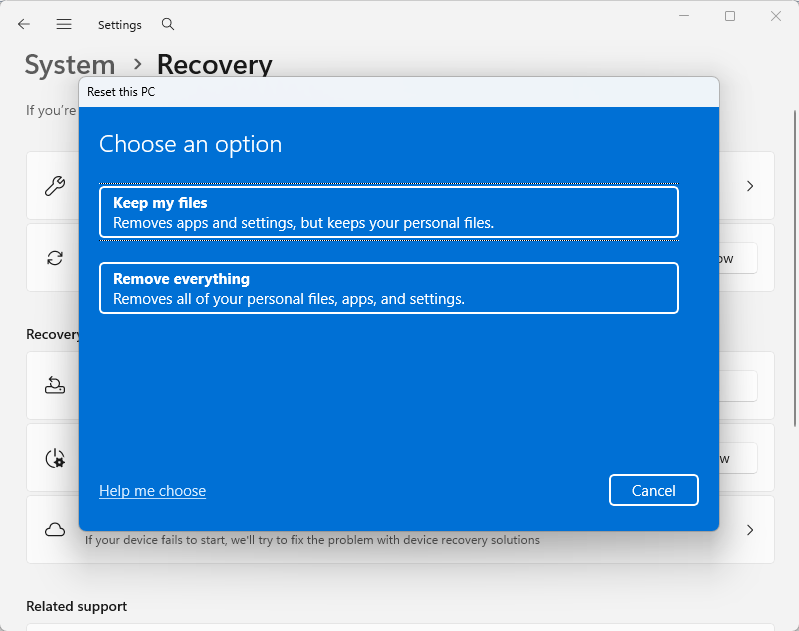
Step 4. Choose one of the following options:
- Keep my files → Removes apps/settings but keeps personal files
- Remove everything → Performs a full clean reinstall
Step 5. Choose how to reinstall Windows:
- Cloud download (Recommended)-Downloads the latest Windows 11 version (~4GB)
- Local reinstall-Uses existing system files
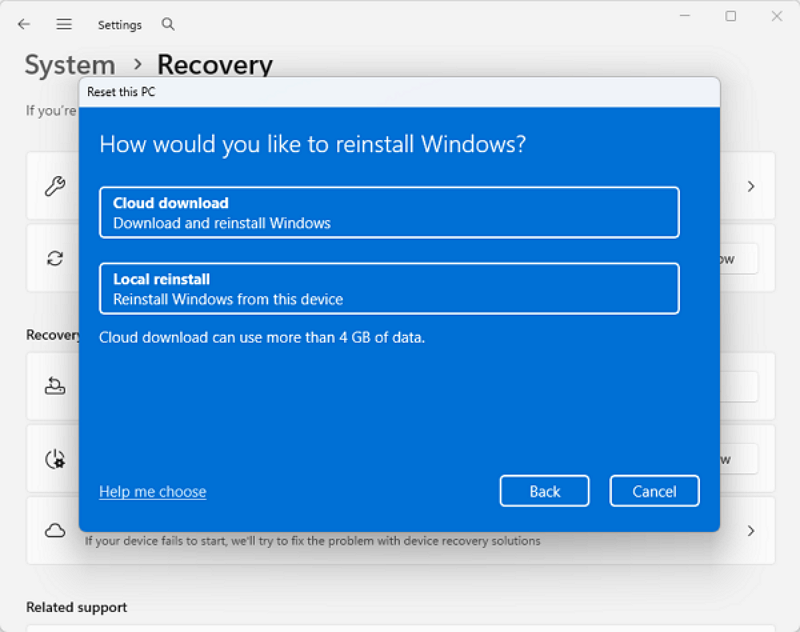
Step 6. Click Next > Reset and wait for the process to complete.
If you find the post practical, share it with your friends and fans to help them install Windows without a USB drive.
Common Issues on Windows Installation Without USB
The following are some common issues you might encounter during the Windows installation no USB required.
Issue 1: Cloning Fails with "Insufficient Space" Error
Symptoms:
- "Target disk too small" warning despite adequate space
Solutions:
1. Clean source drive:
- Run Disk Cleanup > Delete files (temp files)
- Uninstall unused apps (>4GB) before cloning.
2. Enable sector-by-sector cloning in EaseUS:
- Check "Sector-by-sector clone" to ignore partition size errors.
Issue 2: PC Won't Boot from SSD After Cloning
Symptoms:
- "No boot device found" or boot loop
- BIOS detects SSD but fails to load Windows
Fix:
- Update BIOS/UEFI: Enable "AHCI mode" (not IDE/Raid).
- Reconfigure boot order: In BIOS, prioritize "Windows Boot Manager" over physical disks.
Issue 3: Driver Conflicts on New SSD
Symptoms:
- Blue Screen (BSOD) after boot
- Missing storage/NVMe drivers
Solutions:
- Inject drivers pre-install: Download OEM chipset/NVMe drivers → Integrate into Windows ISO using DISM++.
- Safe Mode driver removal: Boot Safe Mode > devmgmt.msc > Uninstall "Storage Controllers" > Reboot.
- Use universal drivers: Install standard "Microsoft NVMe Controller" driver via Device Manager.
Issue 4: Windows Activation Fails After Installation
Symptoms:
- "Windows is not activated" despite valid license
- Error 0x803fa067
Fix:
1. Verify Product Key and Internet Connection:
- Ensure you're using the correct product key for the installed Windows version.
2. Troubleshoot Activation:
- Open Settings > Update & Security > Activation.
- Click "Troubleshoot" to run the Activation Troubleshooter.
- Follow the on-screen instructions.
3. Reactivating After Hardware Changes:
If you've made significant hardware changes (e.g., motherboard), you might need to reactivate using your Microsoft account's digital license: Settings > Update & Security > Activation > "Troubleshoot" > "I changed hardware".
To Wrap Things Up
This is all about how to install Windows on new SSD without USB. You can select any method this article offers as you like. But considering time, reliability, flexibility, and operability, we suggest you use EaseUS Disk Copy to install Windows on a new SSD without a USB.
EaseUS Disk Copy is an easy-to-use and practical cloning software that can help you clone a hard drive or migrate Windows to another drive without reinstalling everything or losing data. Download EaseUS Disk Copy for 3-click OS migration!
Free Download
Windows 11/10/8/7
FAQs on How to Install Windows Without USB
Below are some frequently asked questions about how to install Windows on another drive without USB:
1. How to install Windows if PC cannot boot?
If your PC cannot boot, you can use recovery partitions, network (PXE) boot, or temporarily connect the drive to another working PC to install or clone Windows without needing a USB drive
2. What software helps install Windows without USB?
EaseUS Disk Copy can help you install Windows without a USB flash drive or CD. Its system clone feature can let you directly migrate your Windows and saved data to another drive. All you need is to use an adapter or hard drive enclosure to connect the new drive to your computer and then run disk cloning software. After cloning, you can replace the old disk with the new one and boot from it.
3. Can I install Windows without USB or CD?
Yes, you can install Windows without USB or CD by using methods like cloning your existing system, mounting an ISO file within Windows, or using built-in reset/recovery options, depending on whether your system is still accessible.
4. Is cloning better than reinstalling Windows?
Cloning is faster and keeps all your data, apps, and settings intact, while reinstalling Windows provides a clean system. The better option depends on whether you prefer convenience or a fresh start.
5. What's the easiest way to install Windows without USB?
Cloning can be the easiest way to install Windows on a new drive without a USB: choose a reliable cloning tool, connect the new drive to your PC via the USB to SATA cable or external drive enclosure, run the cloning software to migrate Windows to the new drive, replace the drive, and boot from the new drive.
6. Do I need BIOS access to install Windows without USB?
In most cases, BIOS access is not required if installing Windows from within an existing system. However, it may be necessary for advanced methods like changing boot order or enabling network boot options.
-
Updated by
![]()
Jerry
"I hope my articles can help solve your technical problems. If you are interested in other articles, you can check the articles at the bottom of this page, and you can also check my Facebook to get additional help."…Read full bio