



-
![]() Fix Excel 2016 Opens and Closes Immediately [4 Ways]
Fix Excel 2016 Opens and Closes Immediately [4 Ways] October 14,2026
 6 min read
 -
![]() 4 Methods | How to Convert RAW to FAT32 for Micro SD Card/USBOctober 14,20266 min read
4 Methods | How to Convert RAW to FAT32 for Micro SD Card/USBOctober 14,20266 min read -
![]()
-
![]()
-
![]() Hard Drive Not Showing Files Though They Still ExistOctober 14,20266 min read
Hard Drive Not Showing Files Though They Still ExistOctober 14,20266 min read -
![]() Can VLC Repair MP4? Look How to Repair Corrupted MP4 Video Files Using VLCOctober 14,20266 min read
Can VLC Repair MP4? Look How to Repair Corrupted MP4 Video Files Using VLCOctober 14,20266 min read -
![]() It Takes Two Lost Save File, How to Recover Lost Progress? [2026 Tips]October 14,20266 min read
It Takes Two Lost Save File, How to Recover Lost Progress? [2026 Tips]October 14,20266 min read -
![]() What Is Easy Recovery and How to Download It? Full Guide HereOctober 14,20266 min read
What Is Easy Recovery and How to Download It? Full Guide HereOctober 14,20266 min read -
![]() Fix the Pink Screen of Death Error on Windows 10/11October 14,20266 min read
Fix the Pink Screen of Death Error on Windows 10/11October 14,20266 min read -
![]() Fix The Type of the File System Is RAW Now with 3 StepsOctober 14,20266 min read
Fix The Type of the File System Is RAW Now with 3 StepsOctober 14,20266 min read
Page Table of Contents
If your Toshiba external hard drive is not working or not showing up on Windows 11/10 or macOS, use this rapid multi-system troubleshooting matrix to safely locate the issue.
- Check System Visibility
- Isolate Connection Faults.not showing up on Windows 11/10 or macOS, use this rapid multi-system troubleshooting matrix to safely locate the issue
- Fix Software Conflicts
⚠️ Data Safety Warning: If the drive is Detected But Not Accessible (RAW/Unallocated space), DO NOT format it yet. Run a data recovery scan to retrieve your critical data first before executing any repair commands.
PAGE CONTENT:
- 1. Toshiba Hard Drive Not Working Symptom Matrix
- 2. Fix 1: How to Fix Toshiba Drive [Detectable But Inaccessible / RAW]
- 3. Fix 2: Files on Toshiba External Hard Drive Not Showing Up
- 4. Fix 3: Toshiba Hard Drive Not Showing Up at All (Hardware & Connection)
- 5. Fix 4: Showing Up In Disk Management But Not in This PC Explorer
- 6. Fix 5: Toshiba External Hard Drive Light Blinking But Not Working
- 7. Advanced Multi-Step Troubleshooting (Power, Safe Mode, CMD)
Toshiba Hard Drive Not Working: First Response & Symptom Matrix
"Hi there, do you know how to make an external hard drive show up on a PC when it fails to be detected? I have a 1TB Toshiba external hard drive with almost 500GB of important files saved on it. It suddenly disappeared from my PC, but the indicator light of the drive is still constantly blinking. What's going on with my drive? How can I fix this issue without destroying my files?"
An external storage device failing to appear or function correctly is a widespread issue across all user platforms. To help you fix your problematic device quickly without risking permanent file corruption, the first and most critical step is to check your drive's live status in your operating system's built-in toolset:
- For Windows 11/10 Users: Connect your drive, right-click the Start menu, and navigate to Disk Management.
- For Mac Users: Connect your drive, open Finder, head to Applications > Utilities, and launch Disk Utility.
Based on what you observe inside Disk Management or your local system explorer, your drive will typically fall under one of the five diagnostic scenarios below. Please inspect this comprehensive symptom matrix before attempting any severe manual operations:
| Toshiba HDD Situations | Underlying Causes | Editor's Security Advice | Difficulty Level |
| MBR corruption, RAW File System, I/O device error, logical bad sectors. | CRITICAL: Extract and rescue data using specialized software before formatting the disk. | ⭐⭐ | |
| Files and folders are hidden by configuration or system malware attributes. | Safe to adjust folder configurations or use terminal parameters to show data. | ⭐ | |
| Severe cable connection failure, USB controller glitch, or internal physical damage. | Isolate ports and switch USB cables. If clicking noises persist, halt all power inputs immediately. | ⭐⭐⭐ | |
| Outdated/corrupted storage device drivers, drive letter allocation conflicts. | Completely safe to fix by changing drive letters or reinstalling driver stacks. | ⭐⭐ | |
| Corrupted logical partitions, lack of adequate USB power supply, hardware physical defects. | Check power parameters. If structural repair fails, forward to advanced laboratory services. | ⭐⭐⭐⭐ |
Fix 1. How to Fix Toshiba External Hard Drive Not Working [Detectable But Inaccessible]
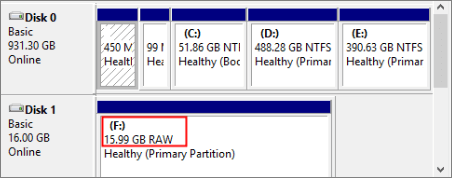
When looking in Disk Management, you might find that your Toshiba external hard drive displays a status like "Not Initialized" or "No Media," shows a RAW file system, or shows its entire storage partition as unallocated space. All of these technical states render your device completely inaccessible to Windows File Explorer.
⚠️ Crucial Data Safety Warning: Recover Your Files First
If your Toshiba drive contains invaluable business files, family media, or backups, do not format the device immediately. Re-allocating file systems will erase your indexing records, making complete data recovery far more difficult. The safest technical route is to extract your files using data recovery software while the drive's physical layer is still detectable, then format it back into a usable state.
Method 1. Recover Data from Toshiba External Hard Drive and Format It
You can seamlessly utilize EaseUS Data Recovery Wizard to scan and extract files from your raw, corrupted, or inaccessible Toshiba external hard drive. Download and install the application safely via the link below to protect your files:
3 Quick Steps to Perform RAW Drive Recovery:
Step 1. Connect your Toshiba hard drive, run EaseUS Data Recovery Wizard, hover over the target disk partition, and click "Scan".
Step 2. Allow the scanning engine to complete its Deep Scan process to reconstruct your original file trees. Use the built-in search box or filter tab to locate specific images, document directories, or multimedia projects.
Step 3. Check the boxes next to the items you wish to save, click "Recover", and choose a new location (such as your local PC disk or another secure cloud drive) to save the extracted files.
Share this life-saving data recovery asset with your network to help other Toshiba users protect their drives from accidental loss!
How to Safely Format Your Toshiba Hard Disk:
Once your critical files are secured in another storage device, you can clear out partition system logic errors by reformatting the drive:
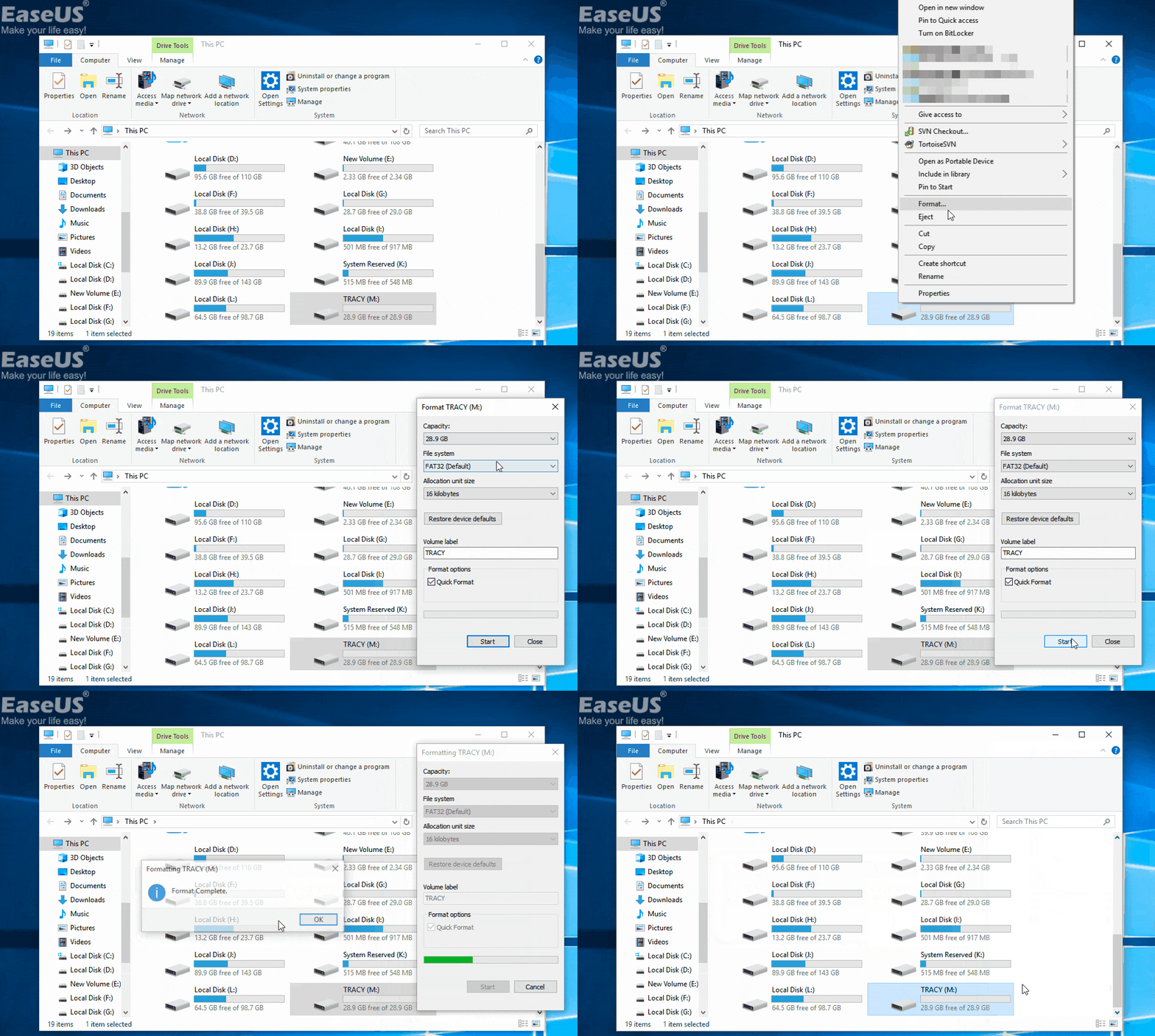
- Open This PC, locate the raw or inaccessible Toshiba volume under your devices directory, right-click it, and choose "Format...".
- Set your preferred File System (Select NTFS for Windows-only ecosystems, or exFAT for full cross-compatibility between Windows 11/10 and macOS).
- Check the "Quick Format" box option and click "Start". Click "OK" when the file warning prompt appears to successfully reset your drive.
Method 2. Recover Data from the Toshiba Disk and Create a New Partition
If your partition structures are completely lost, your drive will display as a large block of "Unallocated Space" within Windows Disk Management. To bring this hardware space back to life, you will first need to build a new simple volume.
Before moving into the step-by-step written process below, check out this diagnostic video guide covering manual external drive repairs and structural fixes:
- Right-click the Start menu icon and choose Disk Management.
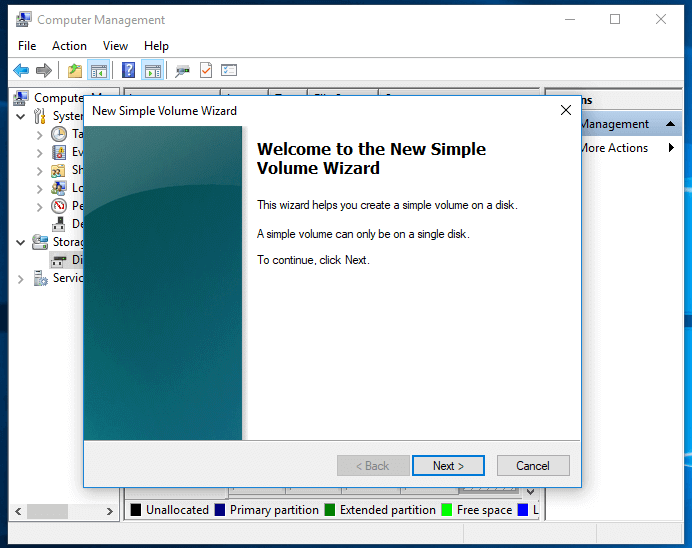
- Locate your Toshiba device showing black unallocated space, right-click the area, and choose "New Simple Volume" from the drop-down box.
- Follow the New Simple Volume wizard, assign your desired partition size boundary, choose a new distinct drive letter identifier, and complete the installation wizard structure.
Method 3. Send for EaseUS Data Recovery Services
If your Toshiba external hard drive continues to show nothing or remains unreadable after trying these software steps, or emits ticking or clicking sounds, it likely has internal hardware or physical component damage. In this scenario, running data recovery applications on your own might cause further wear and tear to the drive's internal magnetic surfaces. We highly recommend sending your drive out for expert manual data recovery services.
Consult with EaseUS data recovery experts for one-on-one manual recovery service. We could offer the following services after a FREE diagnosis
- Repair corrupted RAID structure, unbootable Windows OS, and corrupted virtual disk files
- Recover/repair lost partitions and re-partitioned drives
- Unformat hard drives and repair RAW drives(BitLocker-encrypted drives)
- Fix disks that become GPT-protected partitions
Fix 2. Files on Toshiba External Hard Drive Not Showing Up
Sometimes, your Toshiba external storage system is fully accessible, but when you click inside, it displays a message saying "This folder is empty," even though the drive's properties window shows hundreds of gigabytes of used space. This is usually caused by Windows file attribute modifications, system permission limits, or common malware hiding your directories.
To safely re-reveal your hidden data directories without deleting anything, you can use our detailed guide on pen drive not showing data or files to change file visibility settings. Additionally, if you run into wider drive visibility issues on a Windows environment, check out our related guide below:

How to Fix Hard Drive Not Showing Up in Windows
Are your hard drives, be it new or old, internal or external, not showing up in File Explorer or Disk Management? Follow to learn how to make your hard drive show up again in Windows 10/8/7 without losing data.
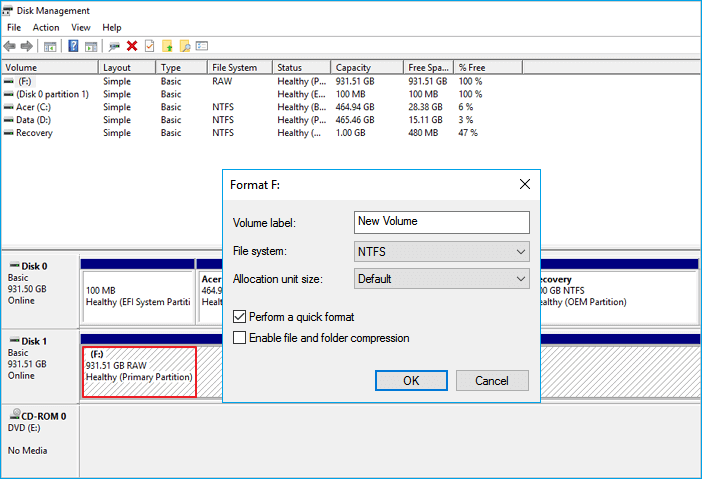
Fix 3. Toshiba External Hard Drive Not Showing Up in This PC and Disk Management
If your Toshiba external hard drive is not showing up at all inside Windows File Explorer AND is completely missing from Disk Management, the system is likely experiencing a physical connection breakdown or an outdated driver stack issue.
Method 1. Check the Physical Hard Drive Connection
Before tweaking your software settings, isolate connection issues by walking through these practical hardware validation steps:
- Connect your Toshiba external drive to alternative USB port slots on your computer (prioritize the rear USB slots directly attached to the desktop motherboard over weaker front-panel ports).
- Ensure you are using the original Toshiba connecting wire whenever possible to preserve optimal power delivery.
- Try a brand-new, verified replacement USB cable to rule out internal wire breaks or pin degradation.
- Plug your Toshiba external storage system into a completely different computer running a compatible OS to isolate computer-specific controller faults.
Method 2. Update the Toshiba External Hard Drive Driver
An outdated, corrupted, or incompatible device driver can block your operating system from registering an external hard drive correctly. Since your drive is entirely missing from Device Manager's normal tree view when this glitch happens, you can manually update its driver package:
- Open an internet browser window and head to the official Toshiba support download registry site.
- Input your specific drive model number or enter your hardware serial key located on the drive's bottom sticker panel.
- Download the latest matching device driver pack installer tailored for your specific operating system (such as Windows 11 64-bit).
- Run the installer package as an administrator on your PC, restart your computer, and test your drive's visibility.
If this driver refresh solves your Toshiba hard drive detection issue, feel free to share these steps on your social platforms to help other users fix their drives!
Fix 4. Toshiba External Hard Drive Shows Up In Disk Management But Not in This PC
When an external storage volume is clearly visible and healthy within Disk Management but won't show up in File Explorer, it's often due to a simple drive letter conflict. This happens when the operating system tries to assign a letter that is already taken by a local network drive or an internal partition.
Method 1. Update Drivers via Device Manager
If your device is registered by the system layer but hidden from Explorer, you can perform an automated driver refresh:
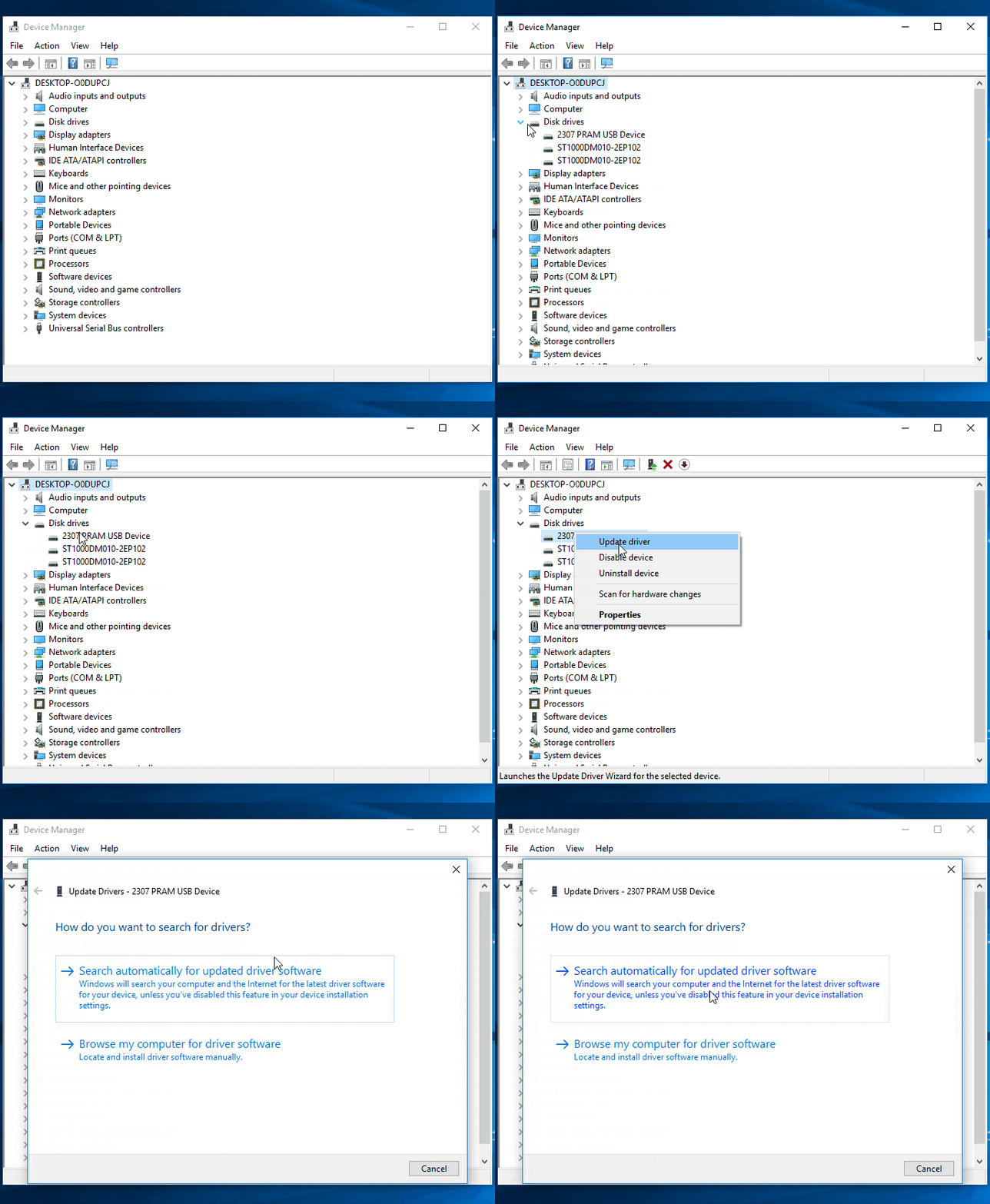
- Right-click the Windows Start icon, select Device Manager, and expand the Disk drives selection group.
- Locate your target Toshiba external USB drive item, right-click it, and choose "Update driver".
- Select "Search automatically for drivers" from the pop-up box window option.
- Let the automated system pull down the latest driver update from Windows Update servers, restart your system, and verify visibility.
Method 2. Manually Change the Drive Letter Path
- Open Disk Management via the Win + X power menu shortcut selection.
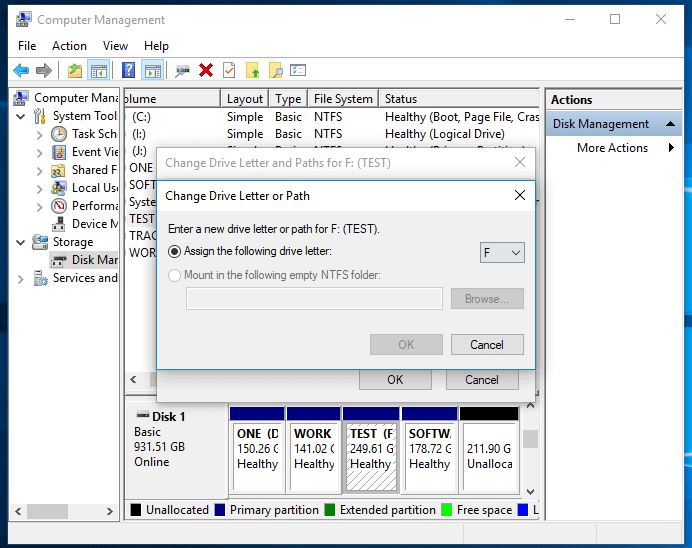
- Right-click the primary healthy partition block belonging to your connected Toshiba external drive, then select "Change Drive Letter and Paths...".
- Click the "Change..." action box button in the configuration module window.
- Assign a brand-new, unused drive letter identifier near the end of the alphabet (such as M, X, or Z) from the drop-down menu, click "OK", and confirm the change.
Fix 5. Toshiba External Hard Drive Light Blinking But Not Working
This is an incredibly common issue that affects users across all major hardware brands, including Toshiba, Seagate, and Samsung. When the indicator light is blinking but the drive isn't responding, the device's internal components are receiving power, but the operating system cannot read its logical partition structures or file systems due to corruption.
The core troubleshooting techniques for a blinking but unresponsive Toshiba drive match the steps used to solve similar issues with other popular drives. For a deeper look into this problem, check out our comprehensive guide below:

Fix Seagate External Hard Drive Light Blinking But Not Working
This article offers 3 quick fixes and 3 effective methods to help you repair not working Seagate external hard drive. Read more >>
Toshiba External Hard Drive Not Working [Advanced System Fixes]
If your Toshiba external drive is still acting up after trying the standard methods, the issue might stem from deeper OS power restrictions, system driver conflicts, or logical bad sectors. Try these four advanced system troubleshooting steps:
| Workable Advanced Solutions | Step-by-step Troubleshooting Path |
|---|---|
| Fix 1. Check Root USB Power Management Settings | Adjust Device Manager USB controller hub power properties to prevent drive shutdown glitches. |
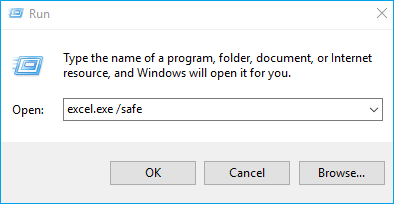
| Fix 2. Reboot Windows OS to Isolated Safe Mode | Boot your PC into Safe Mode using Advanced Startup options to check for third-party driver blocks. |
| Fix 3. Use an Automated File System Check Tool | Run file system check utilities to scan and repair logical partition corruption automatically. |
| Fix 4. Execute the CHKDSK Core Command Prompt | Run targeted Command Prompt strings to isolate bad sectors and repair partition tables. |
Fix 1. Check Power Management for Root USB Hubs
Windows sometimes turns off power to external USB ports to save electricity, which can inadvertently cause your external hard drive to disconnect or stop responding:
- Press Win + R, type devmgmt.msc into the box tool, and hit Enter to launch Device Manager.
- Expand the Universal Serial Bus controllers category list at the bottom.
- Right-click your primary USB Root Hub item and choose "Properties".
- Navigate to the Power Management tab option, uncheck the box labeled "Allow the computer to turn off this device to save power", click "OK", and save your settings.
Fix 2. Reboot PC into Isolated Safe Mode
Booting into Safe Mode loads Windows with a minimal set of drivers. This helps you figure out if a third-party application, security suite, or custom driver is blocking your Toshiba drive:
- Open Windows Settings and head over to Update & security (or System > Recovery on Windows 11).
- Click the Recovery tab layout, locate Advanced startup, and click the "Restart now" button.
- When your PC reboots to the blue options screen, navigate through Troubleshoot > Advanced options > Startup Settings, and click Restart. Press F4 to boot your PC into Safe Mode.
- Once in Safe Mode, check if your Toshiba external hard drive is visible or accessible in File Explorer.
Fix 3. Fix Toshiba Errors via Automated File System Check Utilities
You can quickly fix underlying partition table logic glitches using automated software utilities:
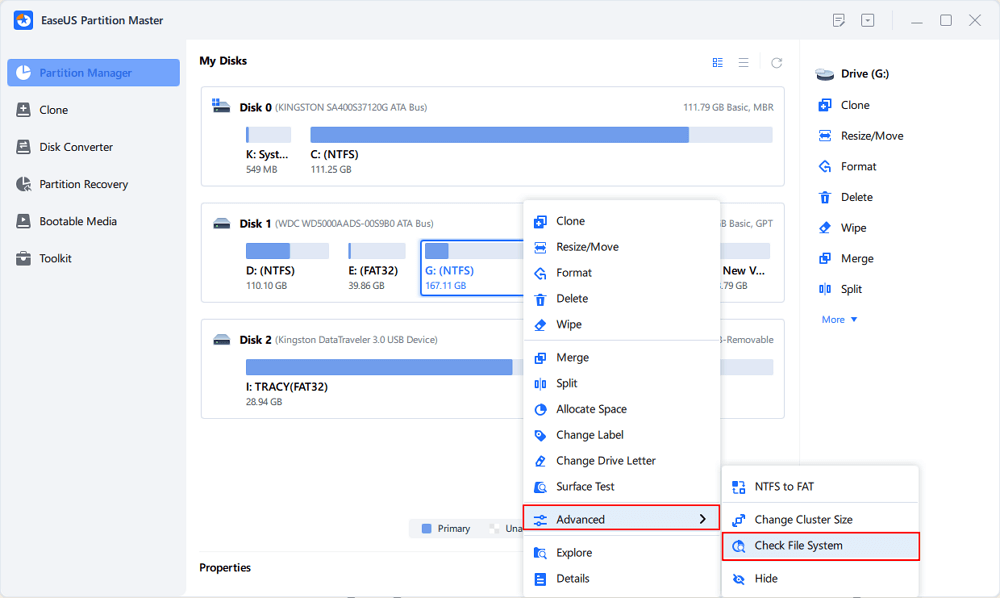
- Download and run the free version of your chosen partition manager utility.
- Right-click the target partition block on your connected Toshiba external hard drive and select "Check File System".
- Click "Start" to let the application scan, verify, and automatically repair file system discrepancies.
Fix 4. Fix Drive Inaccessibility via Command Prompt (CHKDSK)
- Warning: Perform Data Recovery Ahead of Time
- Running the chkdsk /f command forces the operating system to rewrite file allocation tables. If the drive contains bad sectors, this can result in permanent data loss. Always rescue and extract your files using EaseUS Data Recovery Wizard before running terminal commands.
- Type cmd into your Windows search box, right-click Command Prompt, and select "Run as administrator".
- Type the command string: chkdsk /f X: (Swap out the letter "X" with the exact drive letter assigned to your connected Toshiba external drive) and hit Enter.
- Wait for the disk checking utility to finish processing, then type exit and hit Enter to close the terminal window.
Toshiba External Hard Drive Not Working FAQs
1. Why is my Toshiba external hard drive light blinking but not working on Windows 11?
This typically indicates that your drive is receiving power, but its underlying file system or partition structures are corrupted, making it unreadable to the OS. It can also happen if your PC's USB port isn't delivering enough power, or if the drive has internal mechanical damage. Check your drive's status in Disk Management to see if it shows up as RAW or Unallocated Space.
2. Is there a way to fix a Toshiba external hard drive that is detected but not accessible?
Yes. If your drive shows up in Disk Management but remains inaccessible (often appearing as a RAW file system), you can restore access by reformatting it. However, because formatting erases your data, you should always run a scan with data recovery software like EaseUS Data Recovery Wizard to retrieve your important files before formatting the drive.
3. What causes a Toshiba external hard drive to stop working all of a sudden?
The most frequent causes include: physical connection breaks (faulty USB ports or cables), power management conflicts within your operating system, an incorrect or corrupted file system format, or outdated device drivers that prevent the OS from recognizing the hardware layer correctly.
4. How do I recover data from a Toshiba external hard drive that won't show up in File Explorer?
As long as the drive is physically running and visible inside Windows Disk Management (even if it's missing from File Explorer), you can rescue your files. Launch EaseUS Data Recovery Wizard, select your Toshiba drive from the hardware list, click Scan, preview your missing files, and securely recover them to a safe location on your computer.
Was this page helpful?


 Why Trust EaseUS
 Editor Reviews

20+
Years of experience

160+
Countries and regions

72 Million+
Downloads

4.9 +
Trustpilot Score