



Content
Page Table of Contents
About the Author
Hot Topics
Old users of our website should still remember this popular post titled "hard drive shows wrong capacity" that helped so many people reclaim full capacity of an HDD, USB flash drive or SD card. As the article explained, there are mainly three reasons why your hard drive capacity shows less than the actual size, including a huge hidden recovery partition, a computer virus, and invisible unallocated space within the whole disk partition. Nevertheless, hard drive space issues are common and a major concern for many people. In today's post, we'll discuss another similar issue. Computer hard drive keeps losing space! Here's a user story.
Losing Space on My C: Drive
"I'm constantly losing space on my C: hard drive. It's for win10 with 50 GB around, and the free space decreases very rapidly without installing new programs or saving new files to it. The free space displays itself as 12.6 GB this morning, and later 8.3 GB, 6.1 GB... But this moment it's almost full with only 1.2 GB left! Why does the hard drive keep losing disk space for no reason?"
See? It doesn't make sense for the unused space on your hard drive partition to disappear at the rate of several gigabytes a day. You need to take the time to find the real reasons and apply the right solutions.
Next, we will find the reasons and solutions to fix hard drive losing space. If you like it, share with others in need.
Why Does My Hard Drive Keep Losing Space?
If your hard drive keeps losing space for no reason, Windows or installed applications may be creating files in the background. Some system files also change in size depending on how you use your computer.
Here are seven common reasons why your hard drive space keeps decreasing.
| Possible Cause | How It Uses Disk Space |
| Temporary files and system junk | Applications, browsers, and Windows create cache files and temporary data. |
| Windows updates | Update downloads, installation files, and previous Windows installations occupy storage. |
| System Restore | Restore points use disk space to save system settings and files. |
| Virtual memory and hibernation | Pagefile.sys and hiberfil.sys reserve storage for Windows functions. |
| Applications and background processes | Apps generate logs, caches, backups, and other data while running. |
| Hidden files or malware | Hidden folders, unexpected files, or malicious programs may consume storage. |
| File system errors | File system corruption can cause incorrect disk space reporting or make storage inaccessible. |
How to Fix Hard Drive Keep Losing Space
Rapid loss of hard drive free space can feel like an accident, but we can identify the causes more easily. There are several fixes to stop your hard drive from losing disk space.
Fix 1. Delete Temporary Files and Empty the Recycle Bin
Temporary files and deleted items are two common sources of unnecessary disk usage. Windows 11/10 provides Disk Cleanup to remove these files safely.
Step 1. Type Disk Cleanup into the Windows search box and open it.
Step 2. Select the drive you want to clean, usually C:, and click OK.
Step 3. Select the file categories you want to remove, such as Temporary files, Thumbnails, and Recycle Bin.
Step 4. Click Clean up system files to find additional files that can be removed.
Step 5. Review the selected items and click OK to start cleaning.
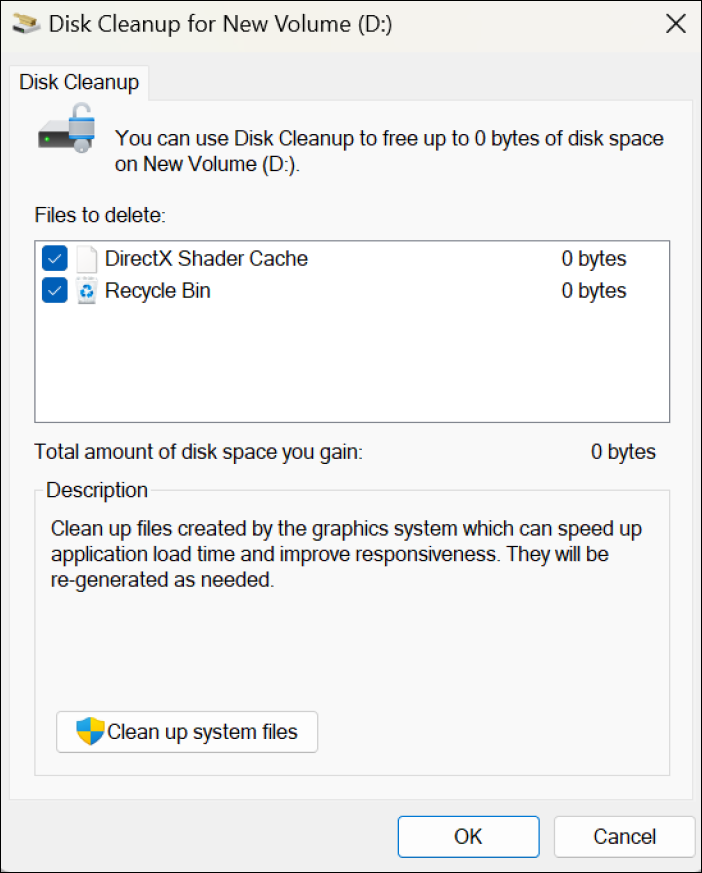
Pro tip: Be careful when selecting Downloads and Previous Windows Installation(s). Removing these files may permanently delete personal downloads or prevent you from rolling back to your previous Windows version.
Fix 2. Clean Up Windows Update Files
Windows Update may leave behind downloaded packages, temporary installation files, and previous Windows installation files.
If your C drive started losing space after an update, check these files first.
Step 1. Open Settings > System > Storage.
Step 2. Select Temporary files.
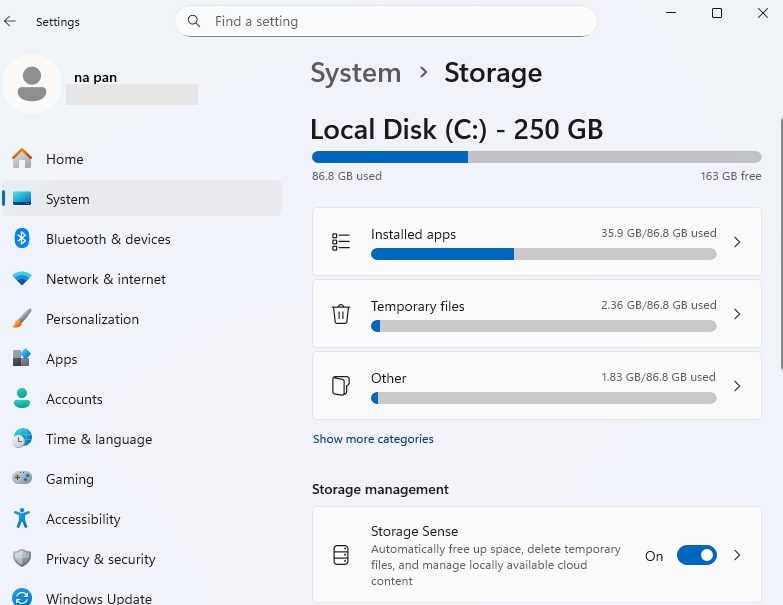
Step 3. Wait for Windows to scan the available cleanup categories.
Step 4. Check categories such as Windows Update Cleanup and Previous Windows Installation(s), if they are listed.
Step 5. Review the selected items and click Remove files.
Step 6. Restart your computer and check whether the available disk space has increased.
Pro tip: Do not manually delete files from the SoftwareDistribution folder while Windows Update is running. If the update cache keeps growing or the Temp folder fills up again shortly after cleanup, investigate Windows Update or Microsoft Store problems instead of repeatedly deleting files.
Fix 3. Reduce System Restore Disk Space Usage
System Restore might consume a lot of storage when it saves many restore points.
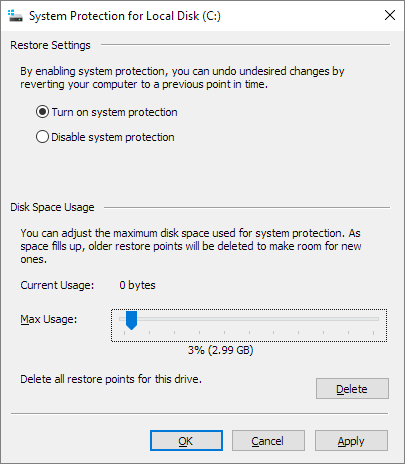
You don't necessarily need to disable System Protection. Reducing its maximum disk usage is a safer option.
Step 1. Press Windows + R, type sysdm.cpl, and press Enter.
Step 2. Open the System Protection tab.
Step 3. Select your system drive and click Configure.
Step 4. Under Disk Space Usage, move the Max Usage slider to reduce the amount of storage allocated to restore points.
Step 5. Click Apply and OK to save the changes.
Fix 4. Manage Virtual Memory and Hibernation Files
The pagefile.sys and hiberfil.sys files may occupy considerable space on your system drive. You can review their settings and disable features you do not use.
If you never use Hibernate, disabling it can remove the hibernation file and free up the space it occupies.
Step 1. Search for Command Prompt in Windows.
Step 2. Right-click it and select Run as administrator.
Step 3. Enter the following command:
- powercfg /hibernate off
Step 4. Press Enter to execute the command.
Pro tip: This also disables Fast Startup on systems where Fast Startup relies on the hibernation file. If you use Hibernate or Fast Startup, keep this feature enabled.
Fix 5. Find and Remove Unnecessary Large Files
If your hard drive keeps losing space because of large application files, old backups, or unnecessary downloads, locating and removing those files can help.
EaseUS Partition Master provides disk space management features that help users check disk usage and manage partitions. If your C drive is consistently running out of space, EaseUS Partition Master also provides partition management features. You can resize or move partitions to allocate more space to the system drive when suitable unallocated space is available.
Step 1. Download and install EaseUS Partition Master Suite.
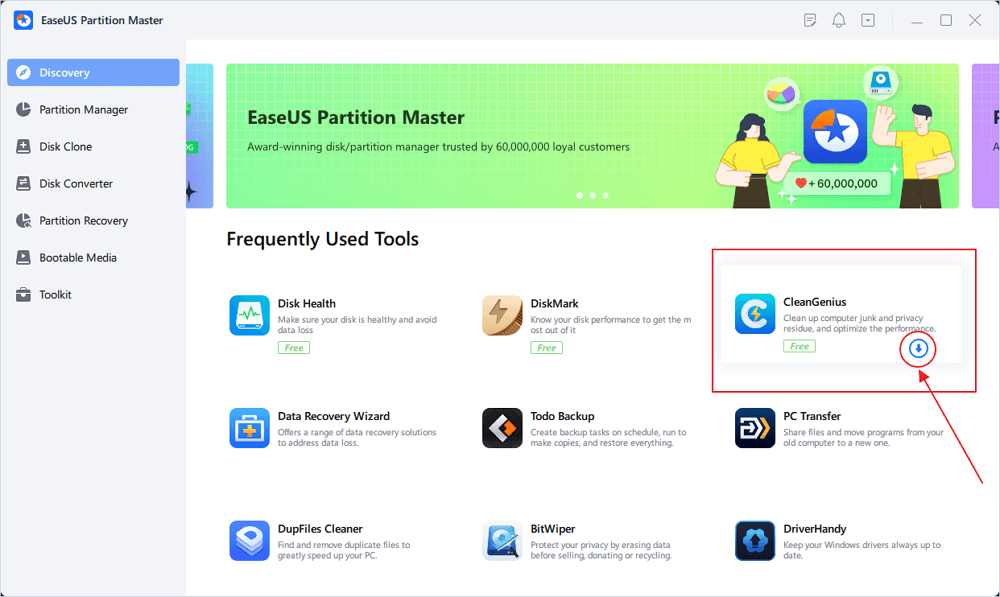
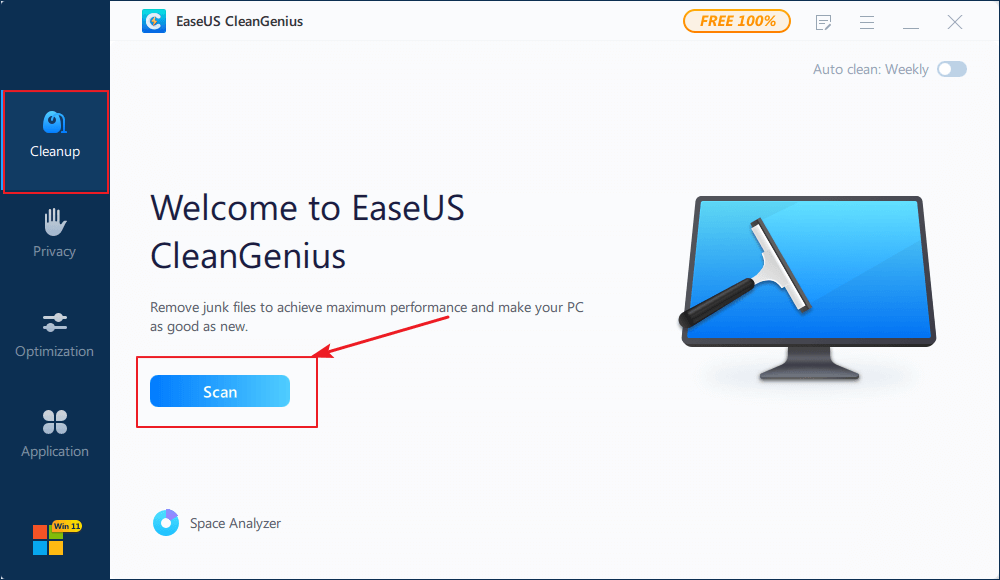
Step 2. Click PC Cleaner and install EaseUS CleanGinus. Then, click "Cleanup" and click "Scan" to start cleaning up the system and make your PC as good as new.
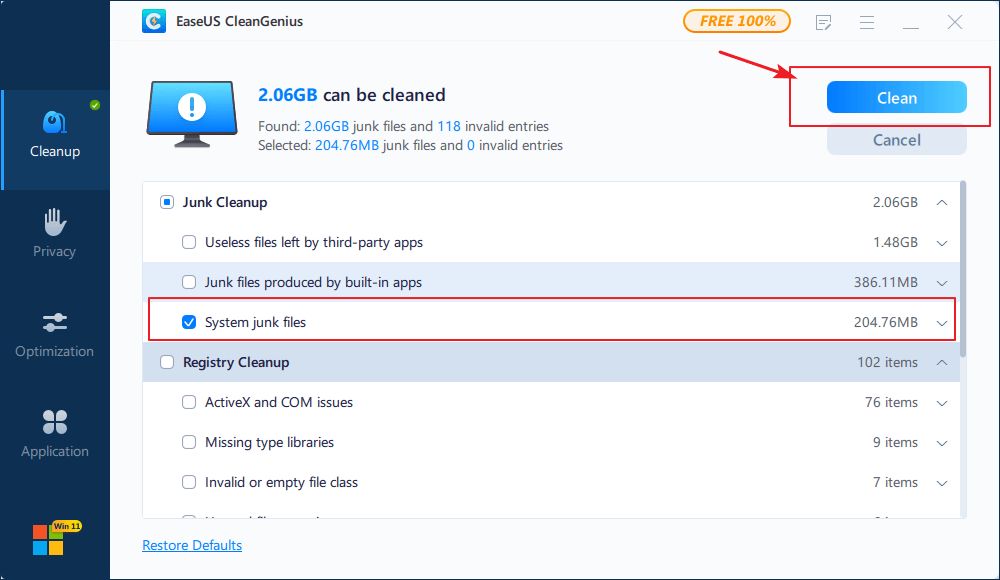
Step 3. The software will scanning all over your computer to find idle data files that take a huge amount of disk space, you can select useless large files, system junk files and Windows invalid entries and click "Clean" to start system cleanup process.
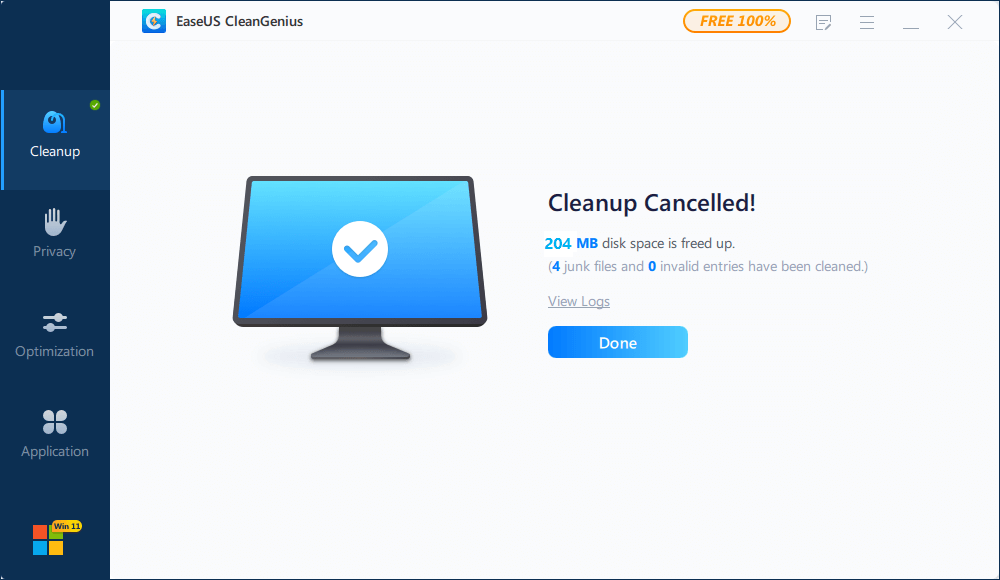
Step 4. When the scan is complete, click "Done" to finish cleaning system junk files.
Fix 6. Virus and Malware Infection
Did you install suspicious programs from unknown websites or open an unknown attachment file in an email in recent days? If yes, be alert. It's very likely that it's a virus that eats up your hard drive space!
Step 1. You can run the antivirus software on your computer to scan and remove the virus for the first attempt.
Step 2. If virus removal software doesn't work, try to use CMD to remove the virus from the hard drive.
Step 3. What's the last, most powerful way to remove a virus? Fully format the hard drive or do a system restore.
- Warning
- Hard drive formatting and system restore can somehow kill the stubborn virus, but at the same time, erase your important data. Consider backing up the data before you take the last chance to stop the hard drive from losing the free space very fast.
Fix 7. Check and Repair File System Errors
File system errors may affect how Windows tracks files and available storage. If you notice incorrect disk space reporting, inaccessible files, or repeated disk errors, check the file system. You can use EaseUS Partition Master or Windows CHKDSK.
1️⃣Option 1. Check the File System with EaseUS Partition Master
EaseUS Partition Master also provides a Check File System feature to detect and repair partition file system errors.
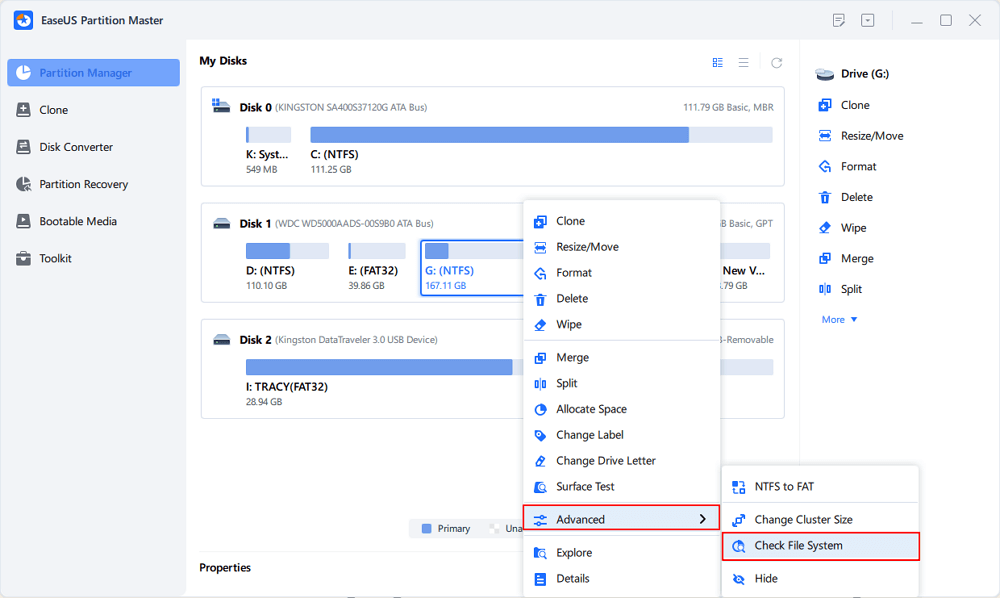
Step 1. Open EaseUS Partition Master on your computer. Then, locate the disk, right-click the partition you want to check, and choose "Advanced" > "Check File System".
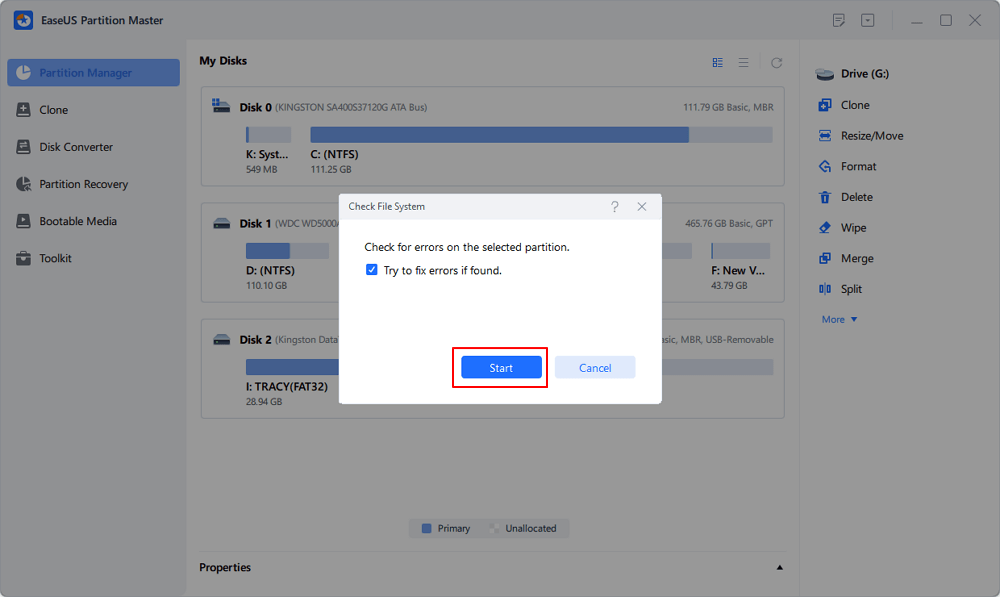
Step 2. In the Check File System window, keep the "Try to fix errors if found" option selected and click "Start".
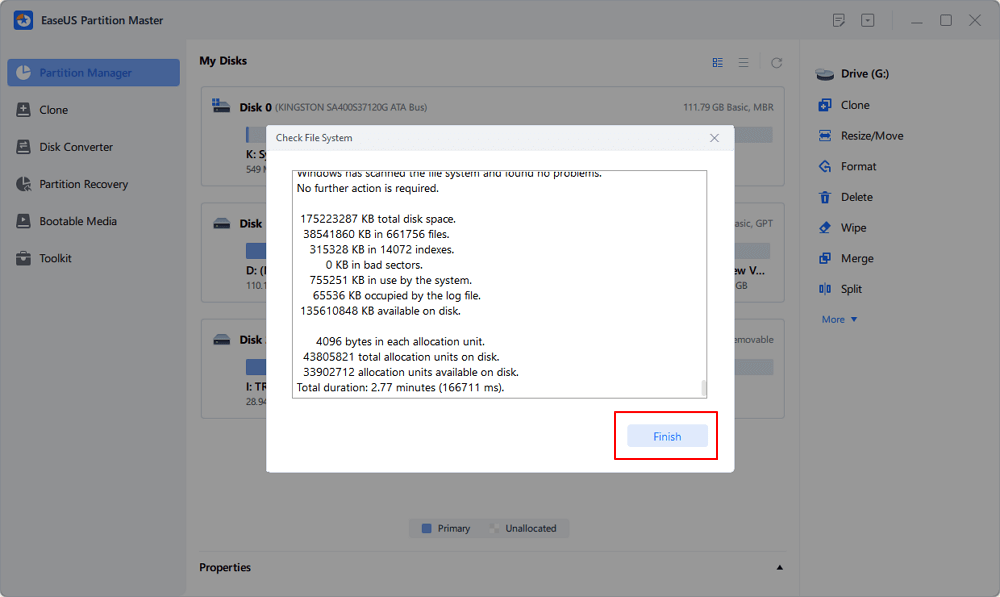
Step 3. The software will begin checking your partition file system on your disk. When it completes, click "Finish".
2️⃣Option 2. Run CHKDSK
Step 1. Search for Command Prompt, right-click it, and select Run as administrator.
Step 2. Enter the following command to scan the C: drive:
- chkdsk C: /scan
Step 3. Press Enter and wait for the scan to finish.
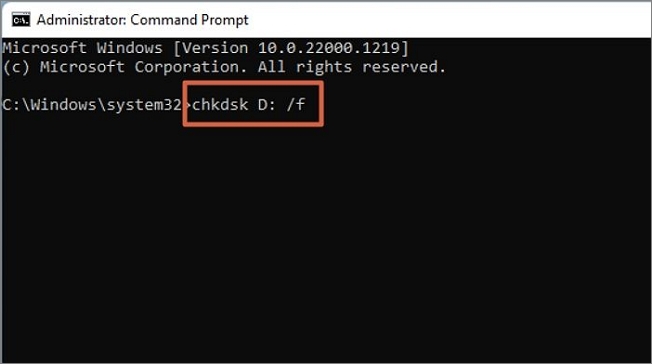
Step 4. If Windows reports errors that require repair, follow its instructions. For an offline repair, you may need to run:
- chkdsk C: /f
Step 5. If Windows asks to schedule the check at the next restart, type Y and restart your computer.
Conclusion
A hard drive that keeps losing disk space does not always indicate a hardware problem. Temporary files, Windows updates, system restore points, virtual memory, and application caches are more common reasons for decreasing free space. Start by checking Windows Storage settings to identify what is consuming the space. Then apply the appropriate cleanup or troubleshooting method instead of deleting files blindly.
If the problem continues, check for malware and file system errors. Tools such as EaseUS Partition Master can also help analyze disk usage, check partition file systems, and manage disk space.
FAQs
1. Why does my hard drive keep losing space without downloading anything?
Windows updates, temporary files, system restore points, and background applications may use disk space automatically.
2. Why does my hard drive suddenly lose several GB of space?
A Windows update, software installation, or system restore point may suddenly consume several gigabytes of storage.
3. Why does my hard drive keep losing space after restarting?
Windows startup processes and background applications may generate temporary files, caches, and logs after each restart.
4. Why does my hard drive show less free space than its actual capacity?
Hidden system partitions, reserved storage, and the difference between decimal and binary capacity calculations can explain the discrepancy.
5. Can a virus cause my hard drive to lose space?
Yes. Malware may create unwanted files or duplicate data, causing free disk space to decrease unexpectedly.
6. How do I stop Windows 11 from automatically using disk space?
Enable Storage Sense, clean temporary files, manage System Restore storage, and check applications that generate large amounts of data.
How Can We Help You
About the Author

Updated by Joey Albert
Joey is an enthusiast of science and technology. With a passion for uncovering the latest tech innovations, she creates clear, engaging how-to guides that make technology accessible and enjoyable for all.

Jean is recognized as one of the most professional writers at EaseUS. She has continually improved her writing skills over the past 10 years and has helped millions of readers solve tech problems on PC, Mac, and iOS devices.
Product Reviews
-
I love that the changes you make with EaseUS Partition Master Free aren't immediately applied to the disks. It makes it way easier to play out what will happen after you've made all the changes. I also think the overall look and feel of EaseUS Partition Master Free makes whatever you're doing with your computer's partitions easy.
Read More -
Partition Master Free can Resize, Move, Merge, Migrate, and Copy disks or partitions; convert to local, change label, defragment, check and explore partition; and much more. A premium upgrade adds free tech support and the ability to resize dynamic volumes.
Read More -
It won't hot image your drives or align them, but since it's coupled with a partition manager, it allows you do perform many tasks at once, instead of just cloning drives. You can move partitions around, resize them, defragment, and more, along with the other tools you'd expect from a cloning tool.
Read More
Related Articles
-
Fix the Selected GPT Formatted Disk Partition Not of Type
![Tracy King]() Tracy King/2026/11/24
-
Windows 11 Home VS Pro, Which Is Better? Your Tips Are Here
![Tracy King]() Tracy King/2026/11/18
-
Best PNY USB Flash Drive Format Tool Free Download👍
![Cici]() Cici/2026/11/25
-
How to Disable Write Protection on Kingston DT50 [Full Guide]
![Cici]() Cici/2026/11/18
 Tracy King/2026/11/24
 Cici/2026/11/25