





 About the Author
 Reviews and Awards
 Mac SD Card Recovery
Accidentally deleting a Mac partition or discovering that an APFS volume has suddenly disappeared can be alarming. Unlike deleting individual files, partition loss may make an entire volume, including documents, photos, videos, applications, and backups, appear inaccessible. Fortunately, a missing partition doesn't always mean the data has been permanently erased.
In many cases, your files still exist on the storage device until they're overwritten by new data. With the right Mac partition recovery software, you can often recover files from deleted, formatted, corrupted, or inaccessible partitions before permanent data loss occurs.
Whether you're using a MacBook Pro, MacBook Air, iMac, Mac mini, or Mac Studio, modern versions of macOS rely primarily on the APFS file system, while older Macs may still use HFS or HFS+. All of these file systems can experience partition-related issues caused by accidental deletion, formatting, partition table corruption, failed macOS updates, power failures, or hardware problems.
This guide compares the best free and paid Mac partition recovery software based on recovery performance, supported file systems, compatibility, ease of use, and overall value. We also explain how Mac partition recovery works, what affects recovery success, and what you should do immediately after losing a partition to maximize the chances of getting your data back.
Everything About Mac Partition Recovery
Mac partition recovery refers to recovering files from a deleted, formatted, lost, corrupted, or inaccessible partition on a Mac storage device. Instead of restoring an entire operating system, partition recovery focuses on retrieving the files stored inside the missing volume.
Professional recovery software scans the storage device sector by sector, searching for recoverable file records, partition metadata, and directory structures that remain after a partition has been deleted or damaged.
Common Mac File Systems
| File System | Introduced | Best For | Supported by Recovery Software |
|---|---|---|---|
| APFS | macOS High Sierra | SSD, encryption, snapshots | Yes |
| HFS+ | Mac OS Extended | Older Macs and HDDs | Yes |
| HFS | Classic Mac OS | Legacy systems | Limited |
| FAT32 / exFAT | Cross-platform | USB drives & SD cards | Yes |
| NTFS | Windows | External drives | Read-supported by most tools |
Today, APFS is the default file system for macOS because it delivers better SSD performance, stronger encryption, and snapshot technology. Most professional Mac recovery tools now fully support APFS recovery, including encrypted APFS volumes.
Why Does a Mac Partition Become Lost
Mac partitions can disappear for many reasons. Some are caused by user mistakes, while others result from software or hardware failures.
| Cause | Description | Recovery Difficulty |
|---|---|---|
| Accidental partition deletion | Removing a volume in Disk Utility | Easy |
| Formatting | Erasing the wrong partition | Easy |
| GPT / Partition table corruption | Partition information becomes unreadable | Medium |
| macOS installation errors | Partition overwritten during installation | Medium |
| Power failure | Interrupts write operations | Medium |
| SSD or HDD failure | Hardware issues prevent partition access | Hard |
| Virus or software corruption | Damaged file system metadata | Medium |
Can You Recover a Deleted Mac Partition
Yes. In many situations, recovering files from a deleted Mac partition is possible, especially if the partition hasn't been overwritten. When a partition is deleted, macOS usually removes only the partition information rather than immediately erasing every file stored inside it.
The highest recovery success rates occur when:
- The drive hasn't been reformatted again.
- No large files have been written after deletion.
- The SSD's TRIM process hasn't permanently erased free blocks.
- You stop using the drive immediately after discovering partition loss.
- Professional recovery software is used before attempting repairs.
- Tip
- Recover your files before rebuilding or recreating the partition. Repair utilities may overwrite recoverable metadata and reduce the overall recovery success rate.
What Should You Do Immediately After Losing a Partition
The actions you take after discovering a missing partition have a significant impact on whether your data can be recovered.
- Stop saving new files to the affected drive.
- Do not create a new partition.
- Avoid formatting the missing volume.
- Do not reinstall macOS on the affected disk.
- Disconnect external drives safely.
- If possible, create a byte-to-byte backup before scanning.
- Use reliable partition recovery software instead of random repair tools.
How We Tested the Mac Partition Recovery Software
To ensure fair recommendations, we evaluated each recovery program using identical testing scenarios, including accidentally deleted APFS volumes, formatted HFS+ partitions, corrupted external SSDs, missing USB partitions, and inaccessible SD cards.
| Criteria | Testing Result |
| Number of software tested | 11 |
| Testing duration | 4 Weeks |
| Operating systems | macOS Sequoia, Sonoma, Ventura, Monterey |
| File systems tested | APFS, HFS+, exFAT, FAT32, NTFS |
| Storage devices | Internal SSD, External HDD, USB, SD Card |
| Evaluation factors | Recovery rate, Speed, Preview, Ease of use, Compatibility, Price |
Based on our testing results, the following software provides the best balance between recovery performance, compatibility, ease of use, and value for recovering deleted or lost Mac partitions.
Top 6 Mac Partition Recovery Software [Free]
If your APFS or HFS+ partition has disappeared from Finder, don't panic. The software below can scan your storage device and recover files from deleted, formatted, or inaccessible partitions before they're permanently overwritten.
Top 1. EaseUS Data Recovery Wizard for Mac Free
Best for: Recovering deleted, formatted, lost, or inaccessible Mac partitions with an intuitive interface.
Free recovery limit: Up to 2GB
EaseUS Data Recovery Wizard for Mac Free is our top recommendation for recovering deleted Mac partitions because it combines a beginner-friendly interface with professional-level recovery technology. Whether your APFS or HFS+ partition has been accidentally deleted, formatted, corrupted, or has simply disappeared after a macOS update, the software automatically scans the entire storage device to locate recoverable files.
Unlike many free recovery utilities that require command-line knowledge, EaseUS provides a guided recovery process suitable for both beginners and experienced users. It performs both Quick Scan and Deep Scan automatically, significantly improving the chances of locating deleted files hidden inside damaged partition structures.
The software supports recovery from internal SSDs, Fusion Drives, external hard drives, USB flash drives, SD cards, CF cards, and many other storage devices commonly used with Macs.
One of its biggest advantages is its excellent support for modern Apple file systems. Besides APFS and HFS+, it also works with FAT32, exFAT, NTFS, and other popular file systems, making it useful even for external drives shared between macOS and Windows.
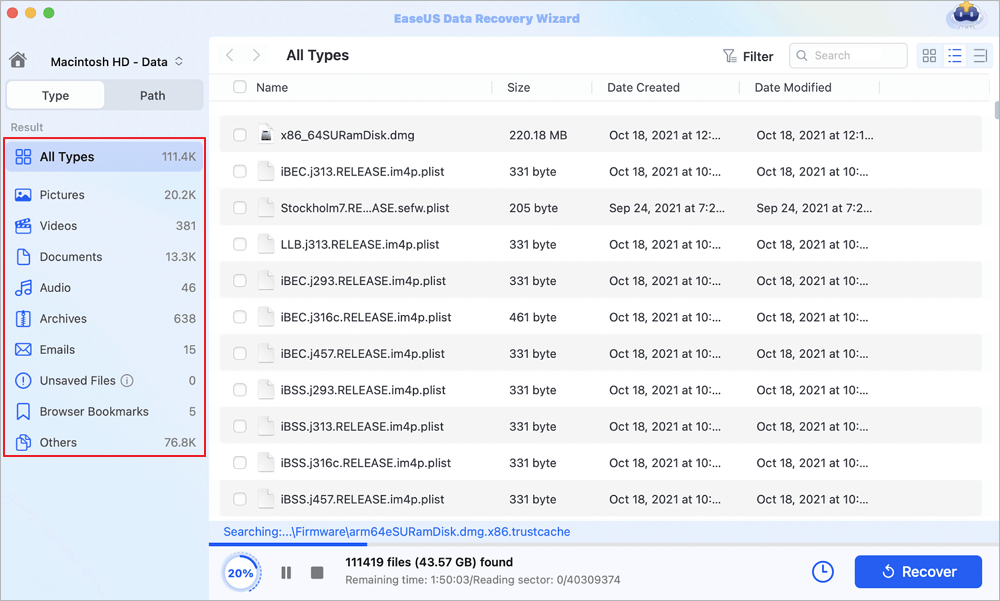
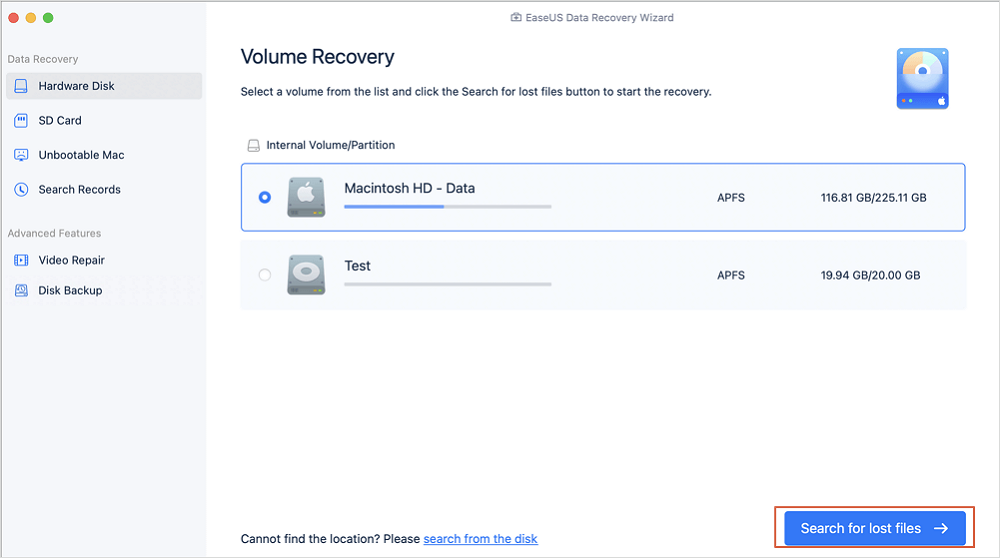
Step 1. Launch EaseUS Data Recovery Wizard for Mac. Select the deleted, formatted, or inaccessible partition, then click "Search for Lost Files" to begin scanning.
Step 2. The software performs Quick Scan and Deep Scan automatically. Use the Type, Path, or search filters to quickly locate the files you want to recover.
Step 3. Double-click any recoverable file to preview it. After confirming the results, click "Recover" and save the recovered files to a different drive.
Key Features
- Recover deleted, formatted, RAW, inaccessible, and lost partitions.
- Supports APFS, HFS+, HFSX, FAT32, exFAT, NTFS, and other file systems.
- Recovers more than 1,000 file formats, including photos, videos, Office documents, emails, archives, and project files.
- Automatically performs Quick Scan and Deep Scan.
- Preview files before recovery.
- Recover data from internal SSDs, HDDs, USB drives, SD cards, memory cards, RAID devices, and external drives.
- Create bootable recovery media for Macs that cannot start normally.
- Compatible with the latest macOS versions and Apple Silicon Macs.
Pros
- Very easy for beginners.
- Excellent APFS recovery performance.
- Supports Apple Silicon and Intel Macs.
- Fast scanning speed.
- Clean interface with preview function.
- Free version recovers up to 2GB.
Cons
- 2GB recovery limit in the free edition.
- Bootable recovery requires the Pro version.
| Feature | Rating |
|---|---|
| Recovery Success | ★★★★★ |
| Ease of Use | ★★★★★ |
| APFS Support | ★★★★★ |
| Scanning Speed | ★★★★★ |
| Value for Money | ★★★★★ |
Editor's Review: EaseUS Data Recovery Wizard for Mac Free consistently delivered the highest recovery rate during our testing. It recovered deleted files from formatted APFS partitions, damaged HFS+ volumes, and inaccessible external SSDs with excellent accuracy while maintaining one of the easiest workflows among all software tested.
Top 2. TestDisk
Best for: Advanced users looking for a completely free open-source partition recovery solution.
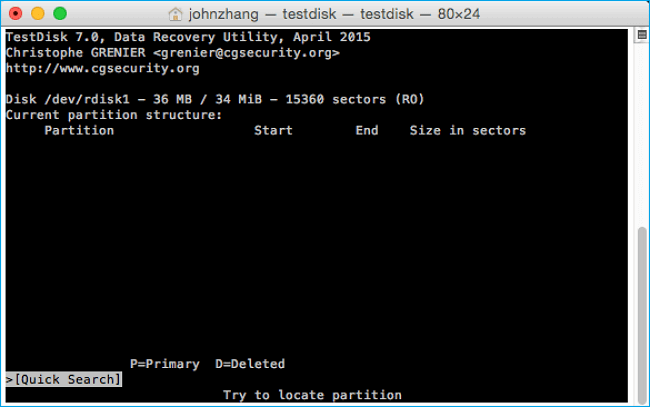
TestDisk is one of the best-known open-source partition recovery utilities available today. Unlike traditional file recovery software, TestDisk focuses primarily on rebuilding damaged partition tables, repairing boot sectors, and restoring lost partitions rather than simply recovering individual files.
Because it operates through the command line, TestDisk has a much steeper learning curve than graphical recovery applications. However, experienced users appreciate its powerful recovery capabilities and broad support for numerous partition types and operating systems.
TestDisk is capable of restoring deleted partitions, repairing damaged GPT or MBR partition tables, rebuilding boot sectors, and copying files from inaccessible partitions when recovery is still possible.
Key Features
- Completely free and open source.
- Repairs damaged partition tables.
- Supports GPT and MBR recovery.
- Compatible with multiple operating systems.
- Can rebuild boot sectors.
- Works with FAT, exFAT, NTFS, ext2/3/4 and several other file systems.
Pros
- No purchase required.
- Excellent partition repair capabilities.
- Very powerful for experienced users.
Cons
- No graphical user interface.
- Not beginner friendly.
- Limited file preview functionality.
| Feature | Rating |
|---|---|
| Recovery Success | ★★★★☆ |
| Ease of Use | ★★☆☆☆ |
| Partition Repair | ★★★★★ |
| Scanning Speed | ★★★★☆ |
Here is a quick look at what users think about TestDisk:
TestDisk has saved me multiple times after accidentally deleting partitions. It's not the easiest software to use, but it's incredibly powerful once you understand the commands.
Top 3. Stellar Data Recovery for Mac
Best for: Recovering photos, videos, documents, and other personal files from internal and external Mac drives.
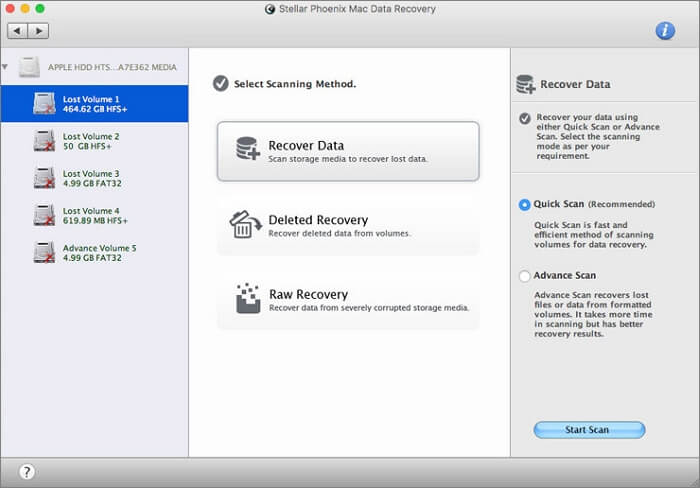
Stellar Data Recovery for Mac has long been one of the most recognized names in the Mac recovery industry. Its modern interface, guided recovery wizard, and broad file format support make it a popular choice among home users who prefer a straightforward recovery experience.
The software supports recovery from deleted, formatted, and inaccessible APFS and HFS+ partitions, while also allowing users to recover files from external hard drives, SSDs, USB flash drives, memory cards, and other removable storage devices.
One feature that differentiates Stellar from many competitors is its integrated drive monitoring capability. Users can check drive health, SMART status, and temperature before attempting recovery, helping identify potential hardware failures.
Key Features
- Recover deleted, formatted, and inaccessible partitions.
- Supports APFS, HFS+, and external storage devices.
- Recovers documents, emails, videos, photos, and archives.
- Preview files before recovery.
- Integrated drive health monitoring.
- Free version supports recovery up to 1GB.
Pros
- Modern and intuitive interface.
- Supports numerous file formats.
- Excellent photo recovery performance.
- Good preview functionality.
Cons
- Recovery speed is slower than some competitors.
- Many advanced features require paid editions.
| Feature | Rating |
|---|---|
| Recovery Success | ★★★★☆ |
| Ease of Use | ★★★★★ |
| APFS Compatibility | ★★★★☆ |
| Scanning Speed | ★★★★☆ |
Top 4. Disk Drill
Best for: Users who want both data recovery and disk management utilities.
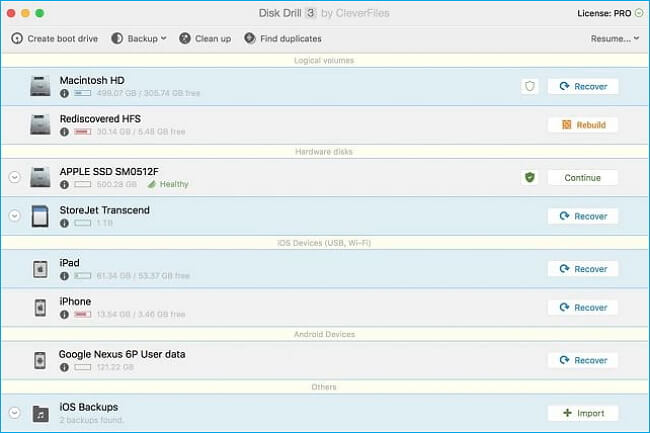
Disk Drill combines data recovery with a collection of disk maintenance tools, making it more than just a recovery application. Besides recovering deleted partitions and lost files, it offers duplicate file detection, disk cleanup, drive health monitoring, and backup utilities.
The software supports most common Mac storage devices and can recover files from deleted APFS and HFS+ partitions, although its recovery performance varies depending on the storage device and data loss scenario.
Key Features
- Recover over 400 file formats.
- Supports APFS, HFS+, FAT32, exFAT, and NTFS.
- Includes duplicate finder and cleanup tools.
- Built-in SMART disk monitoring.
- Simple drag-and-drop interface.
Pros
- Easy to navigate.
- Additional disk management tools.
- Supports most modern macOS versions.
Cons
- Recovery quality may vary with complex partition damage.
- Advanced recovery requires the Pro version.
| Feature | Rating |
|---|---|
| Recovery Success | ★★★★☆ |
| Ease of Use | ★★★★★ |
| Extra Features | ★★★★★ |
| Value | ★★★★☆ |
Top 5. PhotoRec
Best for: Recovering deleted photos, videos, and files when the partition structure has been severely damaged.
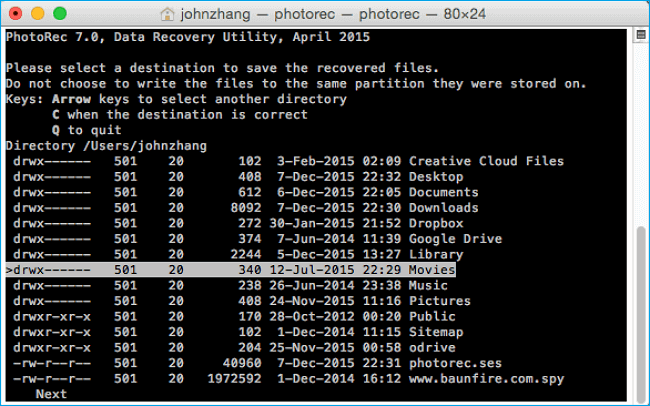
PhotoRec is another well-known open-source recovery utility developed alongside TestDisk. Unlike TestDisk, which focuses on repairing partition structures, PhotoRec specializes in file carving. It scans storage devices sector by sector and identifies recoverable files based on their file signatures rather than relying on the existing file system.
This approach makes PhotoRec particularly effective when the partition table or file system has been destroyed. Even if the original directory structure is missing, PhotoRec can often recover individual photos, videos, and documents.
Highlights
- Completely free and open source.
- Supports hundreds of file formats.
- Works even if the partition table is damaged.
- Excellent photo and video recovery.
- Compatible with numerous operating systems.
Pros
- Excellent recovery results for deleted photos and videos.
- Supports hundreds of file signatures.
- Works even when the file system is severely damaged.
- Free with no recovery limits.
Cons
- Command-line interface may intimidate beginners.
- Recovered files usually lose their original folder structure and filenames.
- No preview before recovery.
| Feature | Rating |
|---|---|
| Recovery Success | ★★★★☆ |
| Ease of Use | ★★☆☆☆ |
| Deep Recovery | ★★★★★ |
| Value | ★★★★★ |
Top 6. Lazesoft Mac Data Recovery
Best for: Beginners looking for a lightweight recovery utility for common file loss scenarios.
Lazesoft Mac Data Recovery is a straightforward recovery application designed primarily for recovering deleted files from Mac hard drives, SSDs, USB flash drives, memory cards, and other external storage devices. Although it isn't as feature-rich as some premium competitors, it offers a clean interface and reliable recovery performance for everyday data loss situations.
The software supports recovering photos, videos, Office documents, archives, music files, and emails from accidentally deleted or formatted partitions. For users who simply need to restore recently lost files without navigating complicated recovery options, Lazesoft provides an accessible solution.

Key Features
- Recover deleted and formatted files.
- Supports internal and external storage devices.
- Simple step-by-step recovery wizard.
- Recovers photos, videos, documents, emails, and archives.
- Compatible with older versions of macOS.
Pros
- Easy for beginners.
- Lightweight installation.
- Simple navigation.
- Supports common file formats.
Cons
- Fewer advanced recovery features.
- Recovery performance is lower than leading competitors.
- Limited support for newer APFS-specific technologies.
| Feature | Rating |
|---|---|
| Recovery Success | ★★★☆☆ |
| Ease of Use | ★★★★☆ |
| Compatibility | ★★★★☆ |
| Value | ★★★★☆ |
- Editor's Recommendation
- If you're looking for the highest recovery success rate for deleted or lost Mac partitions, EaseUS Data Recovery Wizard for Mac remains our top recommendation thanks to its excellent APFS support, high recovery accuracy, intuitive interface, preview capability, and bootable recovery option. Users who prefer completely free, open-source tools can consider TestDisk or PhotoRec, although they require significantly more technical knowledge.
If you found this comparison helpful, consider sharing it with other Mac users on Facebook, Reddit, X (Twitter), or other social media platforms to help them recover deleted partitions on Mac safely.

Top 5 Partition Recovery Mac Software [Paid]
If you need unlimited recovery, bootable recovery media, advanced file repair capabilities, or professional technical support, a paid recovery solution is usually a better investment. Below are the five best paid Mac partition recovery software solutions based on our hands-on testing and overall performance.
Top 1. EaseUS Data Recovery Wizard for Mac Pro
Best for: Professional-level partition recovery with unlimited file recovery, bootable recovery, and advanced APFS support.
Compared with the free edition, EaseUS Data Recovery Wizard for Mac Pro removes recovery limits while providing additional professional features designed for more complicated data loss scenarios. It supports recovering deleted, formatted, RAW, encrypted, inaccessible, and damaged partitions across virtually all Mac storage devices.
The EaseUS Mac data recovery program supports multiple file system partition recovery. For example, recovering data from an APFS drive and retrieving files from HFS, HFS+, HFSX, and FAT.
Highlights:
- Offers bootable data recovery in the event of a Mac machine failure or crash.
- All Mac file system devices, including APFS, HFS+, HFS X, FAT (FAT16, FAT32), exFAT, and NTFS, are fully recoverable of data.
- Allows for cross-platform data recovery, restoring lost data on Mac and Windows systems.
Key Features
- Unlimited recovery of deleted and lost files.
- Supports APFS, HFS+, HFSX, FAT32, exFAT, and NTFS file systems.
- Creates bootable recovery media for Macs that fail to start.
- Recovers data from internal SSDs, Fusion Drives, USB drives, RAID arrays, memory cards, and external hard drives.
- Supports over 1,000 file types, including documents, photos, videos, emails, and archives.
- Allows preview before recovery to improve accuracy.
- Compatible with Intel Macs and Apple Silicon (M1, M2, M3, and newer chips).
Pros
- Highest recovery success rate in our testing.
- Outstanding APFS partition support.
- Fast scanning with excellent file organization.
- Supports damaged, formatted, and deleted partitions.
- Professional technical support.
Cons
- Requires a paid license for unlimited recovery.
| Feature | Rating |
|---|---|
| Recovery Success | ★★★★★ |
| Ease of Use | ★★★★★ |
| APFS Support | ★★★★★ |
| Bootable Recovery | ★★★★★ |
| Overall Score | 9.9/10 |
Top 2. Data Rescue 6
Best for: Recovering accidentally deleted files while automatically filtering duplicate recovery results.
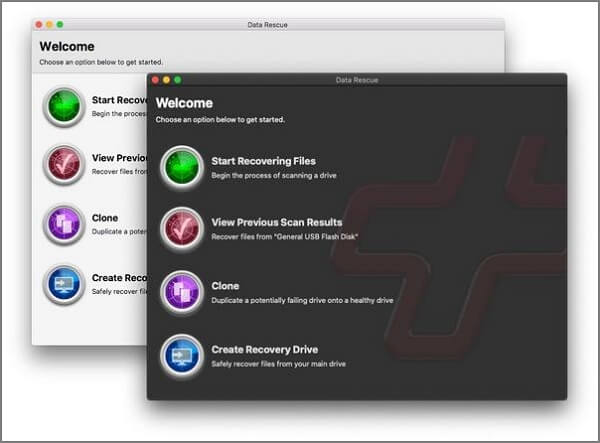
Data Rescue 6 is a mature recovery solution designed for Mac users who need reliable file recovery from damaged, formatted, or inaccessible drives. One feature that stands out is its ability to intelligently filter duplicate files during recovery, making the final recovery results easier to organize.
The software supports internal SSDs, HDDs, USB flash drives, external hard disks, and many removable storage devices. It also includes preview functionality, allowing users to verify recoverable files before restoring them.
Highlights
- Supports recovery from most storage devices.
- File preview before recovery.
- Duplicate file filtering.
- Good compatibility with macOS.
Pros
- Reliable recovery quality.
- Simple interface.
- Useful duplicate filtering.
Cons
- Slower deep scan compared to leading competitors.
- Higher price than some alternatives.
Top 3. Ontrack EasyRecovery for Mac
Best for: Small businesses and professionals requiring commercial-grade recovery software.
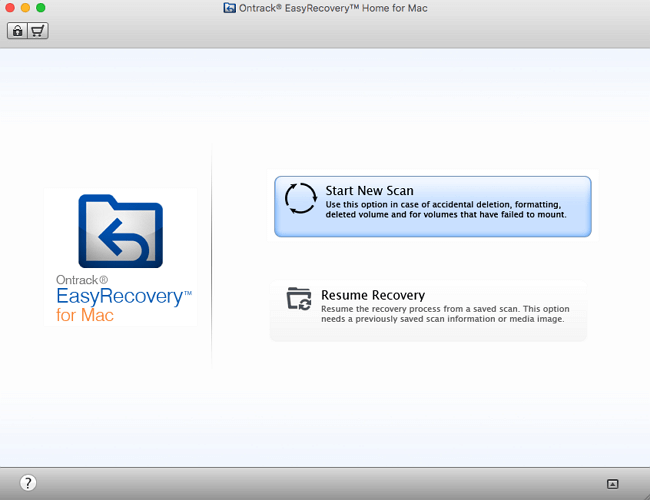
Ontrack EasyRecovery has built a strong reputation in enterprise data recovery. Besides recovering deleted partitions and formatted drives, it also offers email recovery, RAID recovery, and advanced recovery options suitable for business environments.
Highlights
- Business-grade recovery engine.
- Excellent customer support.
- Supports numerous storage devices.
- Preview before recovery.
Pros
- Professional recovery quality.
- Reliable technical support.
- Suitable for enterprise users.
Cons
- Premium pricing.
- Scanning speed can be slow on very large drives.
Top 4. Stellar Data Recovery Professional for Mac
Best for: Users who also need photo and video repair in addition to data recovery.
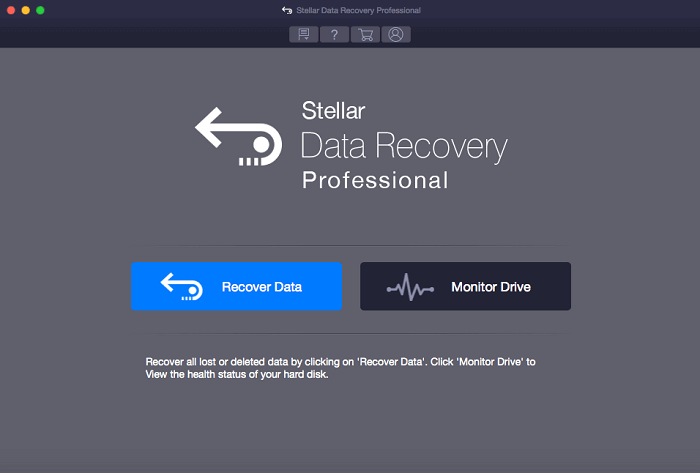
Beyond partition recovery, Stellar's Professional edition includes multimedia repair capabilities, making it especially attractive for photographers, designers, and content creators who frequently work with large image and video libraries.
Highlights
- Photo and video repair.
- Supports numerous media formats.
- Recover emails, archives, documents, and multimedia files.
- Easy-to-use interface.
Pros
- Excellent multimedia support.
- Very beginner friendly.
Cons
- Premium pricing.
- Some advanced features require higher editions.
Top 5. Disk Drill Pro
Best for: Users looking for an all-in-one disk utility with recovery capabilities.
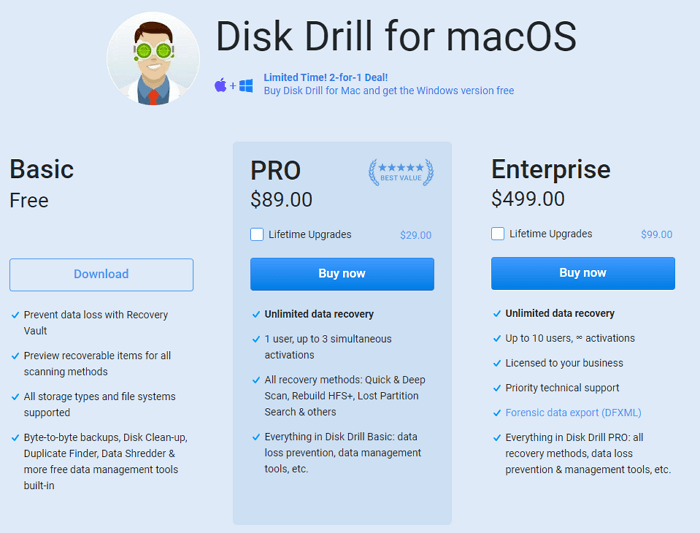
Disk Drill Pro expands upon the free version by removing recovery limitations while providing additional disk management utilities. Besides recovering deleted partitions, it includes backup features, duplicate file cleanup, SMART monitoring, and storage analysis tools.
Highlights
- Unlimited recovery.
- Disk cleanup utilities.
- SMART monitoring.
- Duplicate finder.
Pros
- Comprehensive toolbox.
- Simple user interface.
Cons
- Recovery performance still trails EaseUS in complex APFS partition recovery.
- No native bootable recovery environment for macOS.
Conclusion
Recovering a deleted or lost Mac partition is often possible if you act quickly and avoid writing new data to the affected drive. Whether the partition disappeared because of accidental deletion, formatting, partition table corruption, a failed macOS update, or unexpected hardware issues, choosing the right recovery software greatly improves your chances of retrieving your files.
Among all the software we evaluated, EaseUS Data Recovery Wizard for Mac remains our top recommendation because it offers the best balance of recovery performance, APFS compatibility, ease of use, scanning speed, and overall reliability. It supports recovering deleted, formatted, and inaccessible partitions from nearly every storage device used with macOS.
If you prefer completely free tools and have sufficient technical knowledge, TestDisk and PhotoRec remain excellent open-source alternatives. However, for most users—especially those recovering valuable personal or business data, a graphical recovery solution with preview capabilities provides a much safer and more efficient experience.
No matter which recovery software you choose, remember one important rule: recover your files first, then repair or recreate the partition afterward. This simple step can significantly increase the likelihood of a successful recovery.
People Also Ask
Can I recover a deleted APFS partition on Mac?
Yes. If the deleted APFS partition hasn't been overwritten, professional recovery software can often scan the storage device, locate the missing partition metadata, and recover files. Stop using the drive immediately after discovering the partition loss to maximize the recovery success rate.
Can Disk Utility recover a deleted partition?
No. Disk Utility can repair certain file system errors using First Aid, but it cannot recover deleted partitions or restore files from a formatted volume. You'll typically need dedicated partition recovery software to retrieve lost data.
Can I recover data after formatting a Mac partition?
In many cases, yes. Formatting usually removes the file system index instead of immediately erasing every file. As long as new data hasn't overwritten the original content, recovery software may still recover documents, photos, videos, and other files.
What is the best Mac partition recovery software?
Based on our testing, the best Mac partition recovery software includes:
- EaseUS Data Recovery Wizard for Mac
- TestDisk
- Stellar Data Recovery for Mac
- Disk Drill
- PhotoRec
Each tool has different strengths, but EaseUS offers the best overall balance of recovery success, usability, APFS compatibility, and advanced recovery features.
Can Time Machine recover a deleted partition?
Only if the missing partition was included in your Time Machine backup. Time Machine restores backed-up files rather than rebuilding deleted partitions, so it cannot help if no backup exists.
Does SSD TRIM affect partition recovery?
Yes. TRIM allows SSDs to permanently erase deleted blocks in the background, which can reduce recovery success after partition deletion. If your SSD supports TRIM, stop using it immediately and begin recovery as soon as possible.
Can I recover a partition after reinstalling macOS?
It depends. If the macOS installation overwrote the original partition sectors, recovery becomes more difficult. However, if only part of the drive was modified, recovery software may still retrieve many files.
Is free Mac partition recovery software enough?
Free software works well for simple recovery scenarios or recovering a limited amount of data. If you're dealing with extensive partition corruption, boot failures, or large amounts of valuable data, a professional recovery solution generally provides better results.
Can partition recovery software recover external SSDs and USB drives?
Yes. Most modern recovery applications support internal SSDs, external hard drives, USB flash drives, SD cards, CF cards, memory cards, and other removable storage devices, provided the hardware itself is still functioning.
How can I prevent partition loss on my Mac?
You can significantly reduce the risk of partition loss by following these best practices:
- Back up important files regularly using Time Machine or another backup solution.
- Safely eject external drives before disconnecting them.
- Avoid interrupting macOS updates or disk operations.
- Monitor SSD health and replace failing drives promptly.
- Be cautious when using Disk Utility to resize, erase, or repartition disks.
- Create a backup before making major partition changes.
Was This Page Helpful?

Finley is interested in reading and writing articles about technical knowledge. Her articles mainly focus on file repair and data recovery.

Daisy is the Senior editor of the writing team for EaseUS. She has been working at EaseUS for over ten years, starting as a technical writer and moving on to being a team leader of the content group. As a professional author for over ten years, she writes a lot to help people overcome their tech troubles.
-
EaseUS Data Recovery Wizard is a powerful system recovery software, designed to enable you to recover files you’ve deleted accidentally, potentially lost to malware or an entire hard drive partition.
Read More -
EaseUS Data Recovery Wizard is the best we have seen. It's far from perfect, partly because today's advanced disk technology makes data-recovery more difficult than it was with the simpler technology of the past.
Read More -
EaseUS Data Recovery Wizard Pro has a reputation as one of the best data recovery software programs on the market. It comes with a selection of advanced features, including partition recovery, formatted drive restoration, and corrupted file repair.
Read More
Related Articles
-
Recover Deleted Folders on Mac - Even If Trash is Emptied
![author icon]() Dany/Sep 20, 2026
Dany/Sep 20, 2026 -
Recover Data from M4 Mac | Apple Silicon M4
![author icon]() Dany/Sep 20, 2026
Dany/Sep 20, 2026 -
How to Recover Overwritten PPT Files Mac | Tested Method
![author icon]() Dany/Sep 20, 2026
Dany/Sep 20, 2026 -
How to Recover Deleted Partition on Mac [4 Tested Solutions]
![author icon]() Jaden/Sep 20, 2026
Jaden/Sep 20, 2026
 Dany/Sep 20, 2026
  Jaden/Sep 20, 2026

