Page Table of Contents

PAGE CONTENT:
Cloning your disk is crucial when upgrading your storage media. Sometimes, you may have to deal with the draining "disk clone slow" status. The process may take longer than usual, and the data transfers may sometimes be incomplete, leaving you with corrupted files. You can avoid this trouble in many ways to see that the cloning of HDD to SSD is successful and that all the data is safe. EaseUS presents ways to clone a hard drive fast and safely, guiding you through each step.
How to Fix Disk Clone Slow Windows 11/10/8/7
There are many ways to fix slow disk cloning. The following are four sure ways to overcome sluggish data transfers:
- Fix 1. Wait Patiently
- Fix 2. Use a SATA Connection
- Fix 3. Disable Background Apps
- Fix 4. Replace the Target Disk
Fix 1. Wait Patiently
Disk cloning usually takes time. You can manage a slow disk clone by waiting patiently. Set everything in order and take a break as the data transfers from one drive to another. This method is best if you don't need to use the new disk urgently, as it will take time.
Fix 2. Use a SATA Connection
You can clone your hard drive using a PATA parallel ATA also known as IDE or a SATA connection. The main advantage of the PATA connection is that you can multitask. However, it isn't as fast as the SATA connection. You can switch to this connection if experiencing a "disk clone slow" issue. Here are the steps for cloning with a SATA cable connection.
Step 1. Connect the hard drive to the PC via a USB-to-SATA cable.
Step 2. Restart your device and enter the BIOS setup. You can access the BIOS setup by pressing DEL or F2 for Acer, ASUS, and Lenovo - press F10 for HP and F12 for Dell or Toshiba. Refer to your PC's user manual for instructions on how to enter BIOS.
Step 3. Head to "Advanced Settings," then "SATA Configuration," where you change the mode to IDE. Save the changes and exit the BIOS setup.
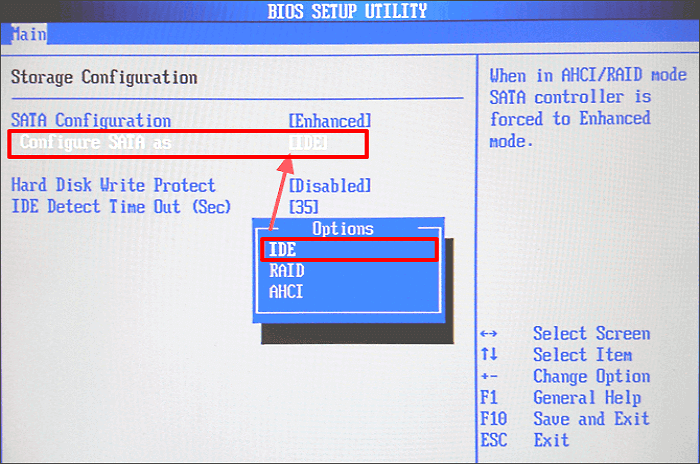
Step 4. Restart your PC and continue with disk cloning. The process will be significantly faster.
Fix 3. Disable Background Apps
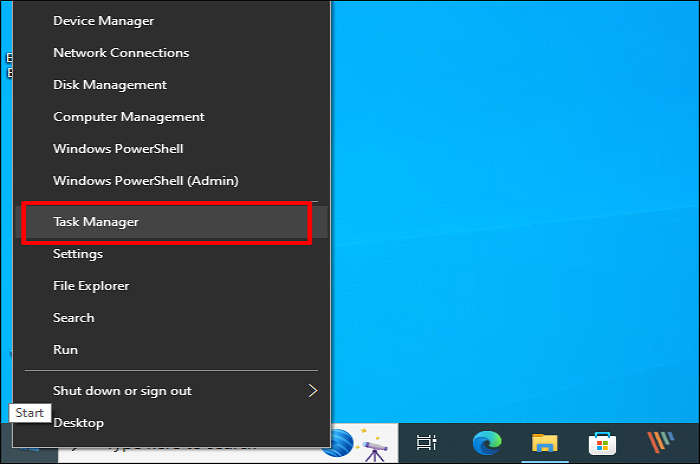
Programs running in the background during the cloning process may lead to extra CPU consumption, slowing you down. A remedy is to stop these apps temporarily until you finish cloning your hard disk. You can do this by accessing your Task Manager settings as follows:
Step 1. Right-click on the Start menu and choose "Task Manager."
Step 2. Navigate to the "Processes" tab once the Task Manager window opens.
Step 3. Find the background process or app consuming a larger percentage of your memory or CPU. Right-click on it and select "End Task." This will stop the process from running.
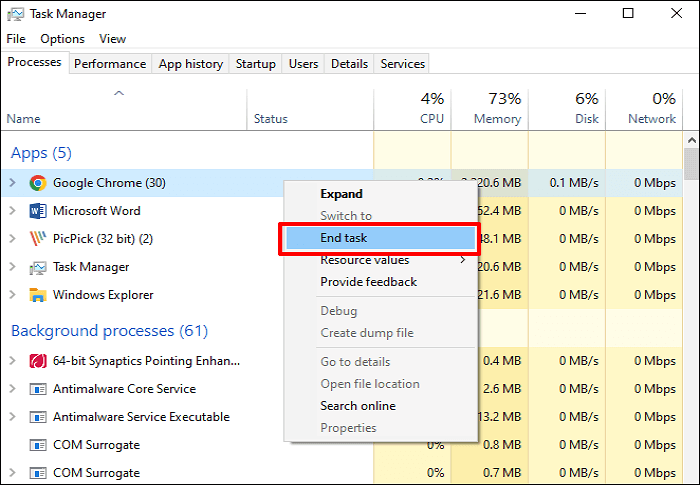
Step 4. Your hard drive cloning speed will improve once you've turned off the background tasks.
Fix 4. Replace the Target Disk
The target disk might be the cause of slow cloning. The issue may be low storage, damage, or system incompatibility. You can replace it with a good disk using the following steps.
Step 1. Get a new drive, preferably an SSD. Ensure it is fully functional and compatible with your system. You can also use an HDD if it is within your reach and isn't slow to read and write.
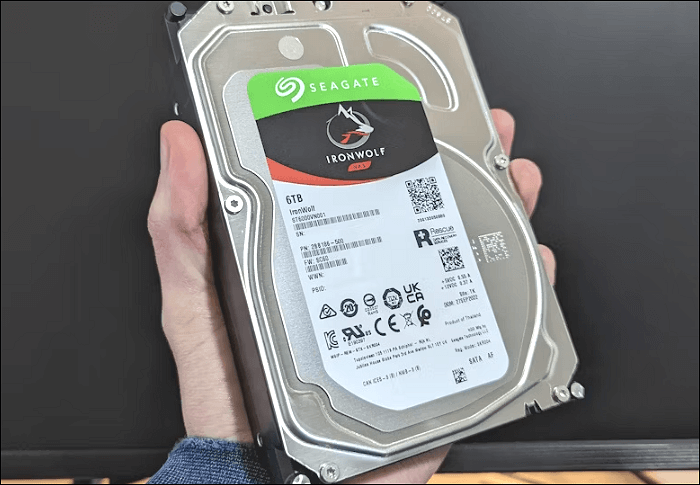
Step 2. Connect the drive to your PC via a SATA cable.
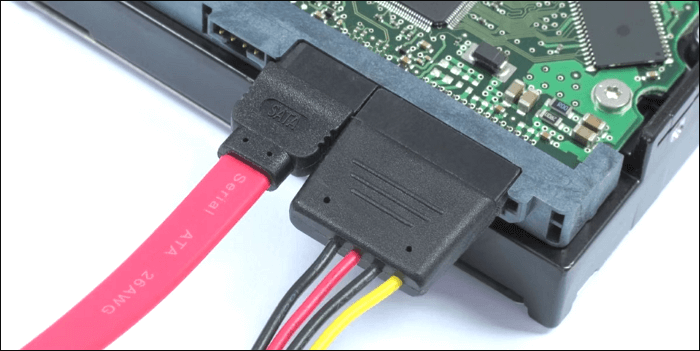
Step 3. Initiate the cloning process again. The speed will improve if the new disk is properly working.
Share this post on social media to help others clone a hard drive easily and quickly!
Clone Hard Drive with Easiest Disk Cloning Software
You can get around a slow disk clone process using stable disk cloning software. EaseUS Disk Copy is the ultimate answer to your disk cloning needs. It is a stable utility that will transfer your data from one drive to another at impressive speeds. EaseUS Disk Copy is a safe tool that assures 100% file integrity after cloning.
 Free Download
Windows 11/10/8/7
You can appreciate this tool's convenience, which comes into play in several aspects. For instance, it can transfer data from one SSD to another without losing data and reinstalling Windows. EaseUS Disk Copy is fully compatible with all hard drives from different manufacturers. Its advanced cloning algorithm can help you clone a hard drive quickly with 3 steps and copy a hard drive bit for bit if there are bad sectors.
Download EaseUS Disk Copy now if you want hassle-free file migration across multiple storage media.
Before cloning:
- If your computer has only one slot, connect the target disk to your machine via a USB-to-SATA/NVMe adapter.
- If your computer has an extra slot, install the target disk into the empty slot properly, and make sure it is compatible.
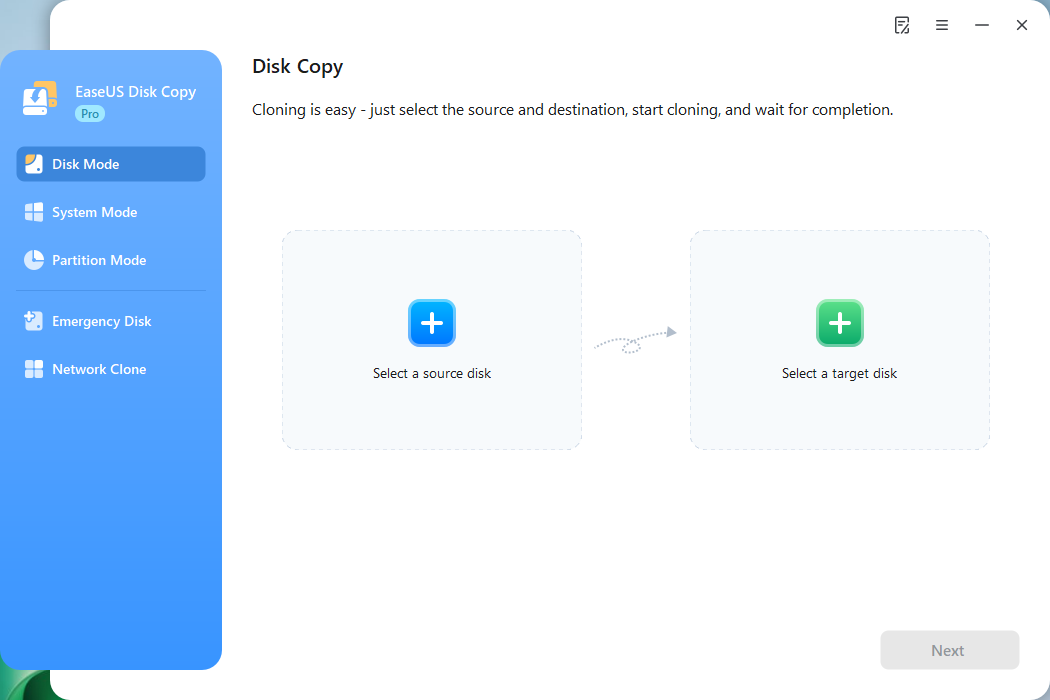
Step 1. Launch EaseUS Disk Copy and choose Disk Mode.
Install EaseUS Disk Copy cloning software on your Windows computer, then launch it and select Disk Mode from the left panel.
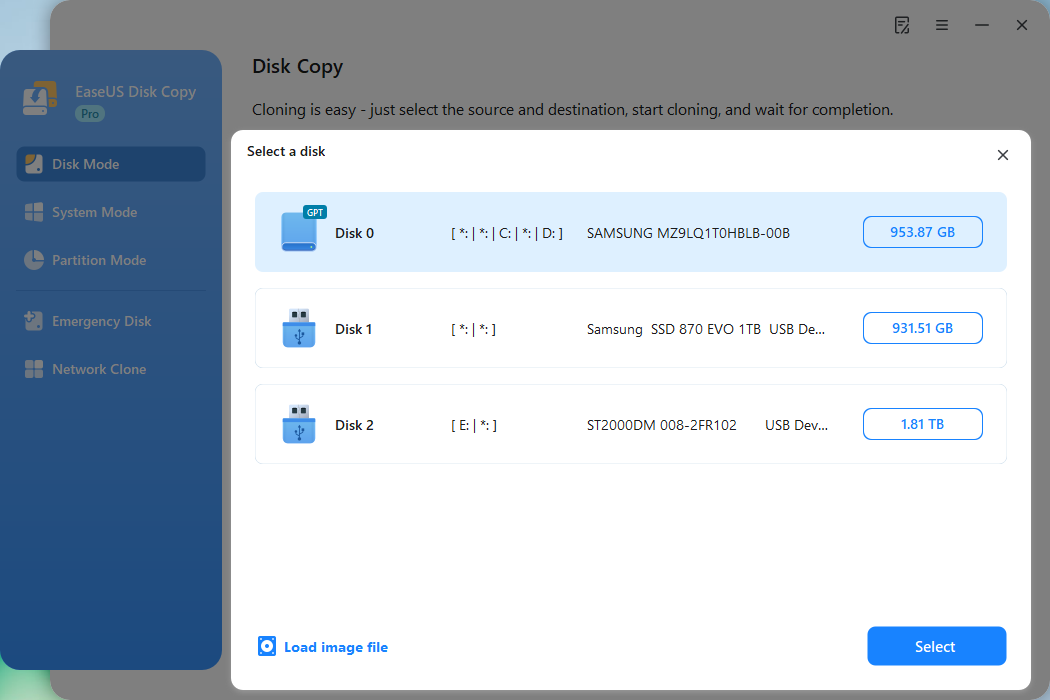
Step 2. Select the source drive.
Select the drive you want to copy, then click Select.
Step 3. Choose the target disk.
Choose the disk that you want to clone data to, and click Select. Note that the used space of the source disk should be less than the target disk capacity.
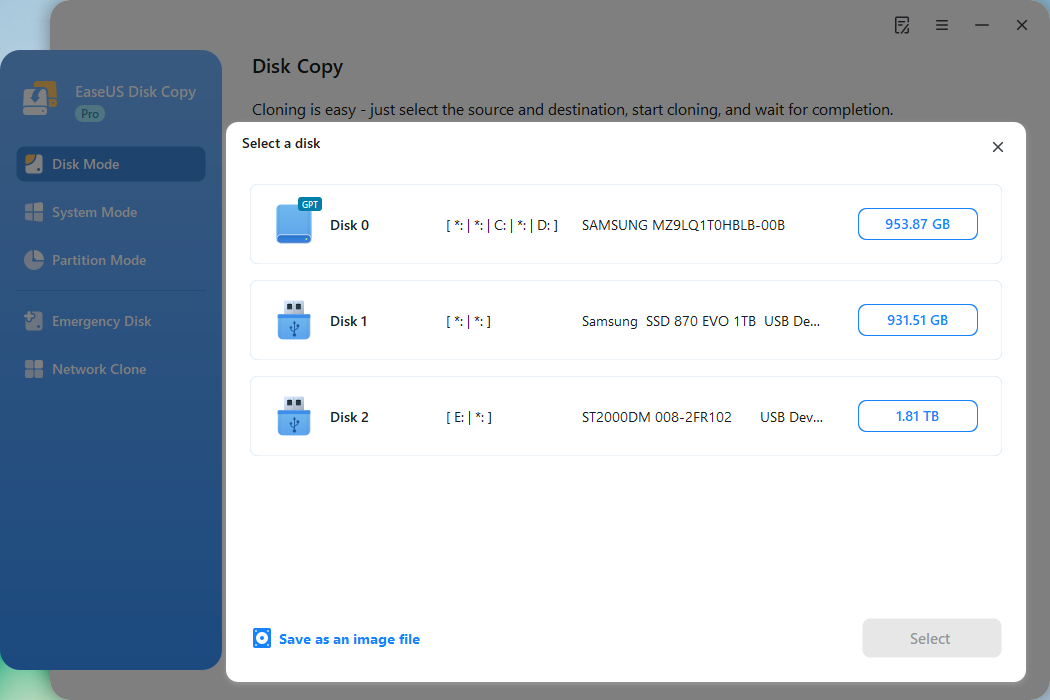
*At this step, you can also click the option "Save as an image file" to store your disk as a compressed image file, which can be restored without any data loss.
Step 4. Adjust disk layout.
Specify the target disk layout as your preference. You can choose among:
- Autofit the disk: makes some changes by default on the destination disk layout so that it can work at its best.
- Copy as the source: create a 1-to-1 copy of your source disk; the layout is the same as the source disk.
- Edit disk layout: allows you to manually resize/move the partition layout on this destination disk.
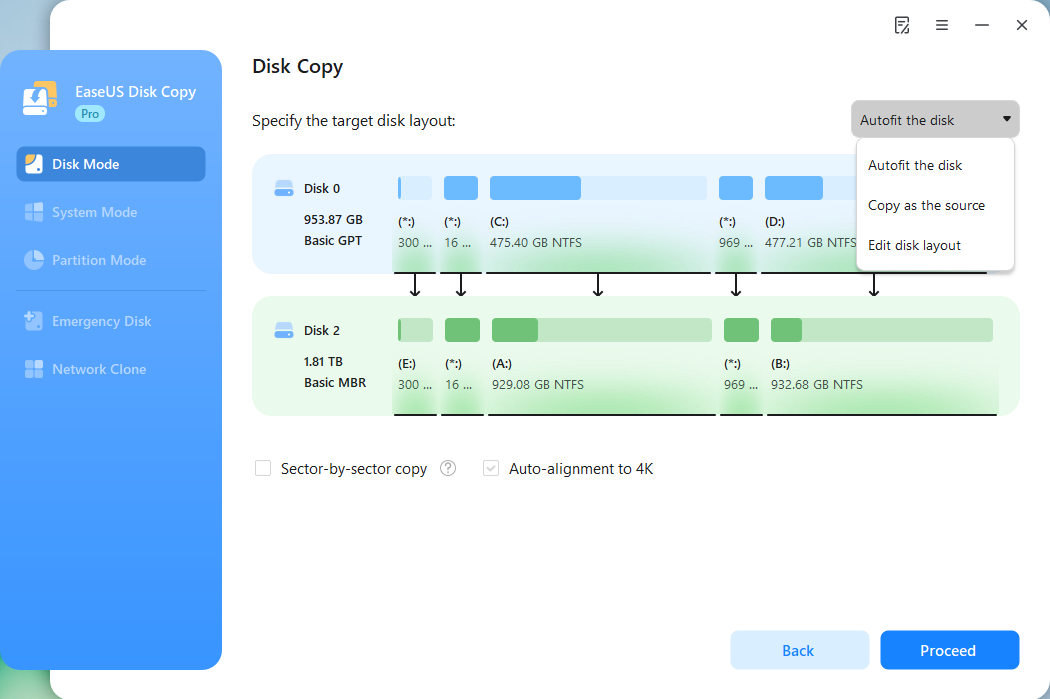
*If the target disk is an SSD, the option "Auto-alignment to 4K" will be checked automatically to optimize the performance of your SSD.
Step 5. Start cloning.
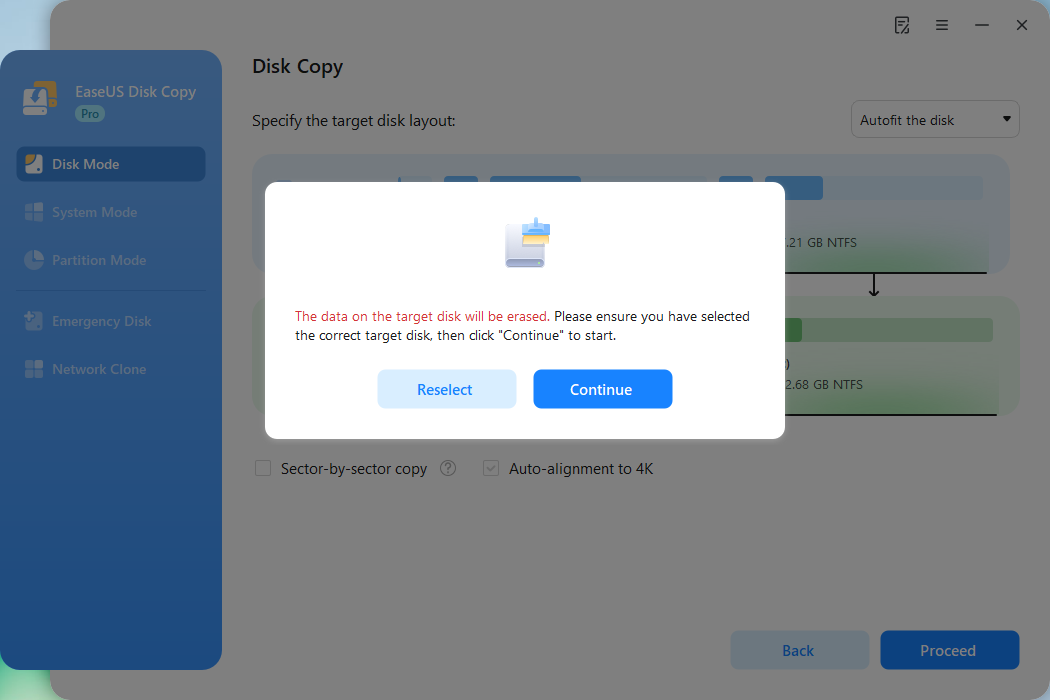
Click Proceed, and a message will appear, warning you that data will be lost. Confirm the message by clicking Continue.
Now, it will start executing the cloning task.
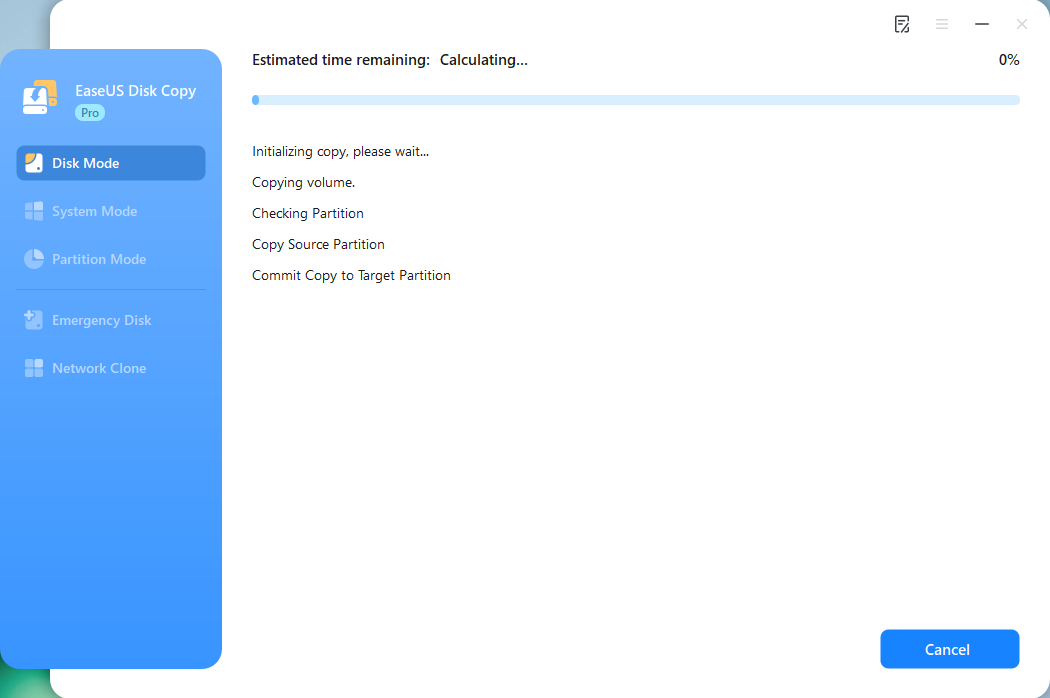
*The time it takes to clone a hard drive depends on how much data is on the source disk, and it will also be affected by the disk types, USB connection, etc.
Why Is Disk Cloning Very Slow on PC
Data migration from one drive to another is a common occurrence. You can efficiently do this via disk cloning. This process is more reliable than copy-and-paste since it lets you copy disk partitions and their attributes. At times, it's possible to encounter a slow disk cloning process. This may happen due to the following reasons:
- Disk health: compromised disk health (following long-term disk usage) greatly affects the file transfer. Most of the time, the problem lies with the source disk, which may be out of service or contain corrupted sections.
- The connection: the link between the PC and disks may impact the cloning speeds. For instance, USB 2.0 is typically slower than newer versions like SATA or USB 3.0. The drive connections might also be unstable
- The PC health: you may encounter cloning troubles when working with a faulty PC. Viruses, hardware damage, running background apps, or outdated software may drag the PC processes, resulting in a "disk clone slow" situation.
- The cloning software: if you use disk cloning software, the issue might lie with it. It may be outdated, or your version is incompatible with your PC's system.
- Data size and complexity: disk cloning might be slow if the data size is too large or complex. Large data capacities typically take longer, especially if cloning through traditional methods.
To Sum Up
Disk clone slow is an eventuality you should avoid, especially if you urgently need your data cloned. There are several ways to avoid this problem, like using faster cables, working on your PC, and getting compatible drives. EaseUS Disk Copy is a guaranteed way of cloning your hard drive fast and safely.
Free Download
Windows 11/10/8/7
The software has a stable architecture that allows it to handle large files quickly. It is fully compatible with all Windows versions and can migrate operating systems. Download the tool from its website and pick a comfortable subscription plan to get the best out of it.
FAQs on Disk Cloning So Slow
The following are the frequently asked questions about slow disk cloning.
1. How Long Does Disk Cloning Take?
The entire process may last from a few minutes to some hours. This greatly varies based on the size of the data you're cloning and the tool. Try out an efficient clone tool like EaseUS Disk Copy to reduce the duration of your clone. This tool is fast and guarantees the safety of your data before and after cloning.
2. Why Is My Windows 10 C Drive Clone So Slow?
Your Windows 10 C drive clone might drag due to several issues. The problem might be unstable drive connections, poor computer or drive health, or running background apps. Check the CPU and memory usage and the connections, and disable background apps to restore your system's speed.
3. Why Would an SSD Take So Long to Clone?
An SSD may take longer to clone due to poor PC health, running background apps, and insufficient memory. It might also be due to weak or slow connectivity, specifically using older cables like USB 2.0.
4. Can I Use My Computer While Cloning Disk?
Yes, you can use your computer while cloning your disk. Nonetheless, if your work is demanding, it might slow the cloning, increasing the risk of data transfer errors.
-
Updated by
![]()
Jerry
"I hope my articles can help solve your technical problems. If you are interested in other articles, you can check the articles at the bottom of this page, and you can also check my Facebook to get additional help."…Read full bio