-
![]() How to Recover Deleted Recordings on Sky Q and Sky Plus Box
 October 20,2026
 6 min read
-
![]() Deleted Video Recovery: Restore Lost Videos from Any DeviceOctober 20,20266 min read
-
![]()
-
![]() How to Recover Deleted Files from Laptop/PC [New Updated]October 20,20266 min read
-
![]()
-
![]() How to Recover Unsaved Projects in Premiere Pro on Windows & MacOctober 20,20266 min read
-
![]()
-
![]()
-
![]()
-
![]() How to Recover Emails Deleted from Trash in All PlatformsOctober 20,20266 min read
Page Table of Contents
If your lost files total less than 2GB (such as a few photos, videos, or Word/PDF documents), you don't need to purchase the paid version.
You can use the free version of EaseUS Data Recovery Wizard to recover and export up to 2GB of data at no cost.
IMPORTANT: When you deleted or lost iTunes backup, stop using the device first. Then follow solution on this page for help.
How to recover lost or deleted iTunes backup
"Have you ever accidentally deleted your iPhone backup from iTunes? And do you know how to restore the lost iTunes backup?
I created an iTunes backup about 6 months ago and it's all about my photos, videos. Last Friday, I run a large file clean program on my computer, it accidentally deleted my iTunes backup. And I didn't find it in the recycle bin. So, if you know a way to bring my iTunes backup back, please help."
It is a disaster when you make the mistake of deleting the iTunes backup on your PC. Important data in the backup like photos, videos, contacts, messages will get lost.
To help you recover lost iPhone data, we suggest you follow the step-by-step guide in the next part to make everything ready.
Preparations
As we know, iOS users can sync their iPhone, iPad or iPod with iTunes to create a backup file for important data, such as years of documents, notes, photos, videos, SMS messages and contacts of all your friends and family.
Sometimes, you might delete one or more of your iTunes backups by mistake. When it happens, stay calm and follow the preparations here to making things done for lost iTunes backup recovery:
- 1. Download EaeUS EaseUS Data Recovery Wizard for help
EaseUS file recovery software - Data Recovery Wizard enables you to scan a specific folder or location on your Windows PC and find the deleted or lost iTunes backup in only 3 steps.
- Supports: File recovery on Windows 10/8/7 and Vista/XP computers.
- Applies to: Scan and find lost iTunes backup on Windows hard drive.
- 2. Locate or find the iTunes backup location on your PC
Normally, the iTunes backup is saved to a fixed path on Windows computer. And you can follow this path to locate your iTunes backup folder:
C:Users\USER\AppData\Roaming\Apple Computer\MobileSync\Backup.
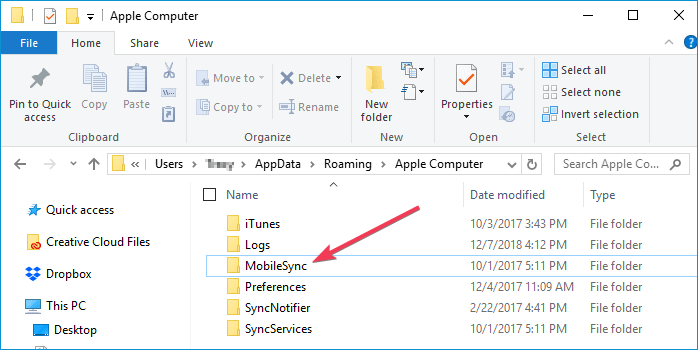
Now, you can move to the next part and follow the step-by-step tutorial to effectively restore the deleted or lost iTunes backup file.
Recover deleted iTunes backup
EaseUS file recovery software - Data Recovery Wizard allows you to choose a specific folder and scan to find the lost files. As for the deleted iTunes backup, you can also use this feature to quickly locate the iTunes backup folder by following its storage path as listed in the Preparation part.
And then through the steps here to bring your lost iTunes backup file back:
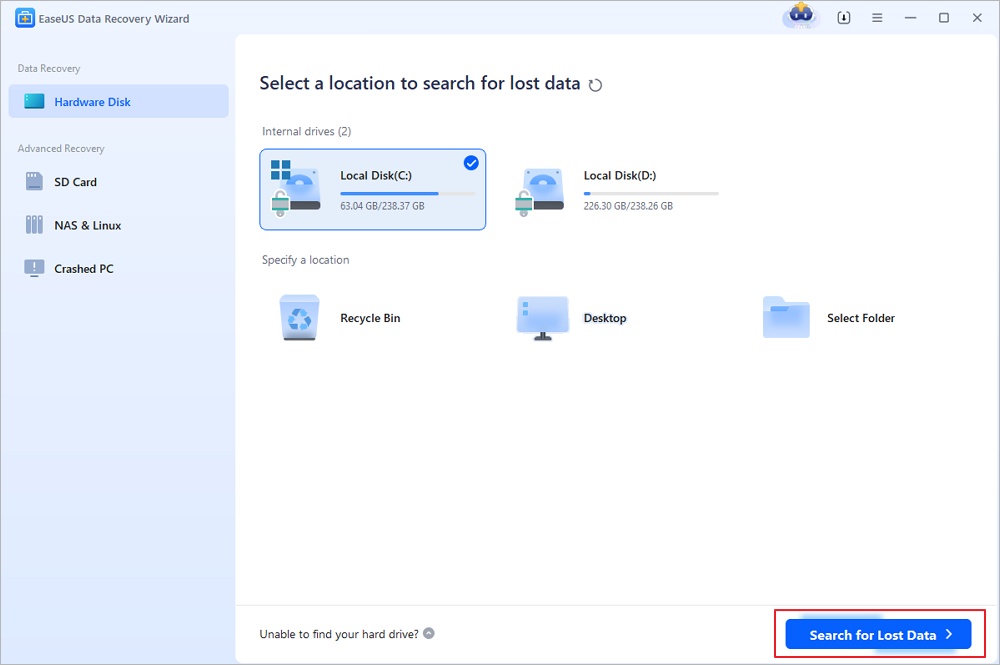
Step 1. Choose the original location and scan for lost data
Open EaseUS Data Recovery Wizard and locate the partition or drive where you accidentally deleted your files. Hover over the location and click "Search for Lost Data" to find recoverable files.
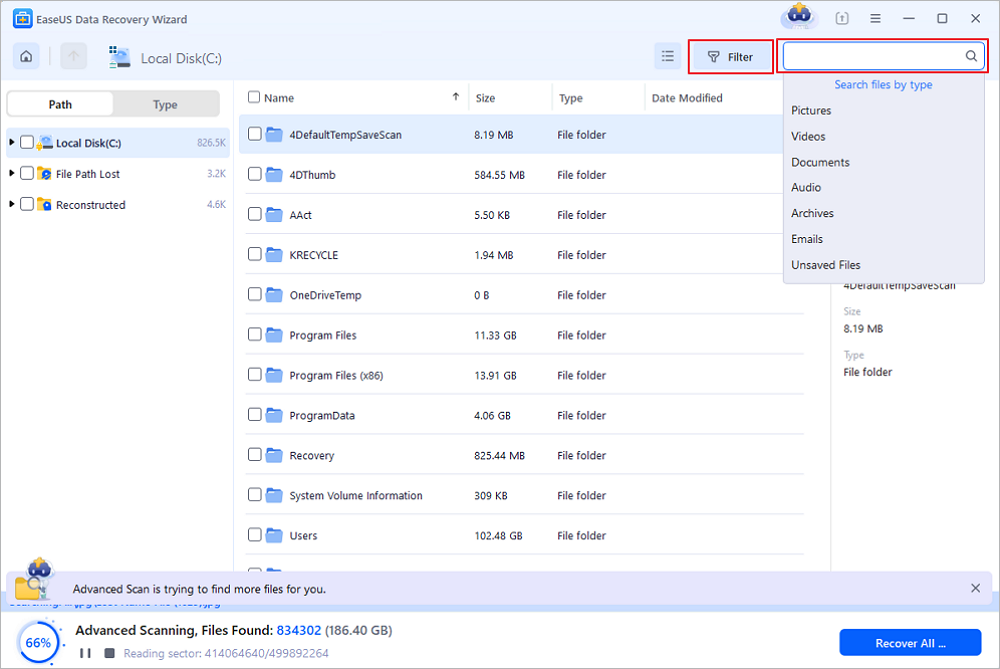
Step 2. Locate the files you want to restore
After scanning, review the results and select the accidentally deleted files you need. You can filter the results by file type, such as documents, photos, videos, or audio files. If you remember the file name, use the search box to find it more quickly.
Step 3. Preview and restore your deleted files
Preview the selected files to verify that they are the ones you want to recover. Click "Recover" and choose a safe destination different from the original storage location. You can save the restored files to another partition, an external drive, or cloud storage, then click "Save".
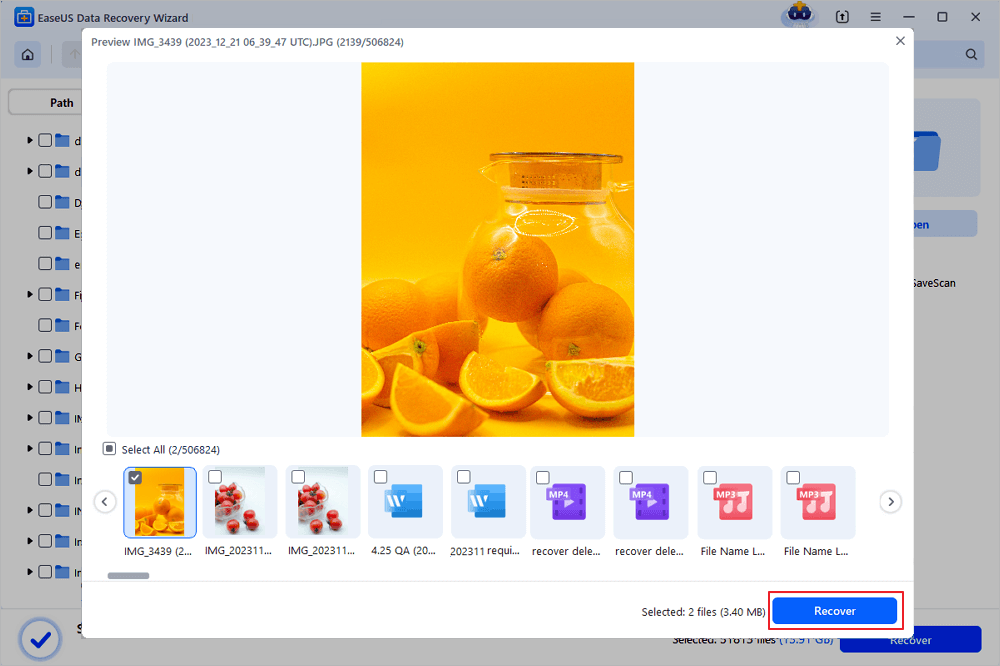
(Note: The free version allows up to 2GB of data recovery. For everyday deleted files within this limit, you can recover your data without purchasing a license. Always save recovered files to a different location to avoid overwriting the original data.)
Notice that the most important part of iTunes backup is a file saved with .plist extension.
Conclusion
Finish all the steps, you can restore and save this file back to the default location on your PC where you used to save the iTunes backup. After this, you can open iTunes to view and check those found files that you've created as an iTunes backup, and you can even restore them from iTunes to your iPhone and continue using the files again.
PLUS: If you deleted iPhone data by mistake, you can use EaseUS iPhone data recovery software to help yourself recovering iPhone data by directly scanning your device and restore lost files from iTunes backup.
Was this page helpful?
-
![]()
Written by
Tracy became a member of the EaseUS content team in 2013. Being a technical writer for over 10 years, she is enthusiastic about sharing tips to assist readers in resolving complex issues in disk management, file transfer, PC & Mac performance optimization, etc., like an expert.…
 Why Trust EaseUS
 Editor Reviews

20+
Years of experience

160+
Countries and regions

72 Million+
Downloads

4.9 +
Trustpilot Score