





A damaged or missing partition table can instantly make an entire hard drive appear unallocated or uninitialized or even prevent Windows from booting. Fortunately, in many situations, the partition itself and the files stored on it are still intact; the operating system simply can no longer locate them because the partition metadata has been corrupted or deleted.
If you stop using the affected drive immediately and avoid formatting or repartitioning it, there is a high chance of successfully recovering both the partition table and your valuable files.
In this guide, you'll learn:
- What a partition table is
- Why partition tables become corrupted
- How to recover a partition table from an unallocated disk
- How to restore data from a not initialized drive
- How to repair the partition table when Windows won't boot
- How to prevent partition table corruption in the future
Whether you're recovering an HDD, SSD, USB flash drive, external hard drive, or memory card, the following methods can help restore access to your data safely.
What Is a Partition Table
⭐A partition table is a small but critical data structure stored at the beginning of a storage device. It records the location, size, type, and boot information of every partition on the disk, allowing Windows to identify and access each partition correctly.
Without a valid partition table, Windows cannot determine where partitions begin and end, making the drive appear empty or inaccessible even though your files may still physically exist.
| Partition Style | Best For | Maximum Capacity | Compatibility |
|---|---|---|---|
| MBR (Master Boot Record) | Legacy BIOS computers | 2 TB | Windows XP/7/8/10 |
| GPT (GUID Partition Table) | Modern UEFI computers | 9.4 ZB | Windows 11/10/8 |
When the partition table is damaged, Windows may display one or more of the following symptoms:
- Disk shows as Unallocated
- Disk not Initialized
- RAW partition
- Missing drive letter
- Operating System Not Found
- Invalid Partition Table
- Boot failure
- Partition disappears from Disk Management
Why Does a Partition Table Become Corrupted
Understanding what caused the damage helps you choose the safest recovery method.
| Cause | Description | Recovery Possibility |
|---|---|---|
| Accidental Partition Deletion | The partition entry is removed while the underlying data still exists. | ★★★★★ Very High |
| Power Failure | Unexpected shutdown during partitioning or formatting corrupts metadata. | ★★★★☆ High |
| Virus or Malware | Boot sectors or partition information is modified or destroyed. | ★★★★☆ High |
| Bad Sectors | Physical damage affects the beginning sectors containing partition information. | ★★★☆☆ Medium |
| Incorrect Disk Conversion | MBR to GPT (or GPT to MBR) conversion fails midway. | ★★★★☆ High |
| Operating System Installation | Installing Windows overwrites existing partition metadata. | ★★★☆☆ Medium |
| Partition Software Failure | Unexpected interruption while resizing or creating partitions. | ★★★★☆ High |
How to Recover Partition Table in 4 Ways
Before attempting any recovery operation, follow these best practices to maximize the recovery success rate.
- Stop using the affected disk immediately.
- Do not format the drive.
- Do not initialize the disk yet.
- Avoid creating new partitions.
- Do not save recovered files back to the same drive.
- If possible, connect the drive directly through SATA instead of an unstable USB hub.
After following these tips, you can start to learn how to recover the partition table in Windows.
Method 1. Recover Partition Table from an Unallocated Disk
If Disk Management shows the entire drive as "Unallocated", the partition itself may have disappeared from the partition table while all data still exists on the disk.
The safest solution is to use professional partition recovery software before creating a new partition or formatting the drive.
EaseUS Data Recovery Wizard can scan deleted or lost partitions, rebuild partition information, and recover documents, photos, videos, archives, and other files without overwriting existing data.
It supports:
- Internal HDDs
- SSDs
- External hard drives
- USB flash drives
- Memory cards
- Dynamic disks
- MBR & GPT disks
- NTFS, FAT32, exFAT, ReFS and more
Step 1. Select and scan the lost partition
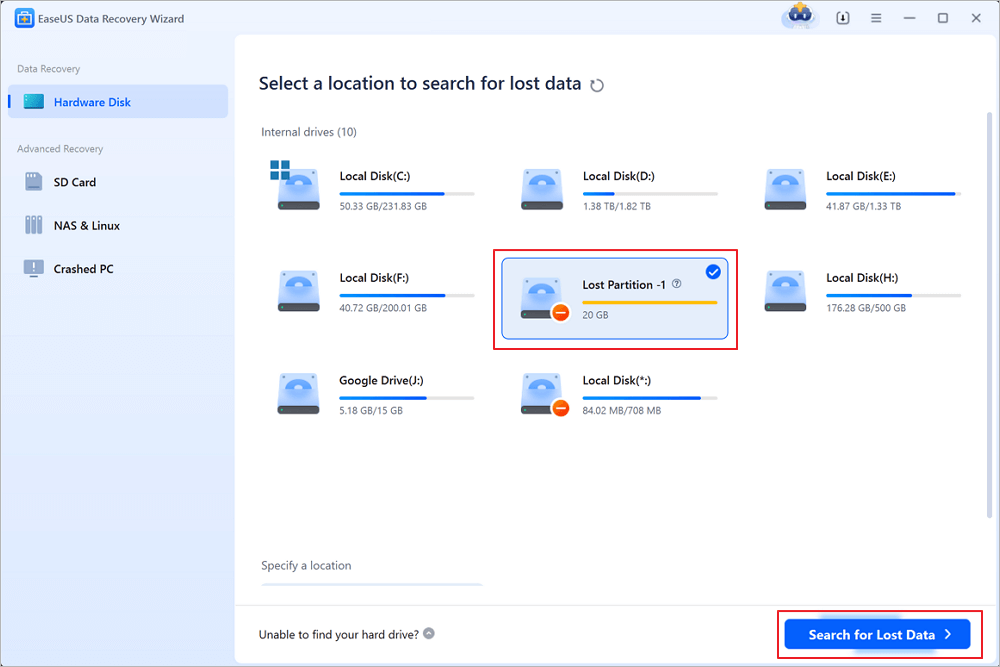
Launch EaseUS Data Recovery Wizard, select "Lost Partition" and click "Search for Lost Data" to search for all the lost data from your lost or deleted partition. If there are many lost partitions, you can identify them through its partition size.
Note: Since the Windows system doesn't support the Linux file system, the Ext2 or Ext3 partition will be recognized as lost partition with no drive letter in the software. If you want to recover data from Ext2/Ext3 partition, you can follow these steps.
Step 2. Filter the scanned results
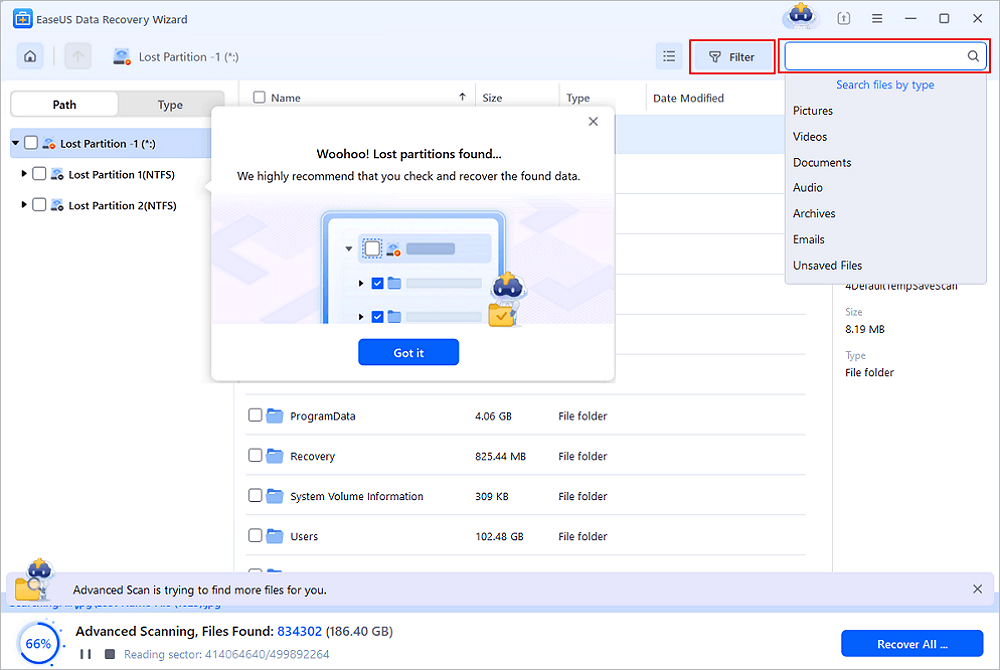
Because there will be a lot of scanned files, you can choose a file category for quick filtering, such as Pictures, Videos, Documents, Audio, and Others. Or if you remember the file name, you can just look it up in the search box in the upper right corner.
Step 3. Preview and recover data from the lost partition
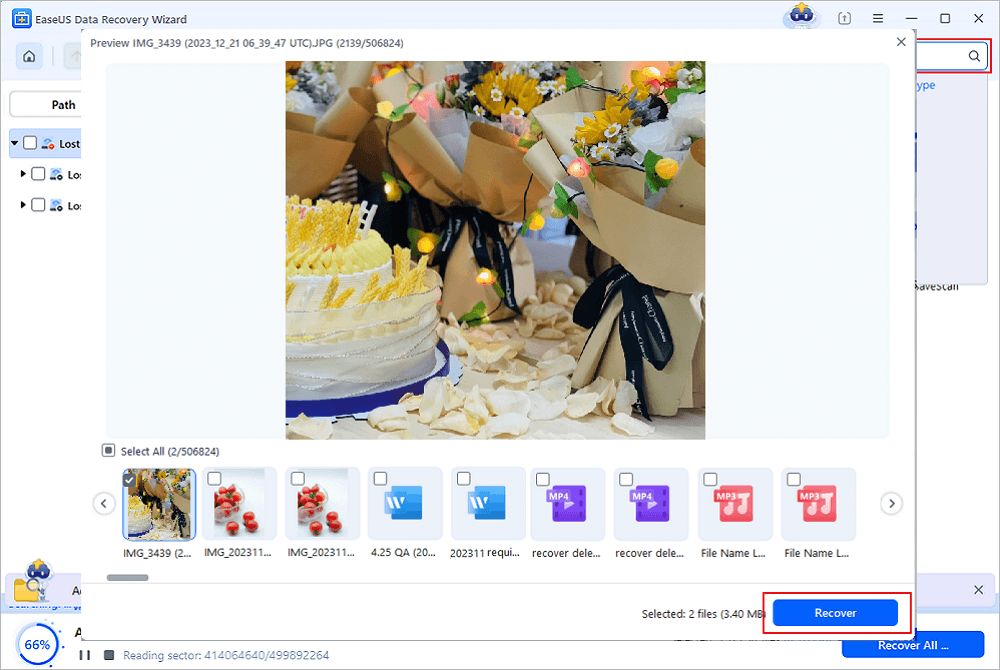
Before recovery, you can preview the file to make sure it is the data you need. Choose all the files you need and click "Recover" to restore them. Choose a storage location (including cloud storage, such as OneDrive, Google Drive, etc.), and click "Save" to save your recovered files.
You can share this partition recovery guide on social media and help more users!

Method 2. Recover Data from a Not Initialized Disk
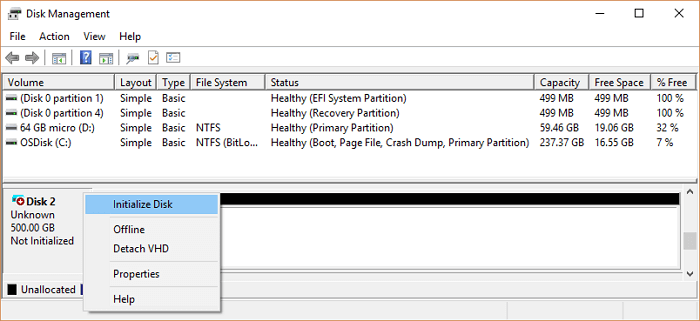
If Disk Management displays your drive as Unknown or Not Initialized, Windows cannot recognize the partition structure. Initializing the disk too early may make recovery more difficult, so recover important files first whenever possible.
Step 1. Check Hardware Connections
Before assuming the partition table is damaged, verify the hardware connection:
- Reconnect the USB cable.
- Try another USB or SATA port.
- Use another computer.
- Replace damaged cables.
- Listen for unusual clicking sounds indicating hardware failure.
Step 2. Recover Important Files
Launch EaseUS Data Recovery Wizard and recover data from an uninitialized disk. Recover all important data to another storage device.
Step 3. Initialize the Disk
Once your files are safely recovered:
- Press Windows + X.
- Open Disk Management.
- Right-click the Not Initialized disk.
- Select "Initialize Disk".
- Choose GPT or MBR.
- Click "OK".
Step 4. Create a New Partition
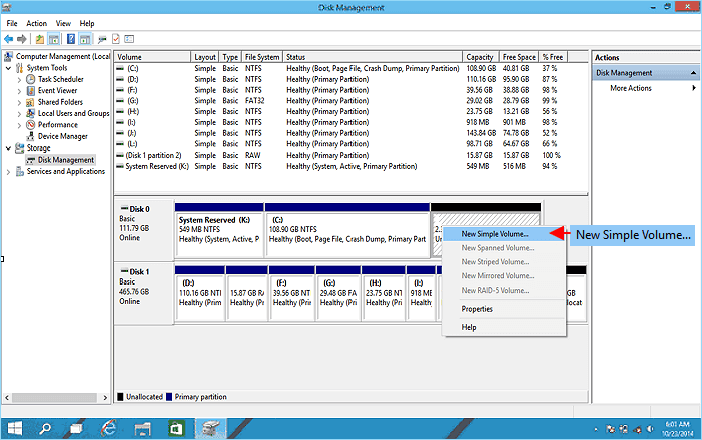
Right-click the unallocated space, choose "New Simple Volume", assign a drive letter, select NTFS (or exFAT), and complete the wizard.
Method 3. Repair the Partition Table When Windows Won't Boot
If the damaged partition table is located on the system drive, Windows may fail to start and display errors such as "Operating System Not Found", "Invalid Partition Table", or a black screen during startup. In many cases, repairing the boot records can restore the system without reinstalling Windows.
This method repairs the boot-related partition information using the Windows Recovery Environment.
Step 1. Insert a Windows installation USB or DVD and boot your computer from it.
Step 2. Select your language and keyboard settings, then click Repair your computer instead of Install now.
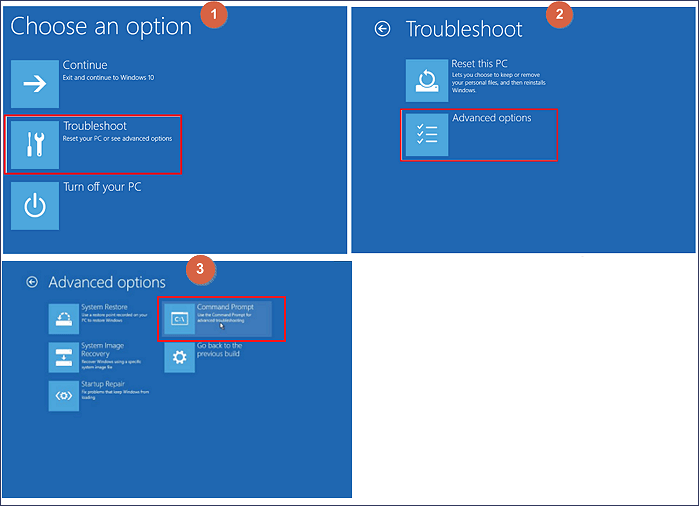
Step 3. Navigate to: Troubleshoot > Advanced Options > Command Prompt.
Step 4. Execute the following commands one by one:
- bootrec /fixmbr
- bootrec /fixboot
- bootrec /scanos
- bootrec /rebuildbcd
Each command repairs a different part of the boot structure:
| Command | Function |
|---|---|
| bootrec /fixmbr | Rewrites the Master Boot Record without affecting partitions. |
| bootrec /fixboot | Creates a new boot sector. |
| bootrec /scanos | Searches for installed Windows systems. |
| bootrec /rebuildbcd | Rebuilds the Boot Configuration Data. |
Step 5. Exit Command Prompt and reboot your PC. If the partition table damage only affected boot information, Windows should start normally.
Method 4. Recover Partition Table Using TestDisk
TestDisk is a free open-source partition recovery utility capable of rebuilding deleted partition tables on both MBR and GPT disks.
Although extremely powerful, it uses a command-line interface and is recommended primarily for advanced users.
Follow these steps to recover a partition table with TestDisk:
- Download and launch TestDisk.
- Select the affected physical disk.
- Choose the correct partition table type.
- Select "Analyze".
- Run a Quick Search.
- If necessary, run a deeper search.
- Verify found partitions.
- Select "Write" to rebuild the partition table.
- Restart Windows.
If TestDisk cannot locate your deleted partition, stop using the disk and recover your files with professional recovery software before attempting additional repairs.
How to Prevent Partition Table Corruption
Although partition table damage is often recoverable, prevention is always the safest approach.
- Back Up Important Data Regularly. Maintain multiple copies of important files using external drives or cloud storage.
- Safely Remove External Drives. Always eject USB drives and external hard disks before disconnecting them.
- Avoid Interrupting Partition Operations. Never shut down your computer while resizing, cloning, converting, or formatting partitions.
- Monitor Disk Health. Use SMART monitoring tools to detect potential disk failures before they become critical.
- Replace Aging Drives. Hard drives with increasing bad sectors are more likely to experience partition corruption.
- Keep Windows and Security Software Updated. Updated firmware, storage drivers, and antivirus software reduce the risk of partition damage caused by software bugs or malware.
Can a Partition Table Always Be Recovered
The answer depends on what caused the partition loss and whether new data has overwritten the original partition information.
| Situation | Recovery Chance |
|---|---|
| Partition accidentally deleted | ★★★★★ Excellent |
| Drive becomes Unallocated | ★★★★★ Excellent |
| Disk shows Not Initialized | ★★★★☆ High |
| Partition becomes RAW | ★★★★☆ High |
| Boot sector corruption | ★★★★☆ High |
| Drive has bad sectors | ★★★☆☆ Moderate |
| SSD with TRIM enabled | ★★☆☆☆ Limited |
| Severe physical damage | ★☆☆☆☆ Low |
Conclusion
A damaged partition table doesn't always mean your files are permanently lost. In most cases, the partition entries become inaccessible while the actual data remains on the disk. Acting quickly is the key to maximizing your recovery success.
If your drive appears as unallocated or uninitialized or contains a RAW partition, avoid formatting or repartitioning it immediately. Instead, use EaseUS Data Recovery Wizard to scan the disk, recover important files, and verify that the lost partition is still recoverable.
After your data is safely backed up, you can repair or recreate the partition table using Windows Disk Management, Bootrec commands, or other partition management tools. Combining safe recovery practices with regular backups is the best way to protect your data and avoid future partition table issues.
Partition Table Recovery FAQs
Can I recover a partition table without losing data?
Yes. In many situations, the partition metadata is damaged while the actual files remain intact. Recover your files first using professional data recovery software before repairing or recreating the partition table.
Does initializing a disk erase data?
Initializing a disk only writes a new partition style (MBR or GPT). However, creating new partitions and formatting afterward may overwrite recoverable data. Always recover important files before initializing the disk.
Can CHKDSK repair a partition table?
No. CHKDSK repairs logical file system errors inside an existing partition but cannot recover deleted or corrupted partition tables.
Is TestDisk safe?
Yes, TestDisk is a trusted open-source recovery utility. However, because it requires manual operations, beginners may accidentally overwrite partition information if incorrect options are selected.
Can SSD partition tables be recovered?
Yes. Recovery is possible if the partition information is damaged, but the underlying data has not been permanently erased by the SSD's TRIM function.
Should I format an unallocated drive?
No. Formatting writes a new file system and increases the chance of overwriting recoverable partition information. Recover data first whenever possible.
How long does partition table recovery take?
The recovery process usually takes between several minutes and several hours depending on disk capacity, interface speed, and the amount of recoverable data.
Can EaseUS recover deleted partitions?
Yes. EaseUS Data Recovery Wizard can detect deleted or lost partitions, recover files stored inside them, and help users restore important data before rebuilding the partition structure.
Was This Page Helpful?
Related Articles
-
Video Recovery Ultimate Guide: Recover Videos from All Devices
![author icon]() Jean/2026-09-20
Jean/2026-09-20 -
HDD Partition Recovery | Restore Deleted Hard Disk Partition
![author icon]() Tracy King/2026-09-20
Tracy King/2026-09-20
 Jean/2026-09-20
  Tracy King/2026-09-20
 -
Lost Partition Recovery Software | Recover Deleted Partitions Easily
![author icon]() Jean/2026-09-20
Jean/2026-09-20 -
4 Effective Ways to Fix Asus Recovery Partition Missing Problem
![author icon]() Cedric/2026-09-15
Cedric/2026-09-15
 Cedric/2026-09-15

