
Recovering files from an external hard drive not detected involves diagnosing connection, driver, file system, or hardware issues and using recovery software to restore inaccessible data before repairing the drive. In many cases, files can still be recovered from RAW, unallocated, or corrupted drives without formatting.
If your external hard drive suddenly vanishes from File Explorer, shows up as RAW in Disk Management, or just won't mount at all, don't freak out. A missing hard drive doesn't always spell disaster for your data. Most of the time, your files are still there, as long as you don't make things worse by formatting the drive or running repair tools over and over.
What Does 'External Hard Drive Not Detected' Mean
An external hard drive not detected error is a storage issue where Windows or macOS cannot properly recognize a connected drive due to file system corruption, hardware failure, driver issues, or connection problems. In many cases, files remain recoverable if the drive is not physically destroyed. This issue can appear in several ways:
| Symptom | What It Means | Recoverable |
|---|---|---|
| RAW drive | File system corruption | Usually yes |
| Unallocated drive | Partition missing or damaged | Usually yes |
| Disk not initialized | Partition table issue | Often yes |
| Clicking noise | Mechanical failure | Difficult |
| Drive not spinning | Power or PCB failure | Possible with professional help |
Logical Failure vs Physical Failure
Before attempting recovery, it is important to determine whether the drive has logical corruption or physical damage.
| Logical Damage | Physical Damage |
|---|---|
| RAW file system | Clicking or grinding sounds |
| Missing partitions | Drive not spinning |
| Drive is not accessible | Burning smell |
| Drive visible in Disk Management | Drive missing in BIOS |
Why Your External Hard Drive Is Not Showing Up
Several hardware and software issues can cause an external hard drive to stop appearing in File Explorer or Disk Management.
1. Faulty USB Cable or Port
A damaged USB cable or insufficient power delivery is one of the most common causes of an external hard drive not being detected. Try the following:
- Use another USB cable
- Connect the drive to another USB port
- Use a powered USB hub
- Connect the drive to another computer
2. Corrupted File System
Improper ejection, malware, or sudden power loss can corrupt the NTFS, exFAT, or FAT32 file system. Common symptoms include:
- "You need to format the disk before you can use it"
- RAW drive status
- Drive visible but inaccessible
- "Location is not available" errors
3. Missing or Corrupted Drivers
Windows updates, corrupted USB controller drivers, or driver conflicts may prevent the system from detecting the drive correctly.
4. Damaged USB Enclosure
Sometimes the hard drive itself is healthy, but the USB-to-SATA bridge board inside the enclosure fails. Typical signs include the following:
- The drive spins but is not detected
- The drive appears intermittently
- The enclosure becomes unusually hot
5. Physical Hard Drive Failure
According to Backblaze drive reliability reports, HDD failure rates increase significantly after 3 - 5 years of heavy use. Common signs of mechanical failure include:
- Clicking noises
- Grinding sounds
- Very slow detection
- Frequent disconnects
- Drive not spinning
You can share these reasons on social media and let more readers know about why an external hard disk is not detected.

Before Recovery: Important Safety Rules
Before attempting any fixes, follow these critical safety rules to maximize your recovery success rate.
What NOT to Do
- Do not format the drive immediately
- Do not copy new files to the drive
- Do not repeatedly reconnect the drive
- Do not open the drive physically
- Do not run CHKDSK repeatedly
When CHKDSK Can Be Dangerous
CHKDSK repairs logical file system structures, but on severely corrupted drives, it may overwrite recoverable file metadata.
Avoid CHKDSK if:
- The drive is clicking
- The drive disconnects randomly
- The drive shows as RAW
- You have not recovered important files yet
When to Stop DIY Recovery
Immediately seek professional data recovery services if:
- The drive was dropped
- The drive has water damage
- The drive overheats rapidly
- You smell burning components
- The drive makes grinding noises

Consult with EaseUS data recovery experts for one-on-one manual recovery service. We could offer the following services after a FREE diagnosis
- Repair corrupted RAID structure, unbootable Windows OS, and corrupted virtual disk files
- Recover/repair lost partitions and re-partitioned drives
- Unformat hard drives and repair RAW drives(Bitlocker encrypted drives)
- Fix disks that become GPT-protected partitions
Important: Every failed recovery attempt can reduce your chances of successful data recovery. If the data is extremely valuable, avoid risky DIY fixes.
How to Recover Files From an External Hard Drive Not Detected
If the drive still appears in Disk Management or spins normally, you can often recover files before repairing the drive.
Quick Recovery Steps
- Stop using the external hard drive.
- Connect it using another USB cable.
- Check whether the drive appears in Disk Management.
- Scan the drive using recovery software.
- Preview recoverable files.
- Recover files to another storage device.
- Repair or format the drive afterward.
Method 1. Recover Files Using EaseUS Data Recovery Wizard
EaseUS Data Recovery Wizard is a good choice when you need to recover files from a corrupted external hard drive, and this tool allows you to scan your disk for free.
With this external hard drive recovery software, you can recover files from:
- RAW drives
- Unallocated disks
- Corrupted partitions
- Drives that are inaccessible
- Drives not detected in File Explorer
In our testing, the software successfully recovered photos, Office files, and videos from a 2TB WD Passport drive that appeared as RAW after an unsafe ejection.
First, check the Drive in Disk Management
Press "Windows + X" and select "Disk Management".
Look for the external hard drive status:
- RAW
- Unallocated
- Unknown
- Offline
Then, you can scan your disk with EaseUS Data Recovery Wizard:
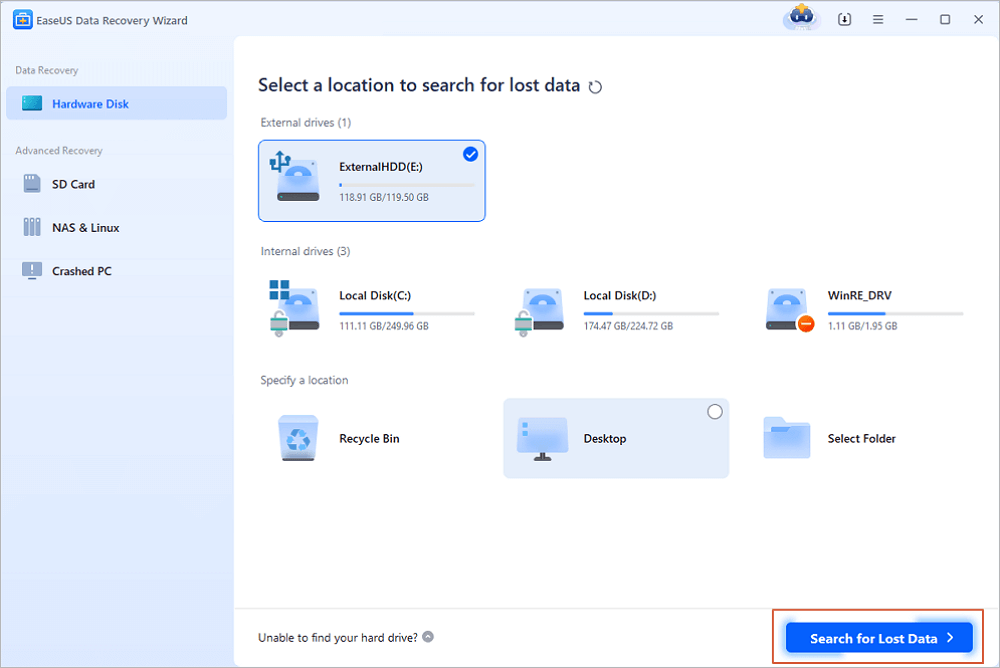
Step 1. Choose and scan the external hard drive
- Download and install EaseUS Data Recovery on your PC or laptop.
- Connect the external hard drive to your computer.
- Run EaseUS Data Recovery Wizard and choose the external drive from External drives list. Then, click "Search for Lost Data".
Step 2. Check the scan results
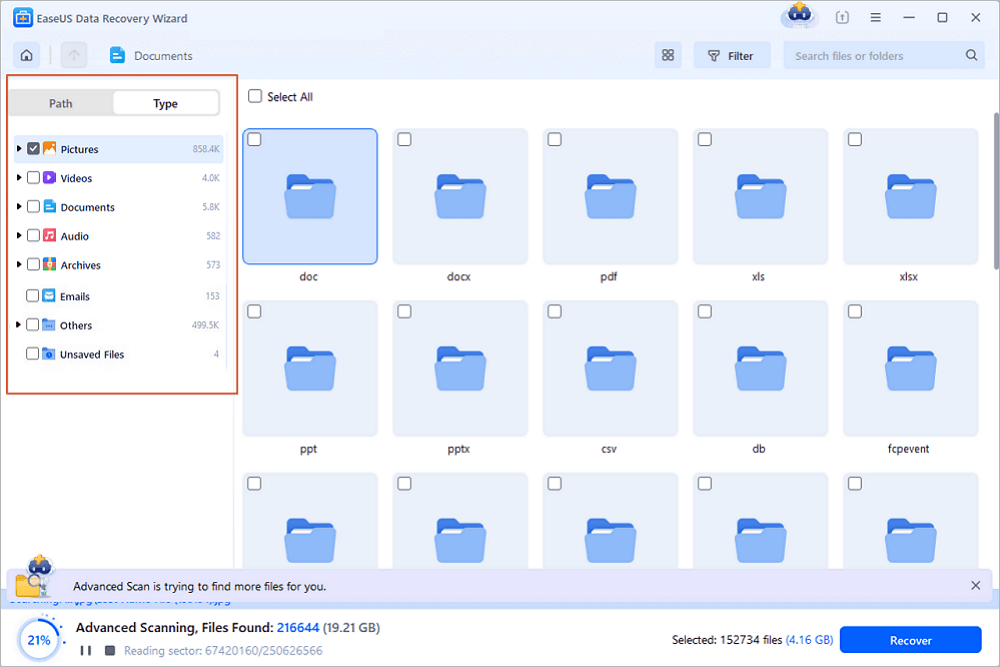
- EaseUS data recovery software will immediately scan the selected drive for all data, including deleted, corrupted, and existing data.
- You can use the Filter feature to quickly locate the files of one kind, such as Pictures, Word, Excel, PDF, videos, emails, etc.
Step 3. Preview and recover data
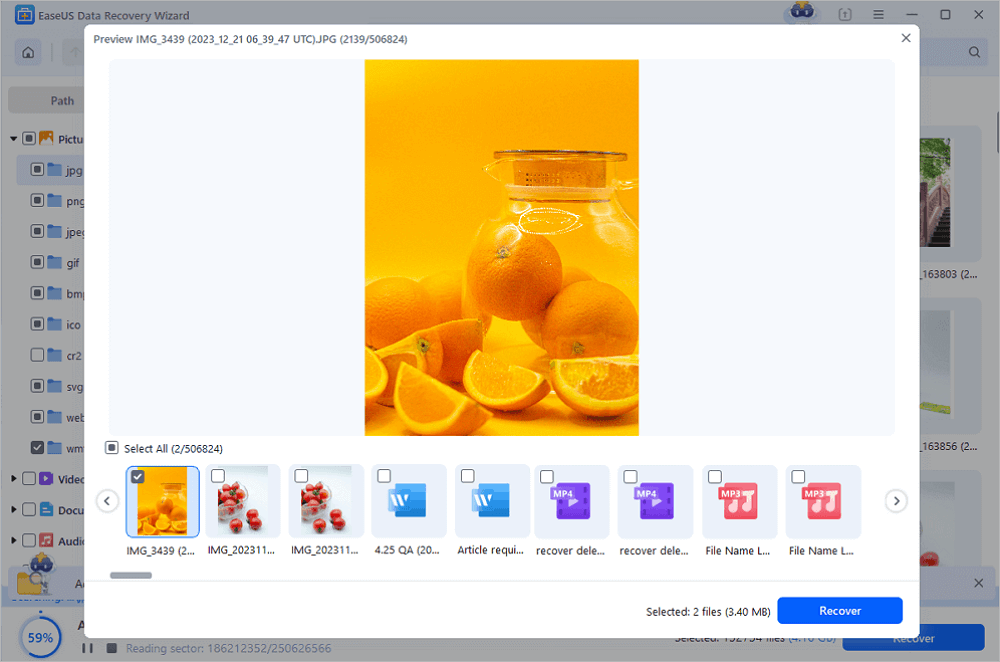
- Double-clicking a file from the scanned results to preview.
- Choose the files you want and click "Recover".
- Select a different drive to save the recovered files instead of the original one.
💡Tip: You can restore data on the local disks, external hard drives, and also the cloud storage.
Key Takeaway
- Recover files before repairing the drive.
- RAW drives are often recoverable.
- Save recovered files to a different device.
Method 2. Recover Files Using PhotoRec
PhotoRec is a free, open-source data recovery tool designed for advanced users.
✅Advantages:
- Completely free
- Supports RAW recovery
- Works on damaged partitions
❗Limitations:
- Command-line interface
- No original folder structure
- Less beginner-friendly

PhotoRec Review: Still Capable of Recovery in 2026
PhotoRec is a file recovery program designed to recover lost files, including video, documents, and archives, from hard disks. Read more >>
How to Fix an External Hard Drive That Is Not Detected
After recovering important files, you can safely attempt to repair the drive.
Fix 1. Assign a Drive Letter
If the drive appears in Disk Management but not File Explorer, it may not have a drive letter.
Step 1. Open Disk Management.
Step 2. Right-click the external drive.
Step 3. Select "Change Drive Letter and Paths".
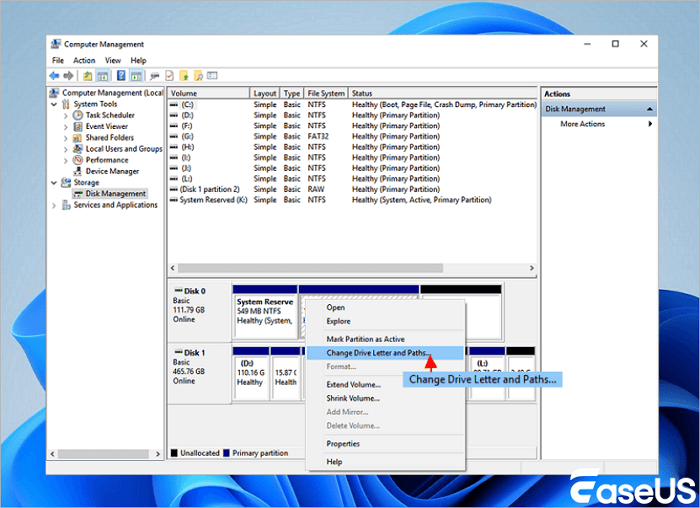
Step 4. Click "Add" or "Change".
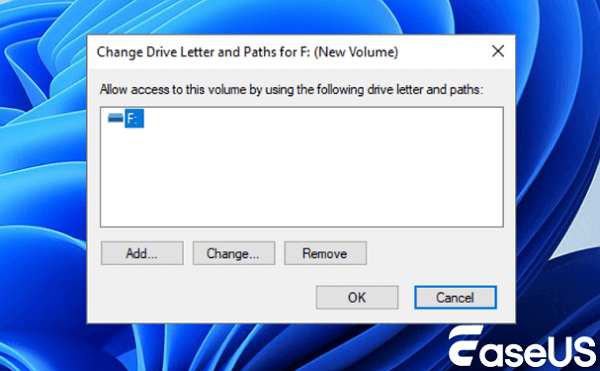
Step 5. Assign a new drive letter.
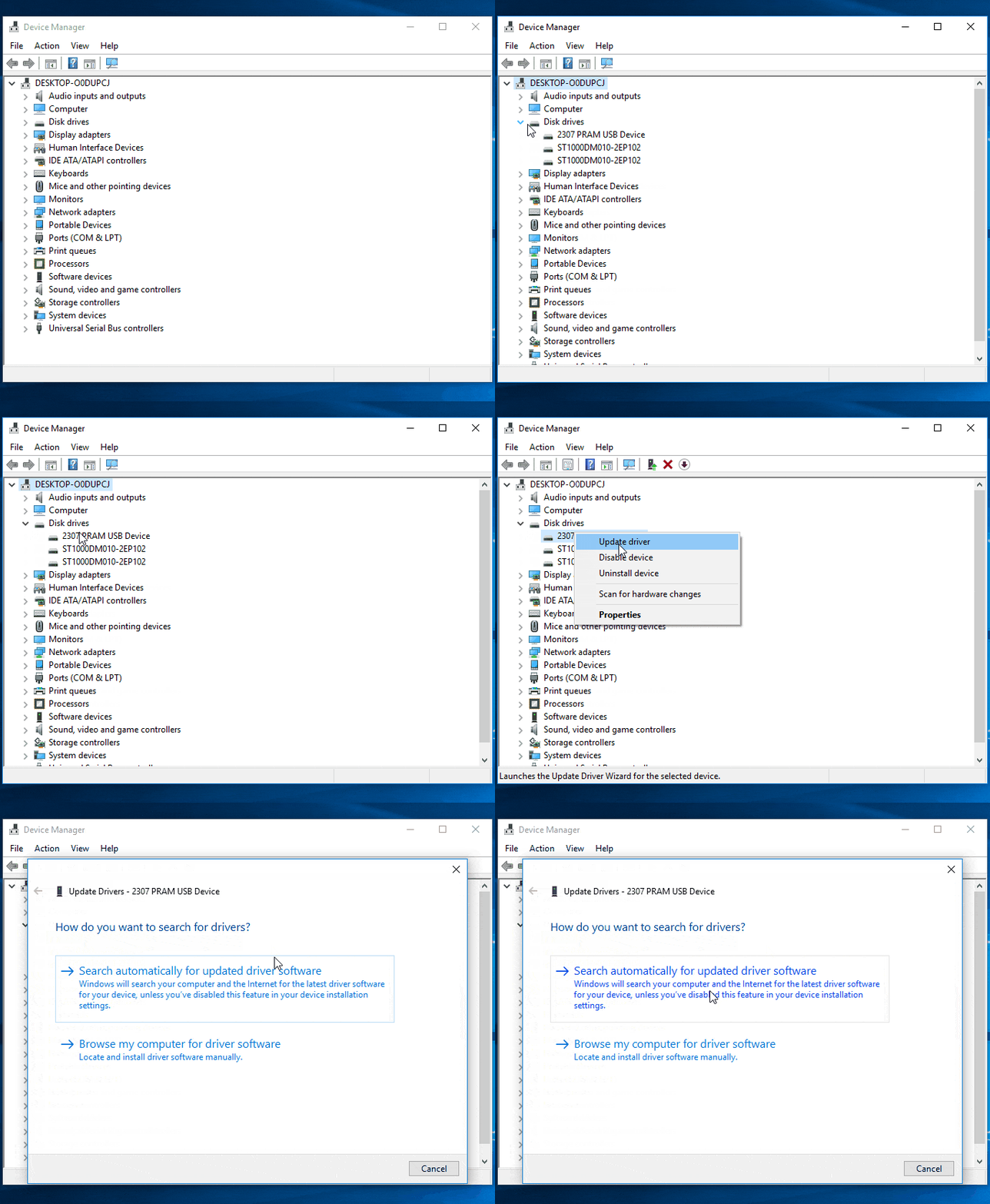
Fix 2. Update Hard Drive Drivers
Step 1. Open Device Manager.
Step 2. Expand Disk Drives.
Step 3. Right-click the external hard drive.
Step 4. Select "Update Driver".
Step 5. Choose "Search automatically for updated driver software".
Fix 3. Repair a RAW External Hard Drive
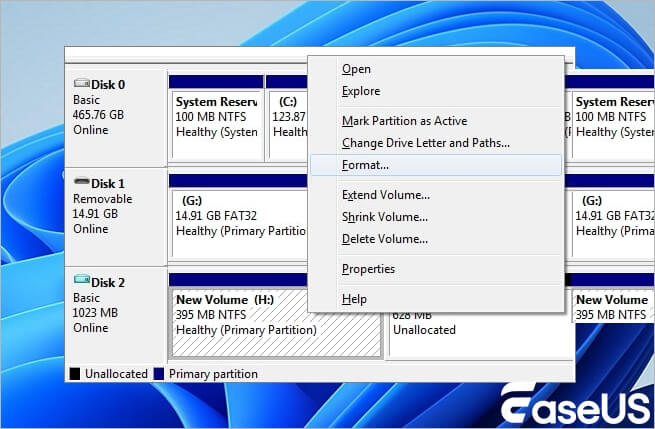
If the drive shows as RAW, formatting may restore usability after recovery is complete.
Step 1. Open Disk Management.
Step 2. Right-click the RAW drive.
Step 3. Select "Format".
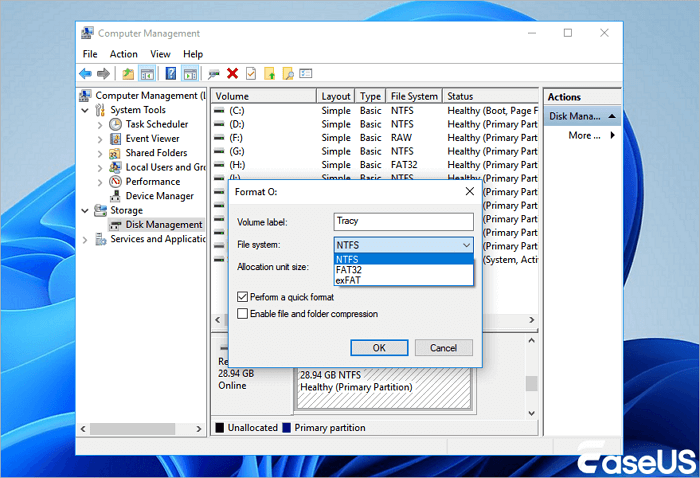
Step 4. Choose:
- NTFS for Windows
- exFAT for Windows and Mac compatibility
Fix 4. Replace the USB Enclosure
If the hard drive spins normally but isn't detected, the USB bridge board inside the enclosure may have failed.
Symptoms include:
- Drive spins but does not mount
- Intermittent detection
- No abnormal clicking sounds
You can remove the drive from the enclosure and connect it directly using:
- SATA-to-USB adapter
- Desktop SATA connection
- New enclosure
Fix 5. Run CHKDSK Carefully
Only run CHKDSK after recovering important files. Open Command Prompt as Administrator and enter: chkdsk C: /f /r /x. Replace C with your drive letter
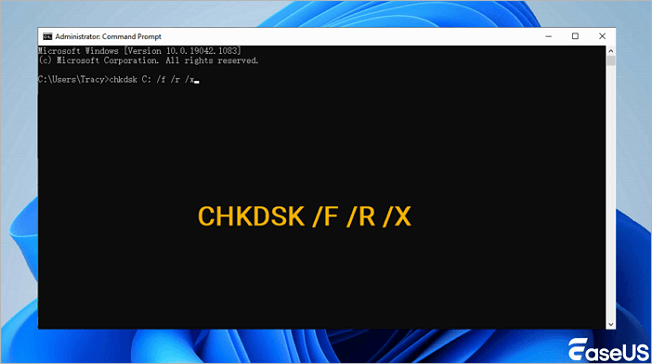
CHKDSK may fix:
- Bad sectors
- File system inconsistencies
- Logical corruption
How to Prevent External Hard Drive Failure
Prevention is far easier and cheaper than recovery.
1. Monitor Drive Health
Use SMART monitoring tools to track:
- Reallocated sectors
- Temperature
- Read/write errors
- Drive health percentage
2. Follow the 3-2-1 Backup Rule
Keep:
- 3 copies of your data
- 2 different storage media types
- 1 offsite backup
3. Safely Eject External Drives
Unsafe removal can cause:
- RAW partitions
- Corrupted file systems
- Partition loss
- File corruption
4. Avoid Physical Shock
External HDDs are sensitive to:
- Dropping
- Vibration
- Overheating
- Water exposure
Conclusion
An external hard drive not detected error does not automatically mean permanent data loss. In many situations, the problem is caused by logical corruption, missing drive letters, USB enclosure failures, or outdated drivers.
The safest recovery workflow is:
- Stop using the drive immediately
- Diagnose the issue carefully
- Recover files before repairs
- Repair or format the drive afterward
If the drive shows signs of physical failure, avoid risky DIY fixes and contact a professional recovery lab as soon as possible to maximize your chances of successful data recovery.
FAQs About External Hard Drive Not Detected Recovery
1. Can I recover files from an external hard drive not detected?
Yes. If the drive still appears in Disk Management or spins normally, recovery software can often restore files successfully before the drive is repaired or formatted.
2. Why does my external hard drive appear in Disk Management but not File Explorer?
This usually happens because the drive does not have a drive letter, the partition is corrupted, or the file system has become RAW.
3. What does RAW mean on an external hard drive?
A RAW drive means Windows cannot recognize the file system due to corruption or partition damage.
4. Can I recover files without formatting the drive?
Yes. In many cases, you can recover files using recovery software before formatting becomes necessary.
5. Is CHKDSK safe for recovering data?
Not always. CHKDSK may overwrite damaged file system structures and reduce recovery success on severely corrupted drives.
6. Why is my external hard drive spinning but not detected?
Possible causes include USB bridge failure, partition corruption, driver issues, or PCB damage.
7. Should I initialize an unknown disk?
No. Recover important files first because initialization may overwrite partition information.
8. Can malware cause an external hard drive to disappear?
Yes. Malware can corrupt partition tables, damage file systems, or hide partitions.
9. Can a dead hard drive still be recovered?
Sometimes. Logical failures have high recovery success rates, while severe mechanical damage usually requires professional recovery labs.
10. When should I contact professional recovery services?
You should contact professionals immediately if the drive clicks, overheats, smells burnt, has water damage, or cannot spin properly.
Was This Page Helpful?

Dany is an editor of EaseUS who lives and works in Chengdu, China. She focuses on writing articles about data recovery on Mac devices and PCs. She is devoted to improving her writing skills and enriching her professional knowledge. Dany also enjoys reading detective novels in her spare time.

Approved by Evan Galasso
Evan Galasso is a digital forensics and data recovery engineer with over 10 years of experience in the field. He presents opinions on the current state of storage media, reverse engineering of storage systems and firmware, and electro-mechanical systems of SSDs and HDDs.
Related Articles
-
SD Card Not Showing Up or Working in Windows 11/10
![author icon]() Tracy King/Jun 16, 2026
Tracy King/Jun 16, 2026 -
The Parameter Is Incorrect | Drive Is Not Accessible [Solved]
![author icon]() Tracy King/Jun 09, 2026
Tracy King/Jun 09, 2026 -
WD External Hard Drive Not Showing Up But Light On (7 Fixes)
![author icon]() Tracy King/Jun 09, 2026
Tracy King/Jun 09, 2026 -
Toshiba External Hard Drive Not Working/Showing Up [11 Fixes]
![author icon]() Tracy King/Jun 16, 2026
Tracy King/Jun 16, 2026
 Tracy King/Jun 16, 2026

