

Page Table of Contents

PAGE CONTENT:
A powerful hard drive will work if your PC is slowing down or you want to improve performance. Now, the hard drive needs Windows 10/11 to run the PC. But how to reinstall Windows on a different drive without losing data? This post is the ultimate guide to reinstalling Windows on a different drive. We will discuss 3 methods to reinstall Windows on a new drive.
Clone Windows to a New Drive Without Reinstalling
Cloning is the simplest method to move Windows 10 from one drive to another. If you have important files, apps, and settings, cloning copies of data bit-by-bit is an excellent way to reinstall Windows without losing data. EaseUS Disk Copy is an advanced cloning tool that moves apps, data, and OS to the new drive without reinstalling Windows. With 3 simple steps, you will have a replica of your source drive on the target drive.
Irrespective of the size and manufacturer of the hard drive, the software works for all clients. You can use it to copy your operating system to a new hard drive wihtout reinstalling Windows or losing data. If you are using Windows 10 and want to upgrade to Windows 11 on a larger drive, EaseUS suits you because it has a "Migrate to Win11" feature that can help you upgrade to Windows 11 on a larger drive while keeping all your data and settings.
Download Disk Copy now, and connect the hard drives on your computer via a USB-to-SATA cable to clone your Windows onto a different drive.
 Free Download
Windows 11/10/8/7
Here is how to clone Windows to a different hard drive using EaseUS Disk Copy:
Before cloning:
- If your computer has only one slot, connect the target disk to your machine via a USB-to-SATA/NVMe adapter.
- If your computer has an extra slot, install the target disk into the empty slot properly, and make sure it is compatible.
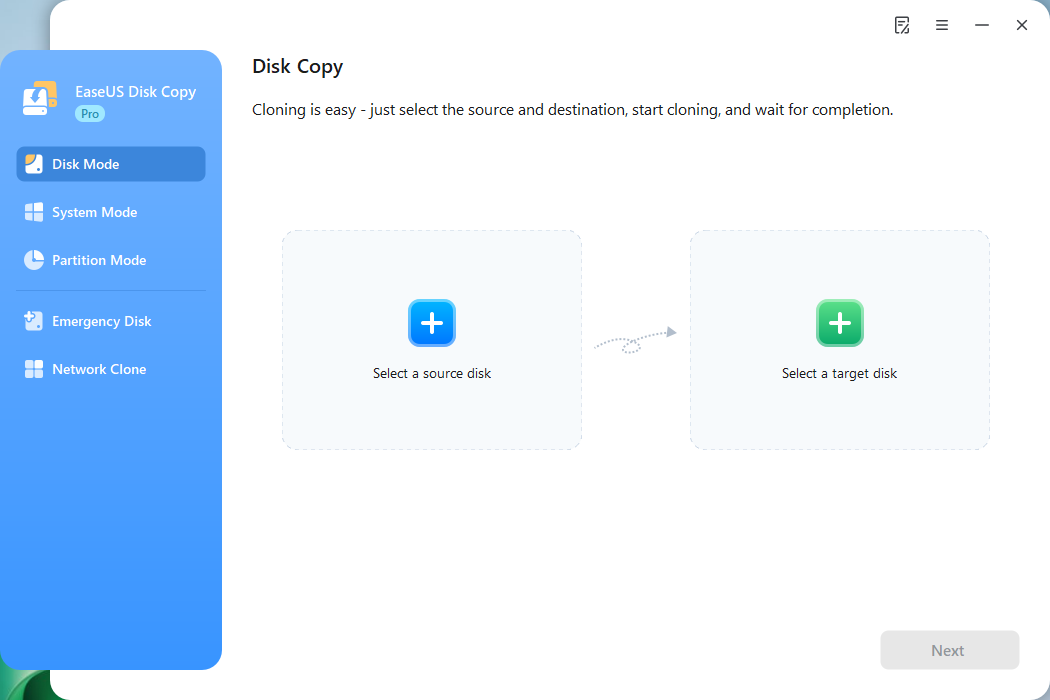
Step 1. Launch EaseUS Disk Copy and choose Disk Mode.
Install EaseUS Disk Copy cloning software on your Windows computer, then launch it and select Disk Mode from the left panel.
Step 2. Select the source drive.
Select the drive you want to copy, then click Select.
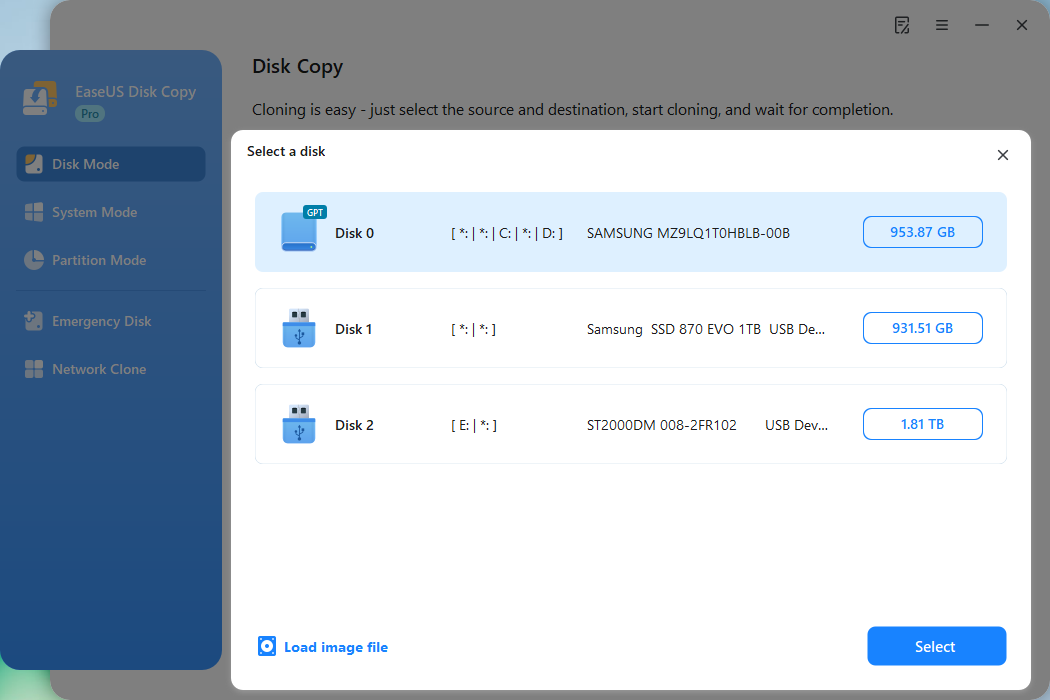
Step 3. Choose the target disk.
Choose the disk that you want to clone data to, and click Select. Note that the used space of the source disk should be less than the target disk capacity.
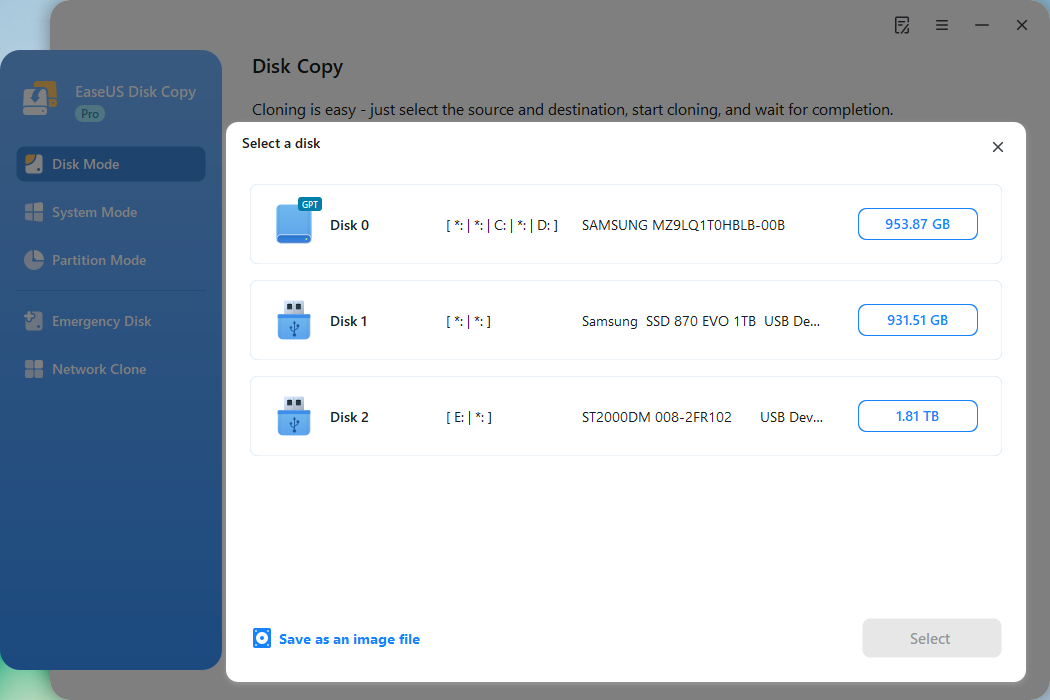
*At this step, you can also click the option "Save as an image file" to store your disk as a compressed image file, which can be restored without any data loss.
Step 4. Adjust disk layout.
Specify the target disk layout as your preference. You can choose among:
- Autofit the disk: makes some changes by default on the destination disk layout so that it can work at its best.
- Copy as the source: create a 1-to-1 copy of your source disk; the layout is the same as the source disk.
- Edit disk layout: allows you to manually resize/move the partition layout on this destination disk.
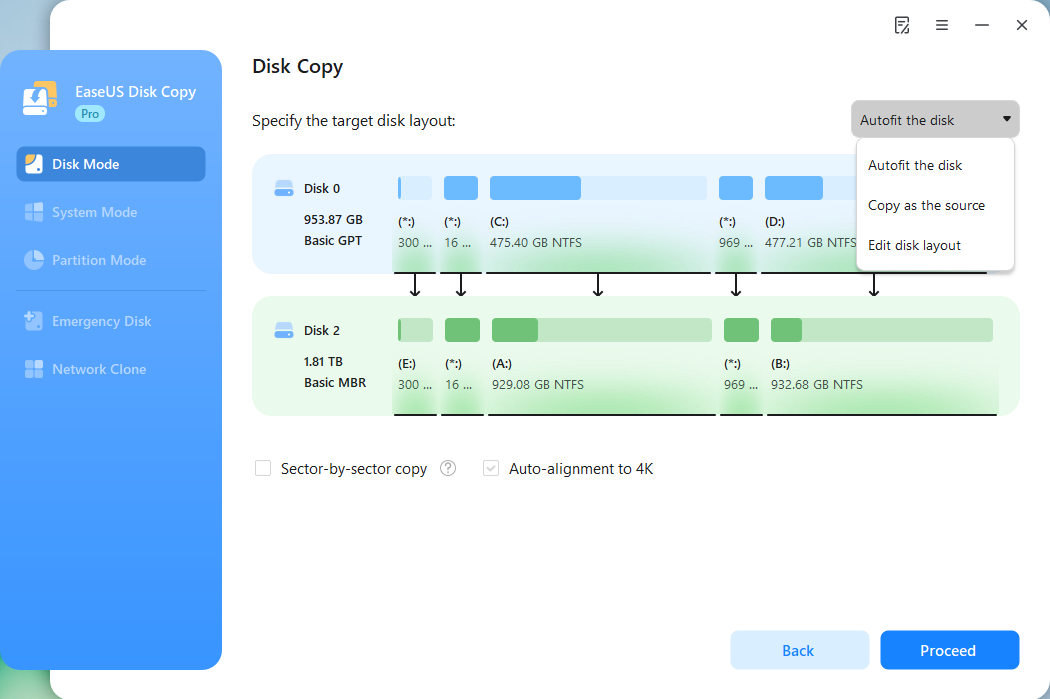
*If the target disk is an SSD, the option "Auto-alignment to 4K" will be checked automatically to optimize the performance of your SSD.
Step 5. Start cloning.
Click Proceed, and a message will appear, warning you that data will be lost. Confirm the message by clicking Continue.
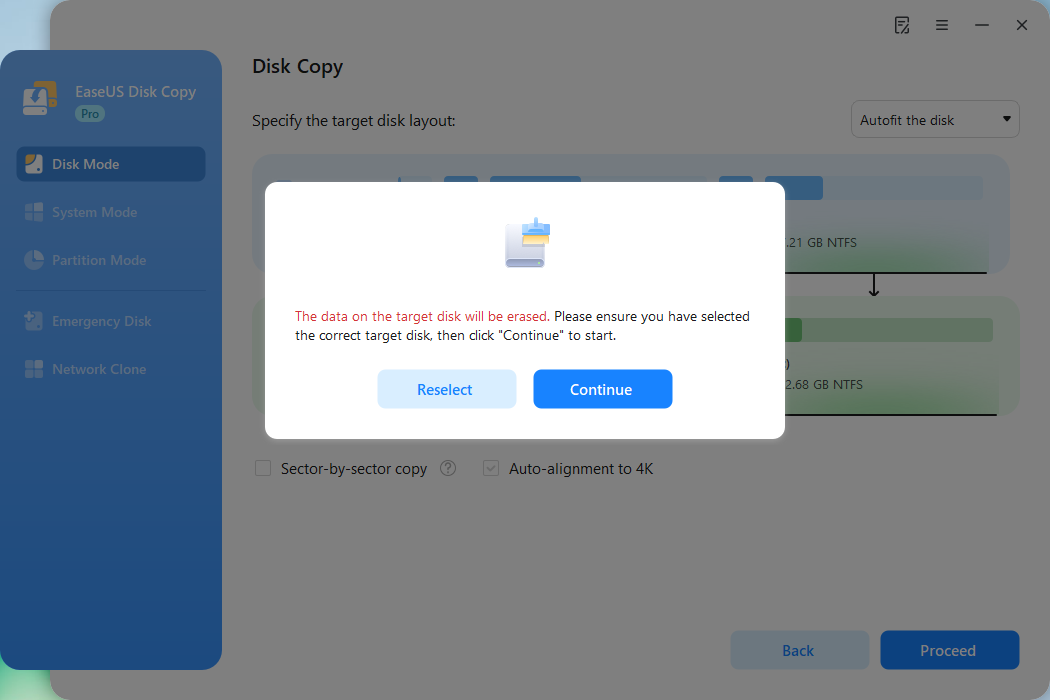
Now, it will start executing the cloning task.
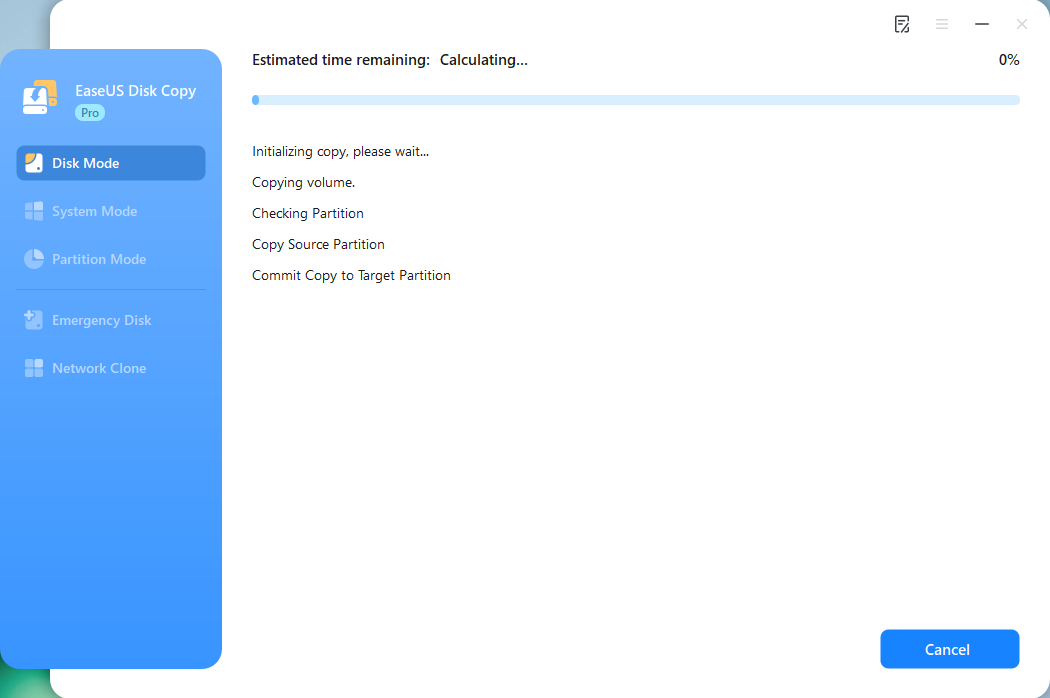
*The time it takes to clone a hard drive depends on how much data is on the source disk, and it will also be affected by the disk types, USB connection, etc.
Download the software to clone Windows to another drive without reonstalling Windows or losing data!
Free Download
Windows 11/10/8/7
This video shows how to clone a hard drive to another using EaseUS Disk Copy:
Share this post on social media to help others reinstall Windows on different disks easily!
Clean Install Windows 10 on Different Drive from USB
Clean Install is a process of installing Windows 10 from scratch. The downside is that it erases all the data, including apps, settings, and files on the PC. To reinstall Windows on a different drive, you must create bootable installation media (a USB drive) with the Windows Media Creation Tool, connect the new drive and disconnect the old one, and then boot from the USB to perform a custom installation onto the new drive.
- Tip
- If you prefer to install Windows 10 cleanly, backup crucial data to the cloud or another drive. EaseUS Todo Backup helps protect important data with cloud and hard drive backup options.
Part 1. Create Bootable Windows Installation Media
A clean install requires some installation media to get Windows onto the new hard drive. This part discusses creating a bootable USB drive to boot Windows from the hard drive. We will be using the Media Creation Tool to achieve this. If you have a Windows 10 ISO file, you can use Rufus to dump it on a USB or choose EaseUS OS2Go to create a Windows 10 bootable USB without downloading any ISO file.
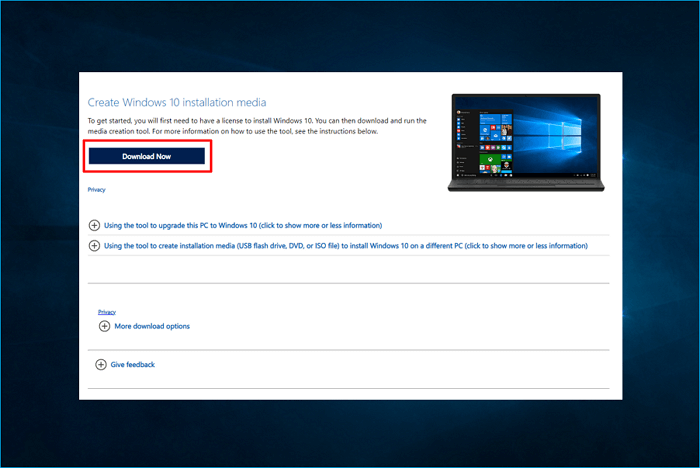
Step 1. Get the Windows Media Creation Tool on your PC from the Microsoft website.
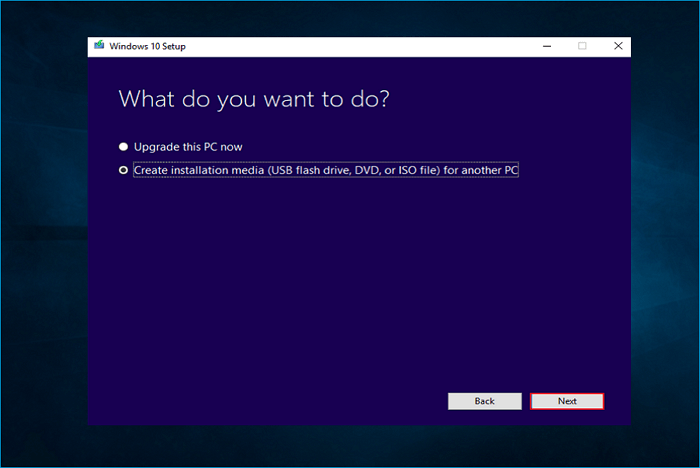
Step 2. Install and open the Media Creation Tool. Click Create Installation Media and connect the USB to install Windows 10 files.
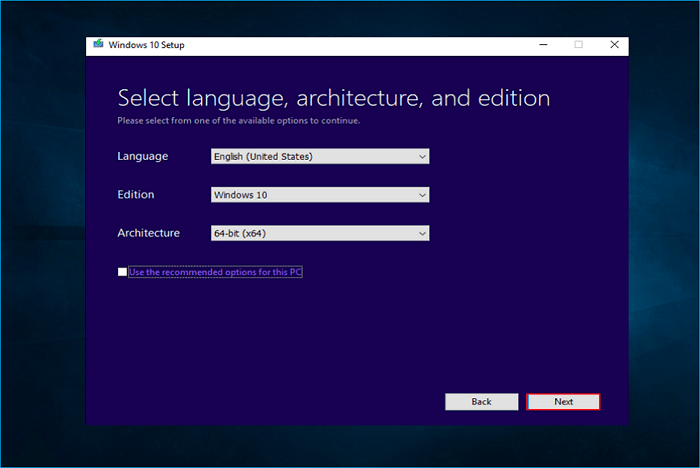
Step 3: Select basic settings like Langauge, Edition, and Architecture.
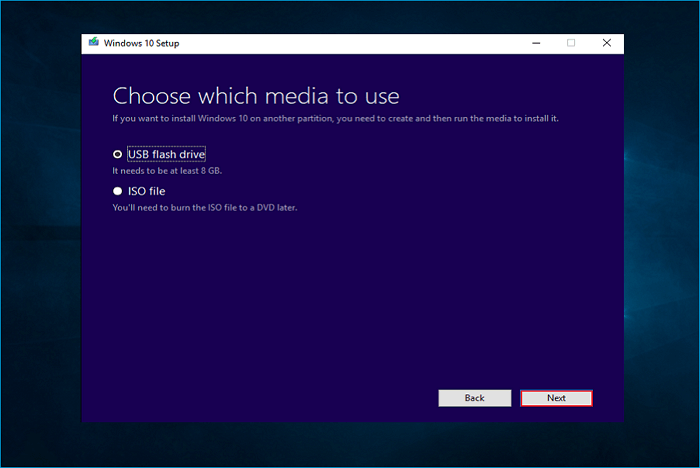
Step 4: Now, you select the USB flash drive option to get the Windows 10 installation files.
Step 5: Ensure the USB is properly connected and click Removable drives to see the USB option. Select the USB and Next.
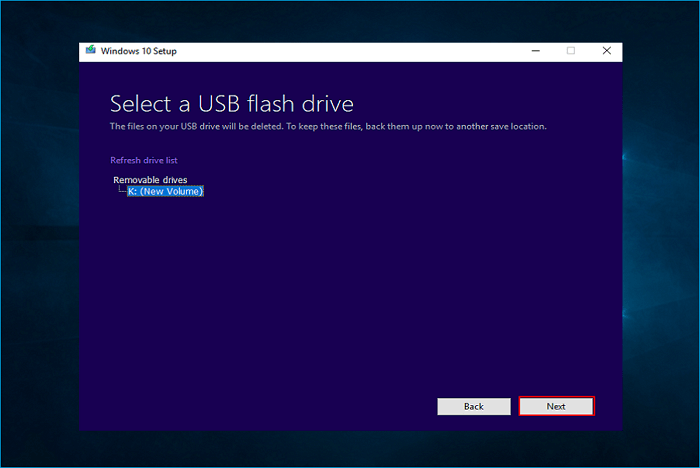
Step 6. Now, the MCT starts installing Windows 10 files onto the USB. Wait until the process is complete. The system says "done" when the process is complete. The time taken depends on the size of the files and the internet connection.
Part 2. Install Windows on the New Drive
Step 1. Get the USB flash drive and insert it into the PC. Enter the BIOS Settings and mark the USB flash drive as the boot disk.
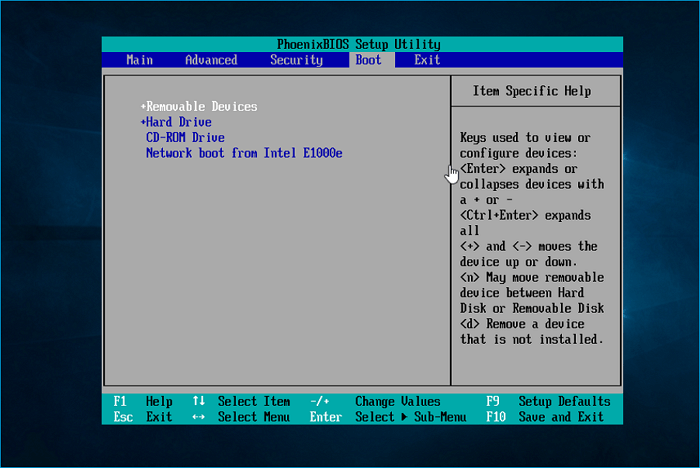
Step 2. Restart the PC, and now the PC boots from the USB. You will be redirected to the Windows setup to start the Windows 10 installation setup. Choose Language, Time, Currency, and Keyboard method, and click Next.
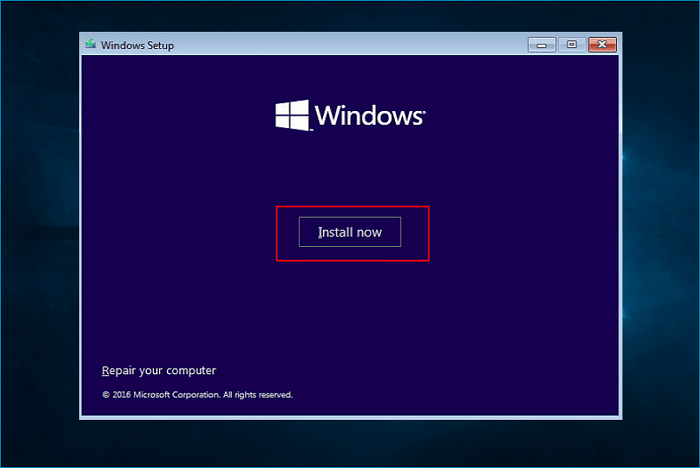
Step 3. Click Install Now.
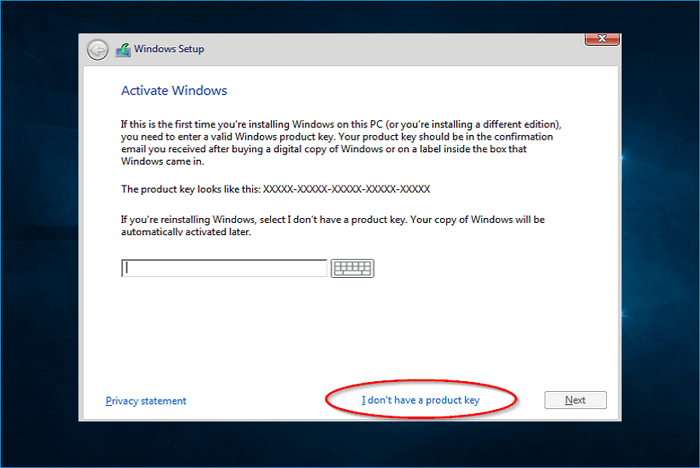
Step 4. Windows asks for a product key to activate Windows. You must provide a product key if you install drive on a new PC without any prior Windows. If not, click I don't have a product key; the OS takes care of it automatically.
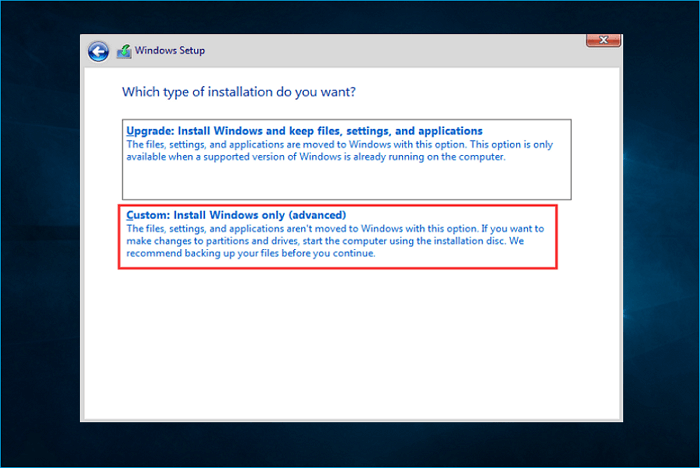
Step 5. Select Custom: Install Windows only (advanced) to proceed with a clean/fresh install.
Step 6. First, delete the data and partition on the drive you want to install Windows 10. Once done, select the drive to install Windows 10 files from USB.
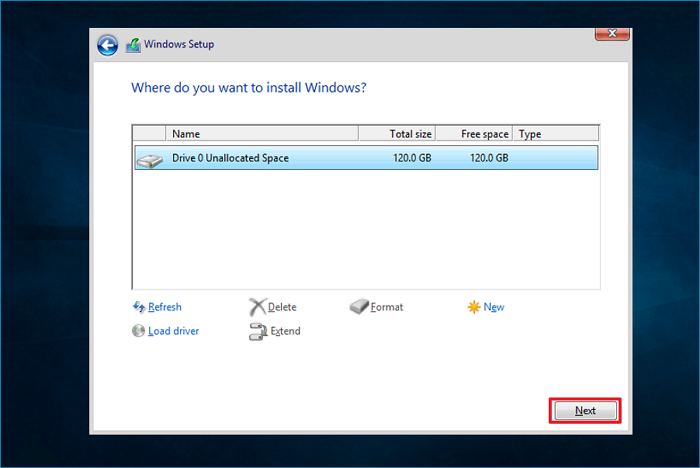
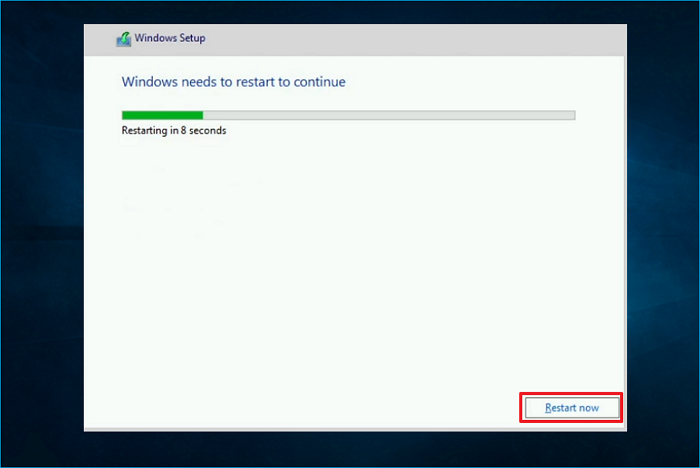
Step 7. Click Next, and follow the Setup to complete the Windows 10 clean install. Restart the PC.
Part 3. Finalize the Setup
After the installation is complete and Windows has booted up, shut down the computer again, reconnect your old drive to the PC and boot your computer. You may need to enter the boot menu again to ensure the new drive is still the primary boot device. Once Windows is running, you can access your old drive in File Explorer and right-click on the old drive and select "Format" to erase it completely and prepare it for use as a secondary drive.
Share this post on social media to help others reinstall Windows on different disks easily!
Reinstall Windows on Another Drive Without USB
If a USB is not available to create installation media, or you want a way to keep the data, apps, and settings, installing Windows 10 through an ISO file is an ideal option. You can mount the latest Windows 10 version and choose to retrieve your data. The steps to use an ISO file to reinstall Windows 10 are given below.
Step 1: Click "Download now" for the Media Creation Tool. Run the MCT as an administrator.
Step 2: Accept the terms and conditions and click Continue.
Step 3: Select the "Create Installation Media for another PC" option to download the ISO file.
Step 4: Choose the Language, Edition, and Architecture to get started with Windows 10 ISO Install. Windows also gives recommended options for choosing the best setup.
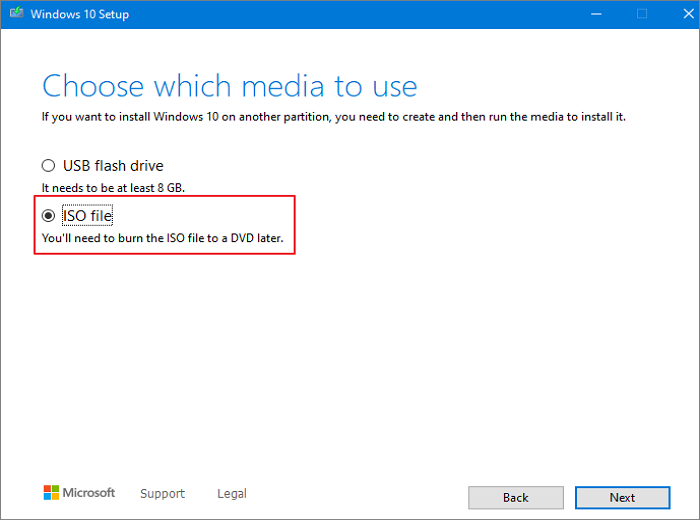
Step 5: Pick the ISO file as the media type to install Windows 10.
Step 6. Find the Windows 10 ISO file, right-click, and select Properties. In the General tab, click Change > Windows Explorer as the program to open ISO files.
Step 7. Right-click on the ISO file, and select Mount to ISO files in Windows Explorer.
Step 8. Get into the Windows 10 ISO file and double-click on setup.exe.
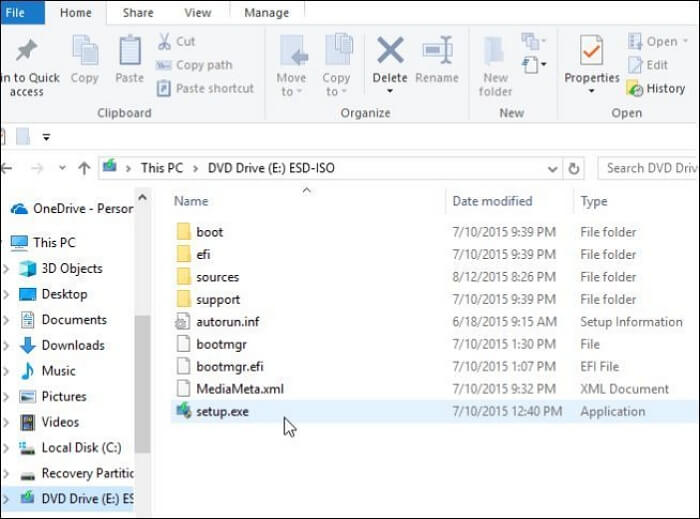
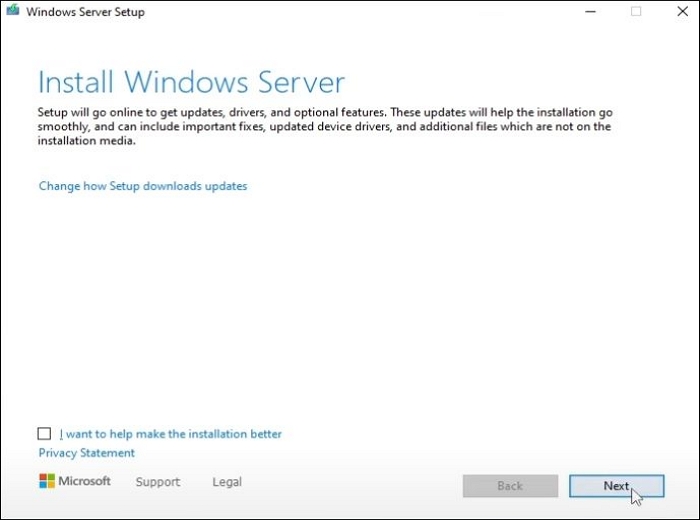
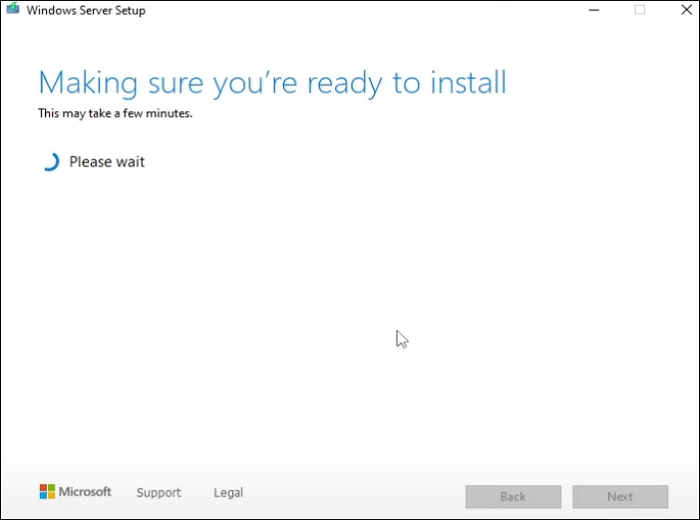
Step 9. On the Install Windows Server window, Change how Windows Setup downloads updates > Not right now > Next.
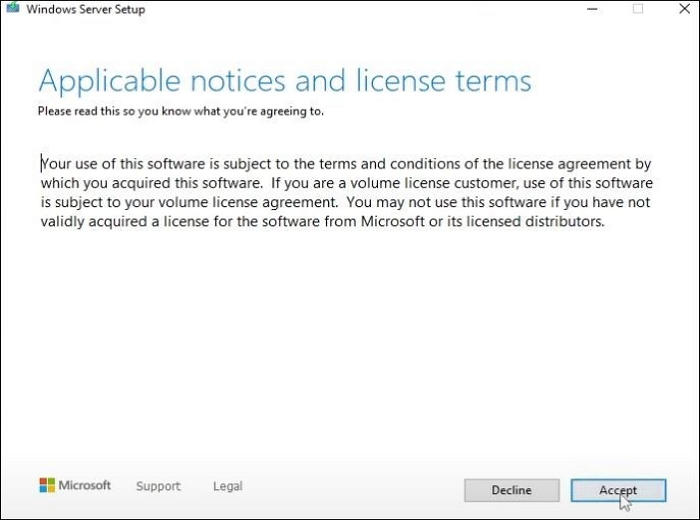
Step 10. Accept the terms and notices to continue with Windows 10 reinstall.
Step 11. This method gives options to keep the files and apps. The options are:
- Keep personal files and apps.
- Keep personal files only.
- Nothing.
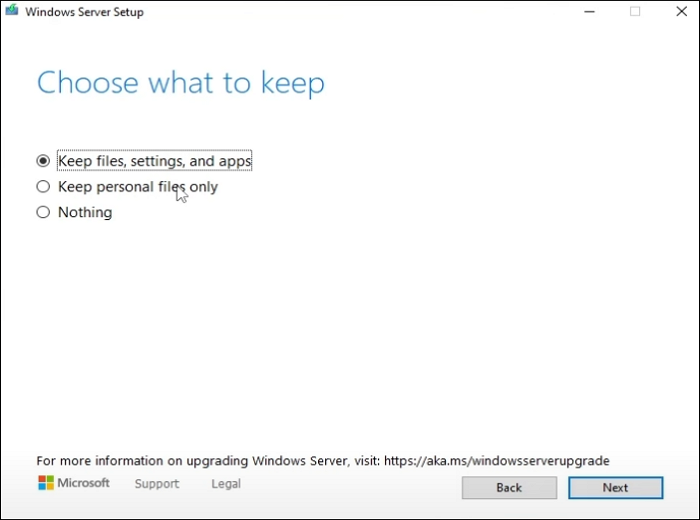
Step 12. Once you hit Next, the OS reinstalls Windows 10 on a different drive. You must now complete the setup and restart the PC.
Share this post on social media to help others reinstall Windows on different disks easily!
To Sum Up
Moving the Windows to a different drive can be tricky sometimes, as it may put your data at risk. The post is an ultimate guide to reinstall Windows 10 on different drives by cloning disks and performing a clean installation (from bootable USB and using an ISO file). As a prerequisite, ensure you have a backup of essential files in case of unfortunate incidents.
Arguably, the best way to reinstall Windows on other drives is cloning. Cloning with EaseUS Disk Copy captures the data bit-by-bit, ensuring data, Windows, settings, and apps are safely transferred to the new drive.
Free Download
Windows 11/10/8/7
FAQs on How to Reinstall Windows 10 on a Different Drive
Here are some frequently asked questions on how to reinstall Windows to different drive.
1. Will I lose my Windows 10 license if I reinstall?
No, Reinstalling Windows 10 will not invalidate your license. When you reinstall the Windows, the Windows 10 license will automatically activate. If you have installed and activated Windows, the OS automatically recognizes it when reinstalling.
2. How do I boot my computer from another hard drive?
BIOS environment helps you boot the PC from another hard drive. Shout down and restart the PC while restarting, repeatedly press the BIOS key (F1, F2, F10, F12, Del) depending on the manufacturer) to enter the BIOS. you can change the Boot drive in the Boot section.
3. How do I change my operating system to another hard drive?
An ISO file or cloning will help you transfer the operating system to another hard drive. Cloning will copy the old drive contents to transfer the OS, whereas the ISO file installs the latest Windows 10/11 version on the hard drive.
4. How to install an operating system on a new hard disk?
A clean install with a USB or ISO file installs the operating system on the new hard disk. You should create Windows installation media on the USB using Media Creation and boot the PC to install the OS. Additionally, cloning the old drive to the new hard disk also works.
5. How do I install Windows 11 onto my second drive?
To install Windows onto a secondary hard drive, you can clean install Windows 11 on the new drive. This requires creating bootable installation media, connecting the new drive, disconnecting the old one, and then booting from the USB to perform a custom installation onto the new drive. After installation, you need to reinstall the necessary hardware and programs.
If you do not want to reinstall programs, you can also clone Windows to your secondary hard drive using EaseUS Disk Copy. Cloning will transfer all your data, including Windows, programs, settings, and files to another drive. You need to connect the new drive to yur PC via the USB-to-SATA cable or install it internall on your PC, and run the cloning software to clone the old dirve to the new one.
-
Updated by
![]()
Jerry
"I hope my articles can help solve your technical problems. If you are interested in other articles, you can check the articles at the bottom of this page, and you can also check my Facebook to get additional help."…Read full bio