



Content
Page Table of Contents
About the Author
Hot Topics
|
Cloning Windows 7 to a USB drive is not the same as copying system files. The real objective is to create a fully bootable Windows 7 environment on a USB device that can be used for system recovery, hardware troubleshooting, legacy software access, or emergency startup. |
This guide focuses on helping users clone an existing Windows 7 system to a USB drive and successfully boot from it, avoiding common failures such as USB not booting, missing system partitions, or BIOS not detecting the device. By following the correct process, you can turn a standard USB drive into a portable Windows 7 startup disk.
Although Microsoft ended support for Windows 7, many users still rely on it for legacy hardware compatibility, specialized software, or offline systems. In these scenarios, cloning Windows 7 to a USB drive becomes a practical solution.
Common use cases include:
- Creating a bootable Windows 7 USB for system recovery when the internal disk fails
- Migrating a Windows 7 system for testing or maintenance purposes
- Preserving a working Windows 7 environment before hardware upgrades or disk replacement
Real User Cases From Forums:
How Can I Create a Windows 7 Bootable USB Free Now? Hi, My old PC was broken and unable to get into the desktop. I want to install Windows 7 system on my machine but I don't have a DVD drive. I've heard that using a USB flash drive can be a convenient alternative, but I'm uncertain about the steps involved in making this bootable device. - From Microsoft
How do I copy an installed operating system (Windows 7) to a pen drive? - From Quora
The goal is not just data duplication, but ensuring the cloned USB drive contains all required boot information, allowing Windows 7 to load correctly from external storage. Feel free to share this post if it helps.

Before starting the cloning process, it is critical to understand the technical limitations and compatibility requirements of Windows 7 USB booting.
|
Notice - Compatibility and System Requirements to Clone Windows 7 to USB Key factors to consider:
Ignoring these factors is one of the most common reasons users fail to boot Windows 7 from a cloned USB drive. |
Preparation for Cloning Windows 7 to USB
To ensure that you can clone Windows 7 to USB smoothly without losing data, you need to do the following preparations:
1. Back up the data on the USB
The cloned Windows 7 data will overwrite the contents on the USB. If you have any critical data, you can use the Windows built-in tool or use professional backup software to backup the data.
2. Ensure storage space on the USB is enough
To ensure that all Windows 7 data is cloned successfully and no data is lost, you need to ensure that the available space on the USB is larger than the used space on the hard disk of Windows 7. Open File Explorer or Disk Management to view and confirm if the storage capacity is enough on the USB drive.
3. Make sure the format of the USB
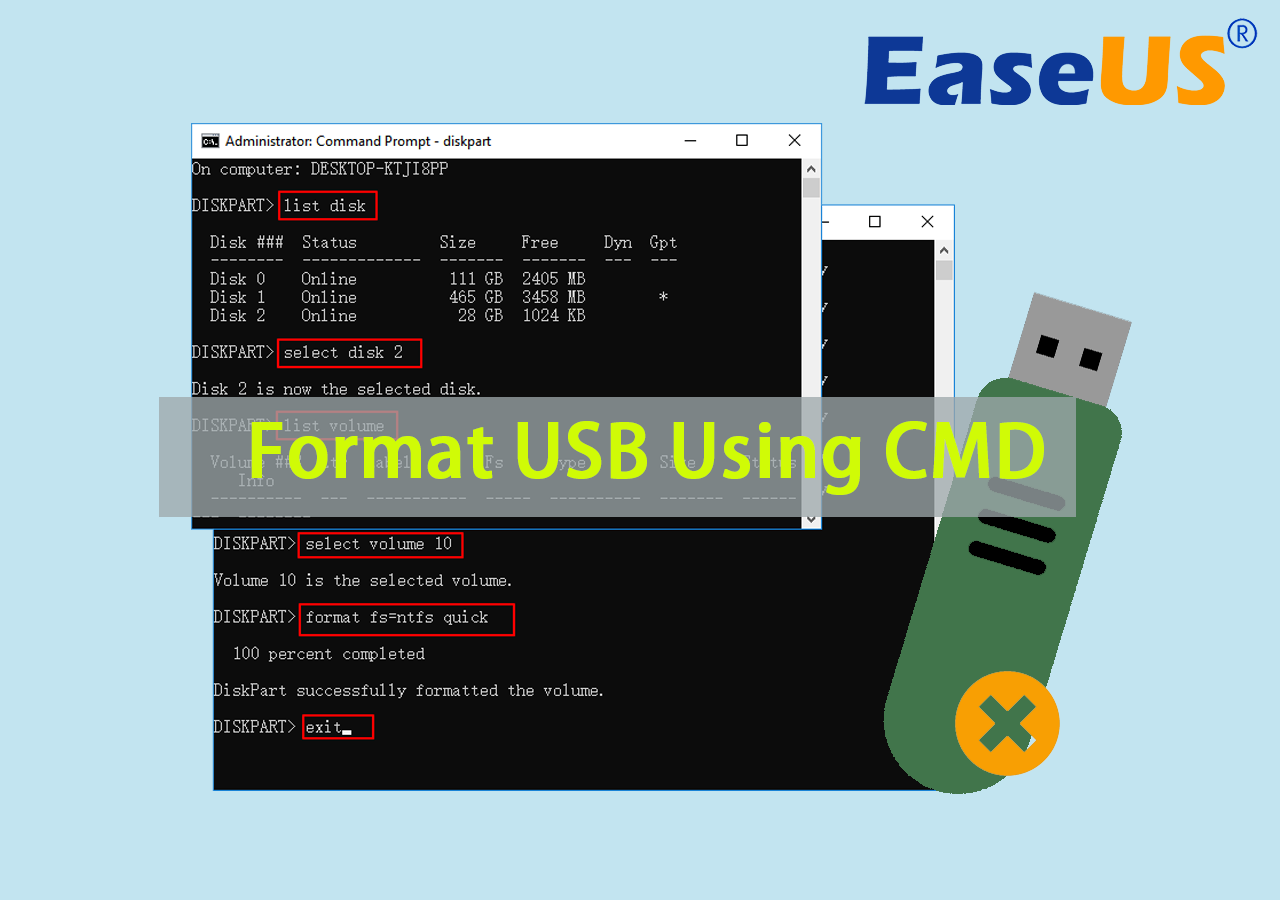
The USB drive format needs to be the same as the operating system's disk format. We suggest that you format USB drive using CMD or other formatting tools to obtain enough space for Windows 7 cloning. You can initialize the USB to MBR.
4. Download a Windows 7 cloning software
Since Windows does not provide a cloning tool, you can download EaseUS Partition Master to clone Windows 7 to a USB. This tool supports system disk cloning and bootable USB creation.
How to Clone Windows 7 to USB with A Step-by-Step Guide
EaseUS Partition Master is an all-in-one disk utility. It supports all Windows users, including Windows 7/8/10/11 and Windows XP/Vista. It has a simple interface to clone Windows to an external hard drive, so you know how to do it even if you are new to cloning. Let's follow the steps below to see how to clone Windows 7 to USB.
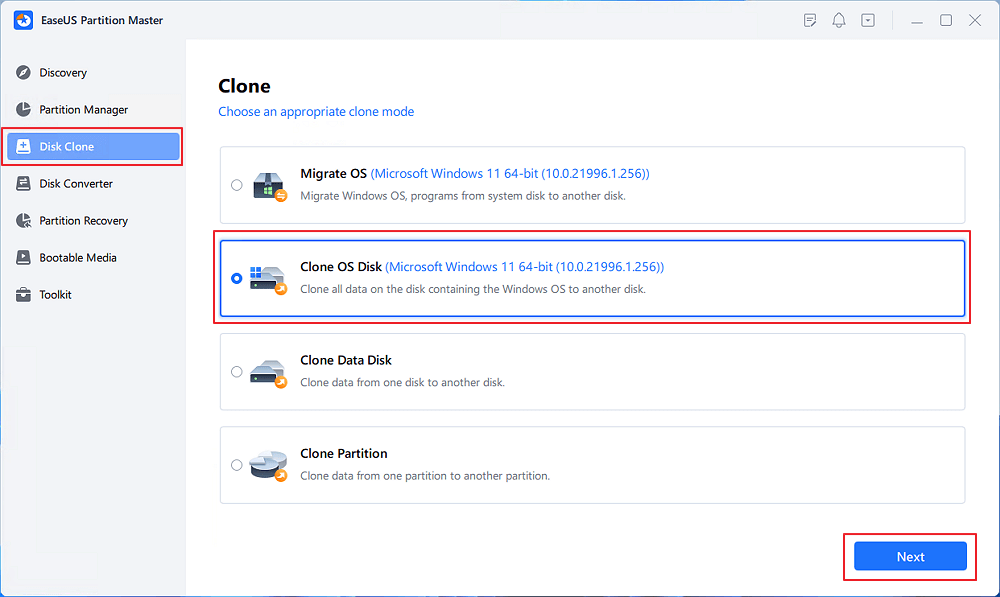
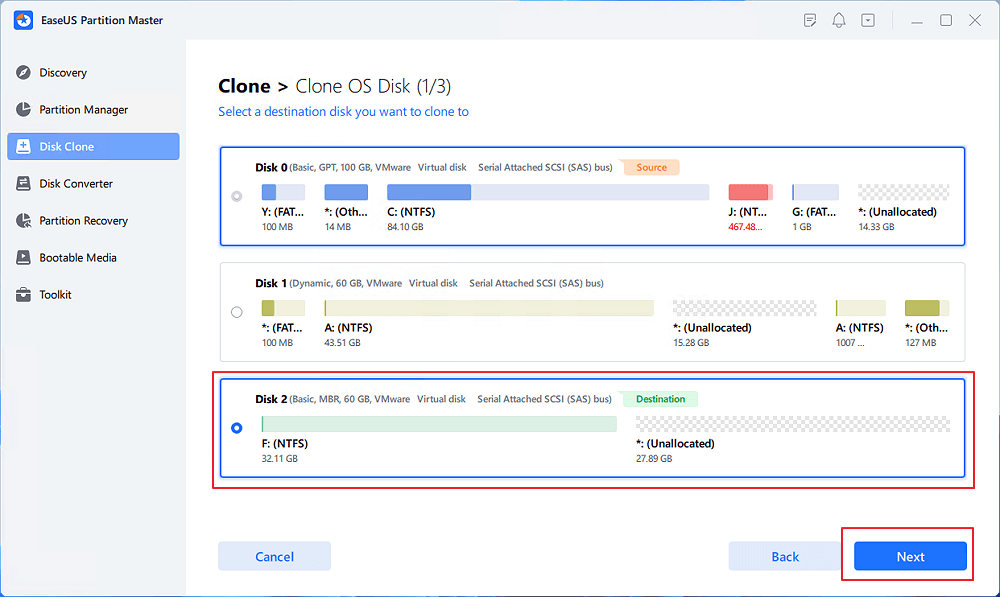
Step 1. Launch EaseUS Partition Master, go to the Disk Clone tab, select "Clone OS Disk" and click "Next".
Step 2. Select the target new drive where you want to clone the OS to, and click "Next".
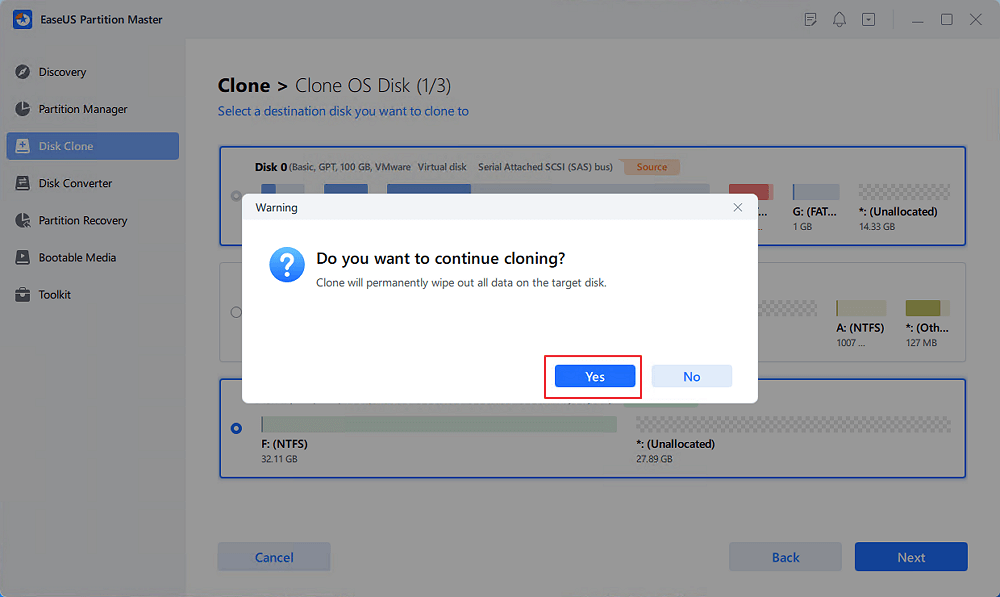
Click "Yes" to confirm that you want to continue the OS disk cloning process.
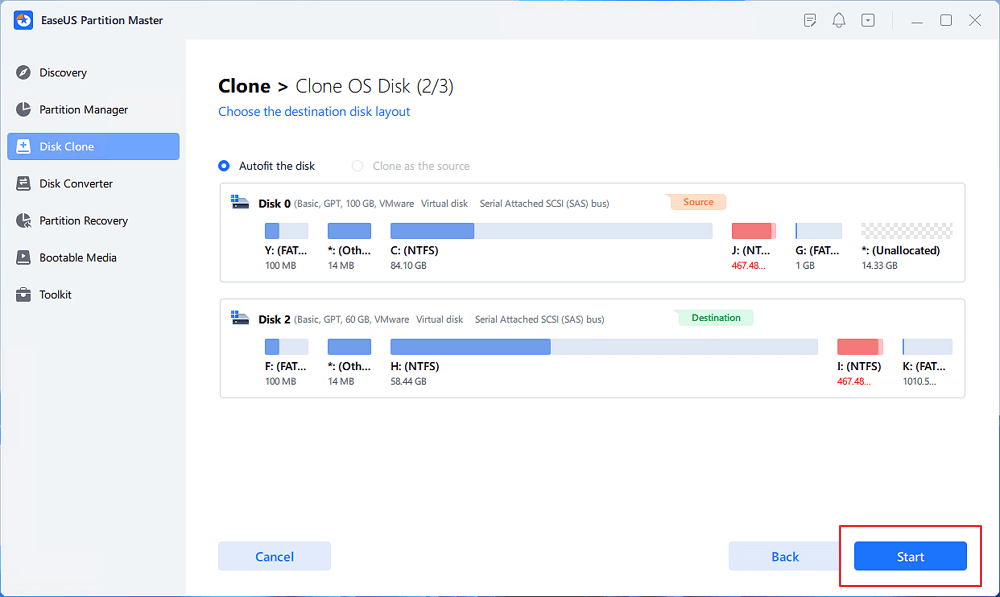
Step 3. View the disk layout, and click "Start" to begin the OS cloning process.
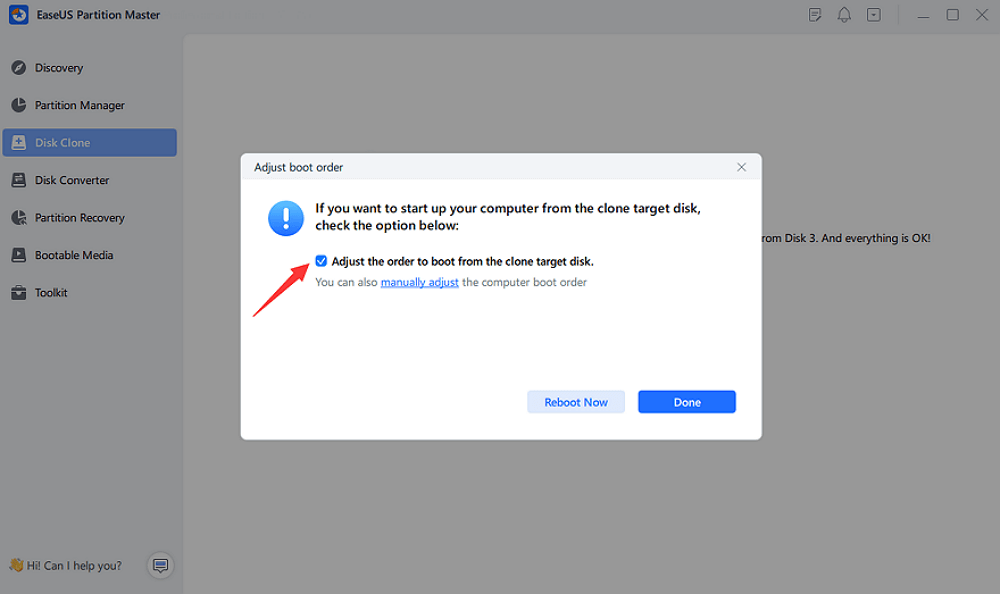
Step 4. When the process completes, you'll see a confirming message, asking "if you want to start up computer from the clone target disk".
- Reboot Now means to reboot your PC and configure the computer to boot OS from the new disk immediately.
- Done means you want to make the changes later.
How to Boot Windows 7 from USB After Cloning
If you want to run and boot Windows 7 to boot from the USB drive, connect the USB drive to the source computer and set the cloned USB as the boot disk. Here are the steps to boot Windows from the cloned USB:
❗Note that you can only boot Windows 7 from USB on the source computer.
Step 1. Connect the USB to the computer.
Step 2. Reboot your computer. Press and hold F2/F8/Del to enter the BIOS environment.
Step 3. Set the cloned USB as the boot disk on the right side.
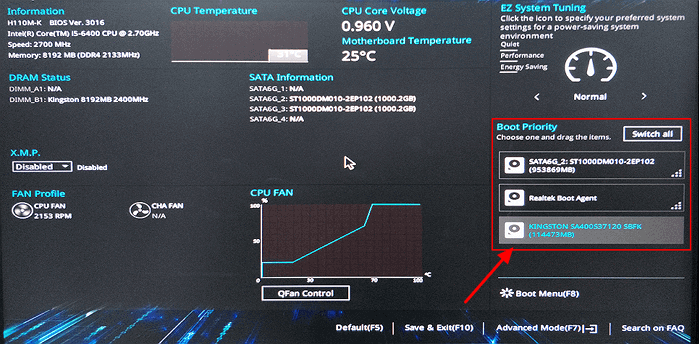
Step 4. Save the changes.
EaseUS Partition Master is a powerful tool that can clone Windows to another drive or clone Windows to new SSD. You can download EaseUS Partition Master and experience the convenience of disk partitioning.
Why Clone Windows 7 to USB
Cloning Windows 7 to USB means moving all the data inside Windows 7, including the operating system and applications, to the USB. Cloning Windows 7 to USB can bring a lot of convenience to our computers. The most common reasons for cloning Windows to USB are mainly the following:
1. Create a backup and avoid OS failure
Windows 7 is an older system that is prone to system crashes. Cloning Windows 7 to USB can restore data in the event of a system crash.
2. Create a removable bootable disk
Cloning Windows 7 to USB can create a portable Windows USB, which can be used to boot Windows on other computers in case of emergency or need.
3. Avoid the hassle of reinstalling Windows
When you copy the OS, applications, and other data together to the USB, you can install Windows programs directly on the new computer, which is faster and saves time.
All in all, cloning Windows 7 to USB is a perfect note. You can boot your computer via USB and use your Windows 7 system even when your computer fails.
Conclusion
Do you know how to clone Windows 7 to USB? This article lists why you need to clone Windows 7 to USB to help you better understand your needs. And it also details the preparation work before cloning and the cloning steps to help you finish cloning successfully.
With EaseUS Partition Master, cloning is no longer a problem. And it has other great features. So, I highly recommend you download it and try it out.
FAQs About How to Clone Windows 7 to USB
Here are some questions that people often ask, with some short answers. I hope this will be helpful to you.
1. Can you clone Windows to a USB drive?
You can clone Windows to USB, although Windows built-in tools don't provide a cloning function. Using reliable third-party software, such as EaseUS Partition Master, is also great.
2. How to copy Windows 7 to USB?
This article provides the preparation and step-by-step guide to cloning Windows 7 to USB. EaseUS Partition Master is a very simple cloning tool.
Step 1. Download EaseUS Partition Master and open it to select "Disk Clone" on the left side.
Step 2. Select "Clone OS Disk" and click "Next."
Step 3. Select the target USB, and click "Next" and "Yes" in the pop-up window.
Step 4. Click "Start" to start cloning Windows 7 to USB.
3. Can I make a bootable Windows 7 USB?
You can use EaseUS Partition Master to clone Windows 7 to USB and then go to the BIOS environment to change the boot order and set the cloned USB as the boot disk.
How Can We Help You
About the Author

Sherly joined EaseUS in 2022 and she has always loved writing articles and enjoys the fun they bring. She receives professional training here, focusing on product performance and other relative knowledge. She has written over 200 articles to help people overcome computing issues.

Cici is the junior editor of the writing team of EaseUS. She accepted the systematic training on computers at EaseUS for over one year. Now, she wrote a lot of professional articles to help people resolve the issues of hard drive corruption, computer boot errors, and disk partition problems.
Product Reviews
-
I love that the changes you make with EaseUS Partition Master Free aren't immediately applied to the disks. It makes it way easier to play out what will happen after you've made all the changes. I also think the overall look and feel of EaseUS Partition Master Free makes whatever you're doing with your computer's partitions easy.
Read More -
Partition Master Free can Resize, Move, Merge, Migrate, and Copy disks or partitions; convert to local, change label, defragment, check and explore partition; and much more. A premium upgrade adds free tech support and the ability to resize dynamic volumes.
Read More -
It won't hot image your drives or align them, but since it's coupled with a partition manager, it allows you do perform many tasks at once, instead of just cloning drives. You can move partitions around, resize them, defragment, and more, along with the other tools you'd expect from a cloning tool.
Read More
Related Articles
-
Resize Windows 10 Partition with Free Windows 10 Partition Manager
![author icon]() Jean/2026/08/13
Jean/2026/08/13 -
C Drive Cleaner Free Download for Windows 11/10
![author icon]() Sherly/2026/08/17
Sherly/2026/08/17 -
How to Shrink C Drive without Losing Data [Full Guide]
![author icon]() Cici/2026/09/18
Cici/2026/09/18 -
Solved: C Drive Not Showing in File Explorer
![author icon]() Cici/2026/06/30
Cici/2026/06/30
 Jean/2026/08/13